


 4 mins read


Auto dialers are everywhere, powering customer outreach, sales, reminders, and support notifications.
But as businesses increasingly rely on automated calling technologies, a critical question arises:
Are auto dialers illegal?
The short answer is no.
Auto dialers themselves are not inherently illegal. However, using them without complying with applicable laws and consumer protection rules can expose businesses to serious legal and financial risk.
In this guide, we break down the global legal landscape and explain major regulations such as TCPA (Telephone Consumer Protection Act) auto dialer rules. We also outline practical steps to help your business stay compliant.
What Is an Auto Dialer?
An auto dialer, also known as an automatic dialer, is a system that automatically dials phone numbers from a predefined list. These systems help sales teams, support centers, and service organizations improve efficiency by automating outbound calling and reducing manual effort.
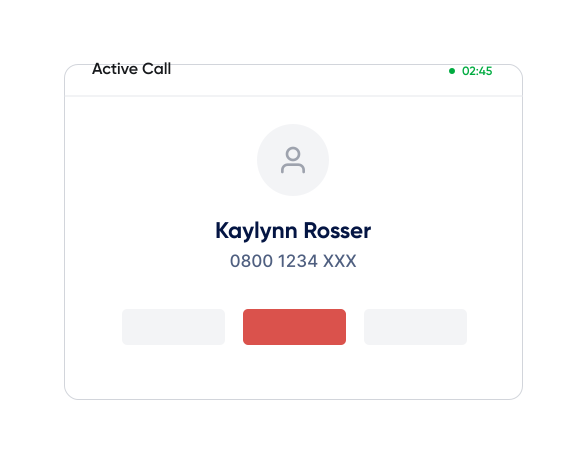
Modern auto dialers can integrate with CRM platforms, adjust dialing rates, detect voicemail, and route live calls to available agents. While these capabilities make auto dialers extremely valuable, they also raise regulatory concerns due to their potential misuse.
Are Auto Dialers Illegal? The Simple Legal Truth
Auto dialers are legal in most countries. What matters is how they are used.
Businesses make auto dialers illegal when they:
- Ignore do not call lists
- Use misleading caller identification
- Call individuals without proper consent
- Place excessive abandoned or silent calls
- Violate data privacy and telemarketing regulations
This is why understanding auto dialer laws and regulations is essential for any organization using automated calling technology.
Auto Dialer Laws Around the World
Regulations differ by country but generally aim to protect consumers from intrusive automated calls while enabling legitimate business communications.
1. United States: TCPA and Telemarketing Rules
The United States has one of the most structured regulatory frameworks for auto dialer calls.
The TCPA governs the use of automatic telephone dialing systems and prerecorded messages. It requires prior express consent before making auto dialed calls or texts to consumers. For marketing calls, prior express written consent is typically required.
Businesses must also comply with the Telemarketing Sales Rule (TSR), which limits calling hours and regulates abandoned calls. It also enforces strict do not call compliance.
Violations of TCPA auto dialer rules can lead to penalties ranging from $500 to $1,500 per call. At scale, even small compliance gaps can become extremely costly.
Auto dialers are legal in the US only when consent, transparency, and do not call requirements are strictly followed.
2. European Union: GDPR and e-Privacy Regulations
In the European Union, auto dialer legalities are closely tied to data protection laws.
Under the General Data Protection Regulation (GDPR), automated calls involve processing personal data. Businesses must have a lawful basis, most often explicit consent, to contact individuals using auto dialers.
The e-Privacy Directive and country-specific telemarketing laws require clear consent for automated marketing calls. GDPR violations can result in fines of up to 20 million Euros or 4 percent of global annual turnover.
3. United Kingdom: PECR
In the UK, auto dialer calls are regulated under the Privacy and Electronic Communications Regulations (PECR). Automated marketing calls require prior consent, and organizations must honor opt-out requests.
The UK regulator can impose fines of up to £500,000 for serious breaches. This makes compliance critical for businesses operating in or calling into the UK.
4. Canada: CASL
Canada enforces the Canadian Anti-Spam Legislation (CASL), which covers automated calls and other commercial electronic communications.
CASL requires express consent for automated marketing calls and mandates clear identification of the caller. Penalties for non-compliance can reach $10 million per violation of Canadian dollars for corporations.
5. India: TRAI and UCC Regulations
In India, auto-dialer calls are regulated under the Telecom Commercial Communications Customer Preference Regulations (TCCCPR), which are overseen by the Telecom Regulatory Authority of India (TRAI).
Businesses must register as telemarketers and comply with customer communication preferences. They must avoid calling numbers listed on the National Do Not Disturb registry. Abandoned and silent calls are closely monitored by telecom operators.
Non-compliance results in escalating financial penalties for repeated violations. The first violation may attract a penalty of ₹2 lakh. A second violation may result in a penalty of ₹5 lakh. Subsequent violations may attract penalties of up to ₹10 lakh.
Telecom service providers may disconnect services for serious or persistent breaches. They may also blacklist sender IDs or calling numbers. Traffic suspension may be imposed for continued non-compliance.
Companies using auto-dialers at scale may require additional telecom approvals. Approval requirements depend on the nature and scope of operations.
6. United Arab Emirates: TDRA and Data Protection Laws
UAE, auto-dialers are regulated by the Telecommunications and Digital Government Regulatory Authority and national data protection laws. These regulations require prior consent and lawful use of personal data.
Financial penalties may range from AED 50,000 to AED 150,000 for regulatory violations. Repeated or serious breaches may result in higher fines or license suspension. Compliance with the UAE Personal Data Protection Law is mandatory. Additional penalties may apply for misuse of personal data.
Auto-dialers are permitted only when consent, transparency, and telecom usage rules are strictly followed.
When Do Auto Dialers Become Illegal?
Auto dialers cross into illegal territory when they are used irresponsibly or without regard to regulatory requirements.
1. Calling Without Consent
Consent is the cornerstone of legal auto dialer use. Businesses must obtain explicit permission from individuals before making automated calls, particularly for marketing purposes. Failing to secure consent violates laws like the TCPA in the US, GDPR in the EU, and CASL in Canada. This applies to both voice calls and automated text messages.
2. Ignoring Do Not Call Lists
Many countries maintain “Do Not Call” registries or preference lists where consumers can opt out of receiving marketing calls. Calling these numbers without proper authorization can render your auto dialer illegal. Regulators actively monitor violations, and penalties can range from monetary fines to restrictions on future calling operations.
3. Misleading Caller Identity
Automated calls must clearly identify the organization making the call. Using fake, spoofed, or misleading caller IDs is illegal and can be treated as fraud. Transparent caller identification builds trust and ensures compliance with telemarketing laws and anti-fraud regulations.
4. High Rates of Abandoned Calls
Auto dialers that result in too many abandoned or silent calls can attract regulatory scrutiny. Laws require businesses to limit abandoned call rates and provide a recorded message when no agent is available to answer. Excessive abandoned calls are considered disruptive and can lead to penalties or restrictions on using auto dialers.
Penalties and Legal Risks
Failure to comply with auto dialer regulations can lead to:
- Suspension of calling operations
- Regulatory fines and enforcement actions
- Reputational damage and loss of customer trust
- Class action lawsuits, particularly under TCPA in the US
These risks make compliance not just a legal necessity, but a business priority.
How to Stay Compliant When Using Auto Dialers
Here are practical steps businesses can take to ensure compliant use of auto dialers.
1. Obtain and Document Consent
Before making any automated calls, always collect clear, verifiable consent from your recipients. Consent should be explicit, meaning the person has actively agreed to receive calls, and it should be documented thoroughly.
Maintain detailed records showing when and how consent was obtained, including the channel (online form, SMS, email) and the date. This documentation is essential because regulators often request proof of consent during audits.
Without proper consent, even legitimate business communications can be deemed illegal, which could result in substantial fines and penalties.
2. Respect Opt-Outs and DNC Requests
Consumers have the right to stop receiving automated calls at any time. To comply with, businesses must regularly update calling lists against national or regional Do Not Call (DNC) registries and promptly honor all opt-out requests.
If a customer asks not to be contacted, your system should flag that number, so no further calls are made. Ignoring opt-out requests or calling DNC-listed numbers is one of the most common reasons companies face regulatory action.
Regularly updating your contact lists not only keeps you compliant but also helps maintain customer trust and avoids unnecessary complaints.
3. Use Compliance-Friendly Technology
The right technology makes compliance much easier. When choosing auto dialer software, prioritize solutions that include features designed for regulatory adherence. These include:
- Time zone-based calling: Ensures calls are only made during appropriate hours in the recipient’s location, avoiding nuisance complaints.
- Caller ID transparency: Displays your organization clearly to the recipient, reducing mistrust and potential spoofing violations.
- Built-in opt-out mechanisms: Automatically offers recipients the ability to opt out of future calls, simplifying compliance.
- Limits on abandoned calls: Reduces silent or unattended calls that may violate local telemarketing rules.
4. Train Your Teams
Even with the best technology, compliance ultimately depends on your people. Agents and managers should understand the rules governing auto dialer use, including consent requirements, DNC obligations, and abandoned call limits.
They should know how to handle complaints professionally and how to update opt-out records correctly. Regular training sessions and compliance briefings ensure everyone stays up to date with evolving regulations and reduces the risk of inadvertent violations.
5. Monitor and Audit Regularly
Compliance is not a one-time effort; it’s an ongoing process. You should conduct regular audits of call logs, consent records, and dialing practices to identify and fix potential gaps.
This involves ensuring calls occur within allowed hours, abandoned call rates are controlled, opt-outs are respected, and caller IDs remain accurate. Monitoring and auditing your systems help prevent violations before they escalate and demonstrate a proactive approach to regulators.
Read Blog : Best Auto dialer service providers in 2026
Conclusion
Auto dialers are not illegal but using them carelessly can quickly make them unlawful. Global regulations are designed to protect consumers while allowing responsible businesses to communicate effectively.
If you understand auto dialer laws, prioritize consent, and use compliant technology solutions like those offered by Acefone, you can scale confidently. This can also help you ensure your calling operations remain legal and efficient across regions.
Responsible use is not just about avoiding penalties. It is about building trust, protecting your brand, and creating better customer experiences worldwide.
Frequently Asked Questions (FAQ)
Yes, auto dialers are legal in most countries. However, legality depends on how they are used. Businesses must follow telemarketing, consumer protection, and data privacy laws. Misusing auto dialers for unsolicited calls or ignoring regulations can lead to heavy fines and reputational damage.
In most regions, prior consent is required, especially for marketing or promotional calls. Some countries require explicit or written consent. Even for non-marketing calls, businesses must have a lawful purpose and provide opt-out options. Proper consent ensures legal compliance and builds trust with customers.
Penalties vary by jurisdiction but can include financial fines, service or number of suspensions, license revocation, and legal action. In some countries, violations may also trigger class action lawsuits or regulatory investigations. Repeated violations often lead to escalated fines and stricter enforcement measures.
Yes, auto dialers can be used for non-marketing purposes such as appointment reminders, service updates, and transactional notifications. These calls must still comply with consent, timing, identification, and data protection requirements. Using auto dialers responsibly ensures efficiency without breaking the law.
Businesses can stay compliant by collecting and documenting consent, honoring opt-out requests, following do not call rules, and using compliant dialing technology. Regular training, audits, and monitoring help prevent violations. Combining the right technology with proper policies reduces legal risk and maintains customer trust.