


 8 mins read


Contact center software applications have been around since digital call centers first appeared. However, lately Gen AI has changed the playing field for everyone, and that’s how many CcaaS providers are leveraging from it. Even tech giants like Microsoft and Amazon are bringing their influence from related industries into the contact center industry.
And it’s a growing space.
With so much changing, it’s a good time to reexamine today’s top platforms.
With so many options out there, choosing the right contact center software can feel overwhelming.
That’s why we’ve made it easy. Here’s a list of the top 10 contact center software providers in 2026, each packed with powerful features to help your team shine.
Let’s dive in.
What is a Contact Center Solution?
A contact center solution is a comprehensive software platform designed to manage customer interactions across multiple channels. It helps you manage multiple channels simultaneously, including voice calls, email, live chat, SMS, and WhatsApp. You get all conversations into a unified dashboard, eliminating silos and inefficiencies.
Modern contact center solutions go beyond basic call handling. They use automation, intelligent routing, and AI-driven tools to optimize every stage of the customer journey.
They come equipped with features like IVR menus, auto-dialers, call recording, workforce management, analytics, and CRM integrations. The features enable your teams to respond faster, personalize interactions, and maintain consistent service quality.
How Can We Choose the Top Ccaas Providers?
A recent study shows that the global market for contact center software is projected to surpass $100 billion by 2028. This reflects rapid adoption and intense competition among vendors. With so many options available, selecting the right CCaaS platform requires a clear, structured evaluation.
To narrow down the top providers, here’s how you can assess providers to find the right solution:
- Core contact center features: Check if your provider offers essentials like IVR, intelligent call routing, call recording, real-time and historical analytics, and true omnichannel support across voice, chat, email, SMS, and social platforms.
- AI and automation capabilities: Availability of advanced features such as voice bots and AI-based post-call analytics is essential to enhance efficiency.
- Scalability and reliability: Look for strong uptime SLAs, global infrastructure, high call capacity, and the ability to support expanding teams without performance drops.
- Ease of use and integrations: Check if the platform seamlessly integrates with CRMs, helpdesks, collaboration tools, and business productivity platforms.
- Pricing and value: Ensure transparent pricing, flexible plans, free trials or demos where offered, and overall cost-effectiveness based on features, performance, and ROI.
By evaluating these areas, you can identify the CCaaS solutions that deliver the best value.
10 Best Cloud Contact Center Providers in 2026
Based on the criteria mentioned above, we have compiled a list of contact center software providers. The best contact center software providers offer way more than just call management. Their solutions are designed to help you stay on top of conversations across voice, chat, email, and more.
Modern Best cloud contact center platform includes features like auto dialers, plug-and-play integrations, and intelligent call routing strategies. You also benefit from intuitive user interfaces, scalability to support business growth, and dependable customer support to keep operations running smoothly
Here is a comprehensive list of the top 10 contact center software providers in 2026:
| Provider Name | Best For | Additional Offering |
| Acefone | Mid-Size Businesses & Enterprises & Industries like BFSI, Retail, Healthcare, Education, Professional services | Up to 30% off on all plans |
| Talkdesk | Large enterprises need advanced cloud contact center solutions | NA |
| Telecmi | Support teams of mid-size businesses seeking omnichannel communication | Free trial for 14 days |
| Dialpad | Retail, Insurance, Technology, Professional Services, Healthcare | Free trial for 7 days |
| JustCall | Real Estate, Technology, Financial Services, Fitness & Wellness, Healthcare, Education, Retail | Free trial for 14 days |
| CloudTalk | Software & Tech, Financial Services, Professional Services, Education & E‑learning | Free trial for 14 days |
| Aircall | Education & E‑learning, Financial Services, Healthcare, Marketing & Advertising | NA |
| Ameyo by Exotel | Education, Banking, BPO, Healthcare, Telecommunications, Insurance, Financial Services | Free trial available |
| 8×8 | Finance, Healthcare, Logistics, Education, Retail & E-commerce | NA |
| RingCentral | Financial Services, Healthcare, Education, Government, Retail, Professional Services | Free trial available |
1. Acefone
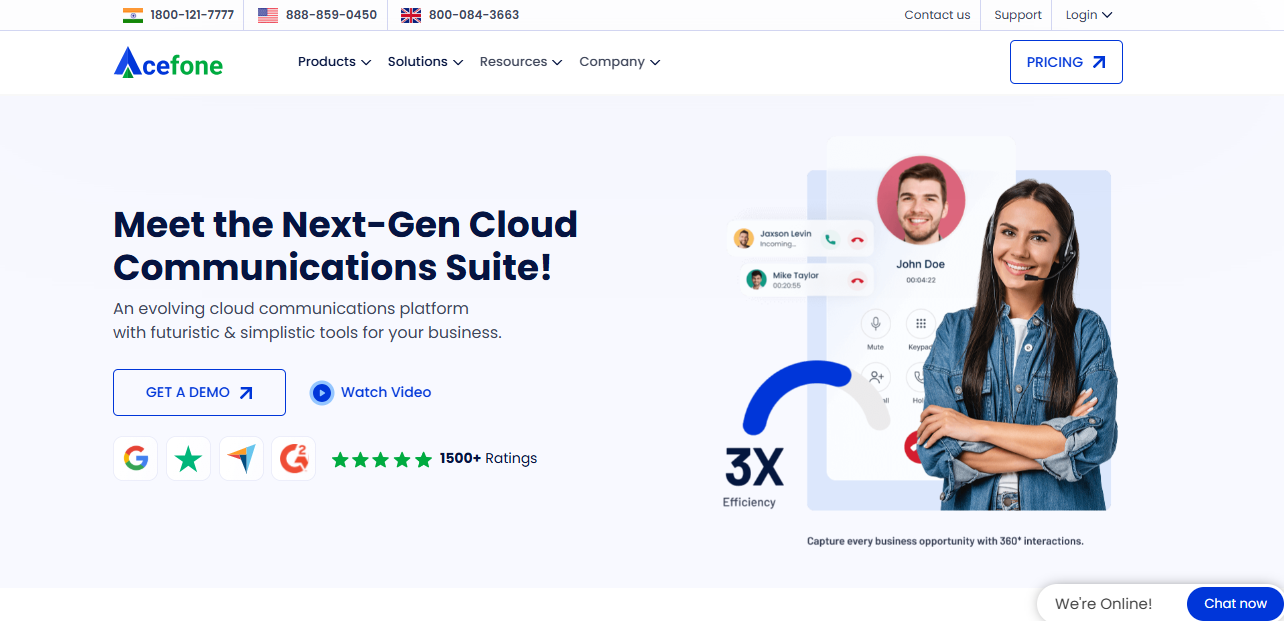
Acefone is one of the most tech-forward contact center software providers out there. The CXaaS platform AceX comes packed with features that simplify and enhance customer interaction.
Built for efficiency, the platform amplifies business communication with AI functionalities, multiple communication channels, custom API dial plans, real time analytics & reporting and more. You also get toggle-based integrations with industry-leading CRMs like Salesforce, Zendesk, Zoho CRM, HubSpot and more.
Additionally, Acefone ensures secure and uninterrupted communication with end-to-end encryption, 99.5% service uptime, and assured regulatory compliance.
What you get:
- AI-powered VoiceBot, Post-Conversation Analytics, and real-time Agent assist
- Manage conversations across channels seamlessly
- Set up smart call routing with a multi-level IVR system
- Receive voicemails directly in your email inbox
- Keep your business number with number porting
- Sync seamlessly with industry-leading CRMs
- Stay secure with advanced compliance checks
Pros:
- AI-driven solutions
- User-friendly interface
- 24/7 customer support
- Quick onboarding
- Flexible pricing
- Agent softphone compatibility
- High channel-to-cost value
Cons:
- No Free Trial
Best For: Businesses from BFSI, Retail, Healthcare, Education, Professional Services sectors
Additional Offerings: Up to 30% off on all plans
2. Talkdesk
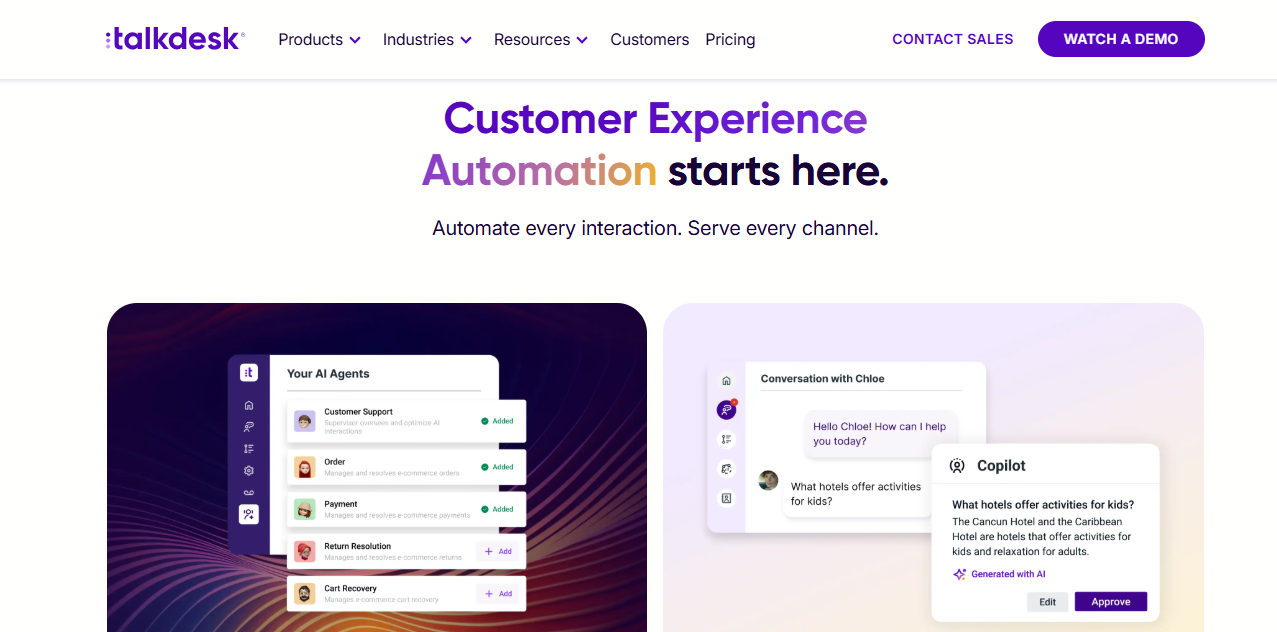
Talkdesk is a global cloud contact center leader offering AI-powered customer service solutions. Their platform unifies contact center operations, enabling communication across teams and other business users, thereby streamlining tools into one platform for greater efficiency.
What you get:
- Route calls using AI for better response times
- Support customers across channels
- Automate workflows to boost efficiency
- Unlock insights with robust call analytics
- Connect multiple parties on the same call with 3-way calling
- Guide callers with a smart IVR system
- Monitor live metrics with real-time dashboards
Pros:
- Advanced AI features
- Scalable for enterprises
- Robust analytics
- Wide integration options
- Reliable uptime
Cons:
- Expensive plans
- AI is available only in premium plans
- Complex setup
- Steep learning curve
Best For: Large enterprises needing advanced contact center solutions.
Additional Offering: NA
3. TeleCMI
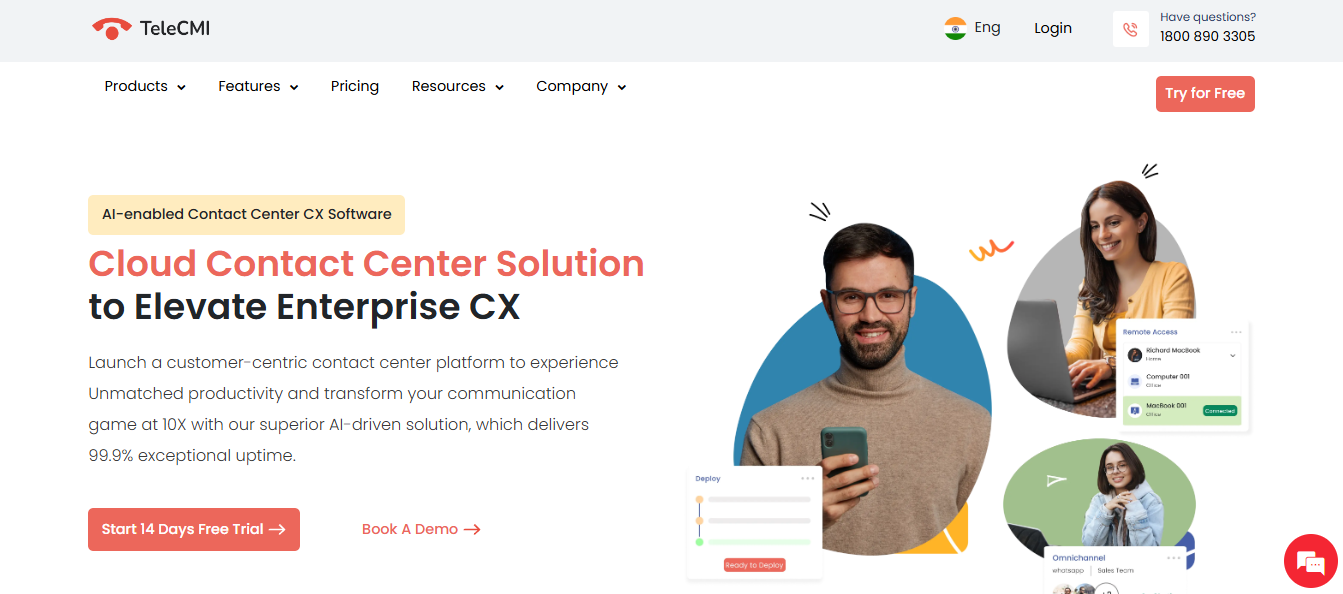
TeleCMI is a cloud contact center solution built to streamline customer interactions through a unified interface. It offers voice, chat, video, and messaging capabilities, all on one platform. Designed with automation in mind, the platform helps companies improve customer experience while reducing manual effort through AI-powered tools.
What you get:
- AI-assisted call handling and support automation
- Real-time coaching and on-call script prompts for agents
- Multichannel engagement through voice, chat, and WhatsApp
- Auto dialers and IVRs for managing high call volumes
- Live dashboards and analytics for tracking team performance
- Integration with CRM platforms and third-party apps
Pros:
- User-Friendly Interface
- Affordable Pricing
- Standard onboarding process
- Good Customer Support
- Basic CRM integrations
Cons:
- Limited Advanced Features
- Basic Reporting Tools
- Occasional Call Drops
- Limited Customization
- Mobile App Limitations
Best For: Support teams of mid-size businesses seeking omnichannel communication.
Additional Offering: Free trial for 14 days
4. Dialpad
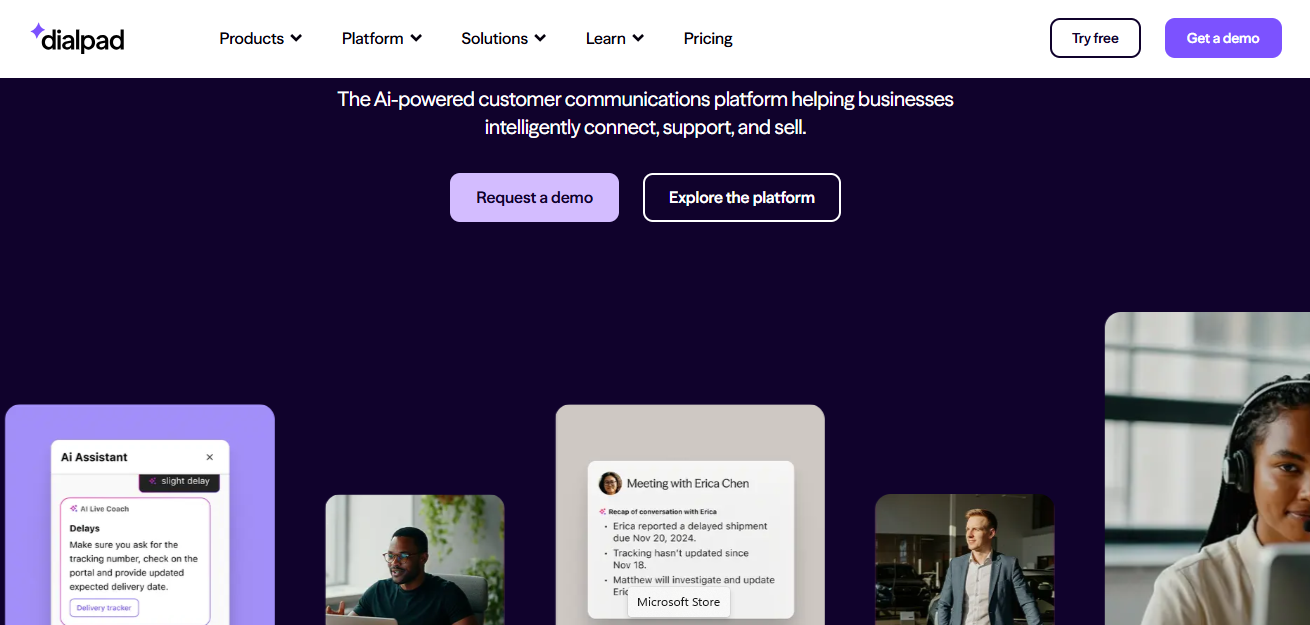
Dialpad brings all business conversations together in one AI-powered cloud platform. Your teams can stay productive from anywhere, on any device. With Dialpad Connect, you can unify communications and collaborate securely worldwide. It also equips you with time-saving AI tools and AI Recaps, which provide automated meeting summaries. You can also easily revisit key conversations and simplify workflows with Dialpad integrations.
What you get:
- Make clear, HD VoIP calls
- Connect instantly with desk-to-desk calling
- Communicate fast through instant messaging
- Host smooth conference calls with ease
- Collaborate visually with video and screen sharing
- Capture every word with real-time transcripts and AI-generated recaps
Pros:
- AI-powered transcription
- Real-time call summaries
- Clean, intuitive interface across devices
- Seamless third-party integration
- Strong mobile experience and hybrid work support
Cons:
- Limited advanced features
- Basic reporting tools
- Occasional call quality issues
- Limited customization
Best For: Businesses from the Retail, Insurance, Technology, Professional Services, and Healthcare sectors.
Additional Offering: Free Trial for 7 days
5. JustCall
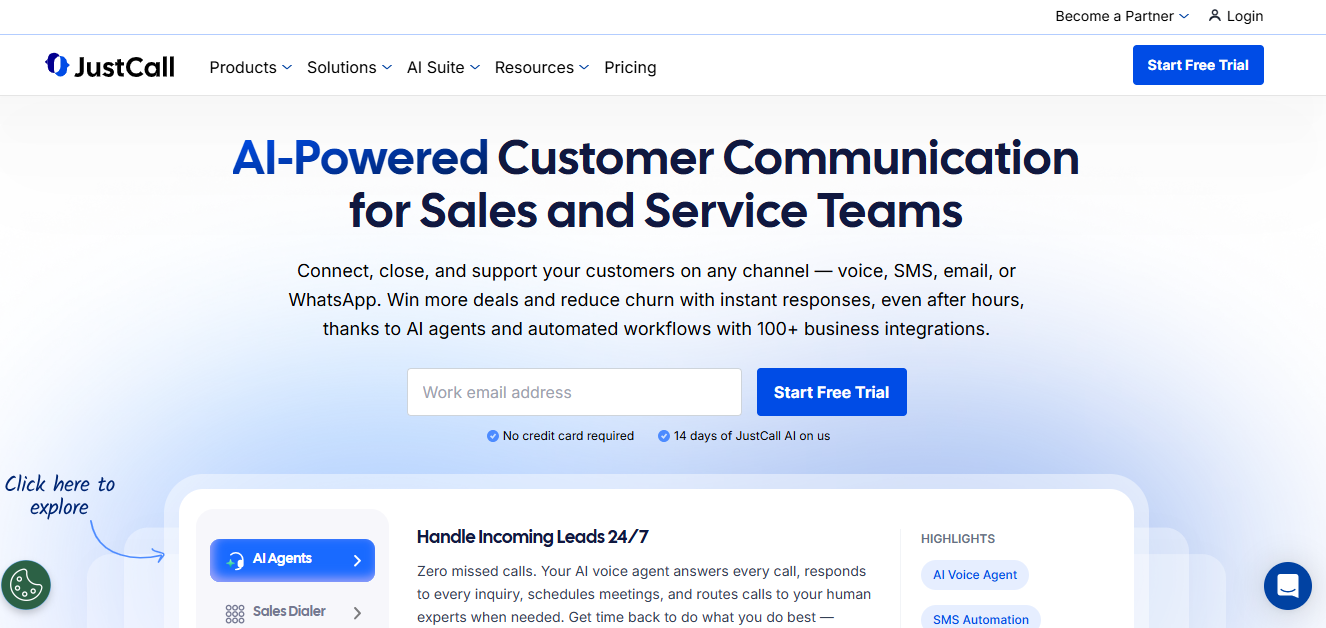
JustCall is a CCaaS provider offering solutions tailored for sales and support teams. It enables businesses to make and receive calls via VoIP, send messages, and equip teams with a feature-rich and scalable AI-powered phone system. JustCall integrates seamlessly with popular CRMs and helpdesk tools, enhancing productivity and customer engagement.
What you get:
- Make and receive VoIP calls globally
- Run bulk SMS campaigns from one dashboard
- Integrate with major CRM tools effortlessly
- Track team performance with call analytics
- Set up menus and call flows with an IVR system
- Forward calls to any number with ease
- Enable instant customer engagement with a click-to-call widget on your website
Pros:
- Strong CRM integrations
- User-friendly interface
- Affordable pricing
- Quick setup
- Good customer support
Cons:
- Limited advanced features
- Basic reporting tools
- Occasional call drops
- Limited customization
- No free trial
Best For: Businesses from Real Estate, Technology, Financial Services, Fitness & Wellness, Healthcare, Education, and Retail sectors
Additional Offering: Free trial for 14 days
6. CloudTalk

CloudTalk is one of the modern contact center providers with a super user-friendly solution. It offers features like smart call routing, AI-powered analytics, and workflow automation. The software is highly suitable for businesses planning to scale fast, enhance customer experience, and streamline communication.
What you get:
- Connect teams with cloud-based VoIP calling
- Manage multiple callers with call queuing
- Record calls for training and review
- Route calls smartly with a customizable IVR
- Analyze call performance with in-depth analytics
- Sync with your favorite CRMs
- Click-to-call from your browser or CRM
Pros: 202
- Feature-rich platform
- Easy integration
- Good call quality
- Scalable plans
- User-friendly interface
Cons:
- Higher pricing tiers
- Limited customer support
- Occasional bugs
- Basic reporting tools
- No free trial
Best For: Businesses from Software & Tech, Financial Services, Professional services, Education & E-learning sectors
Additional Offering: Free Trial for 14 days.
7. Aircall
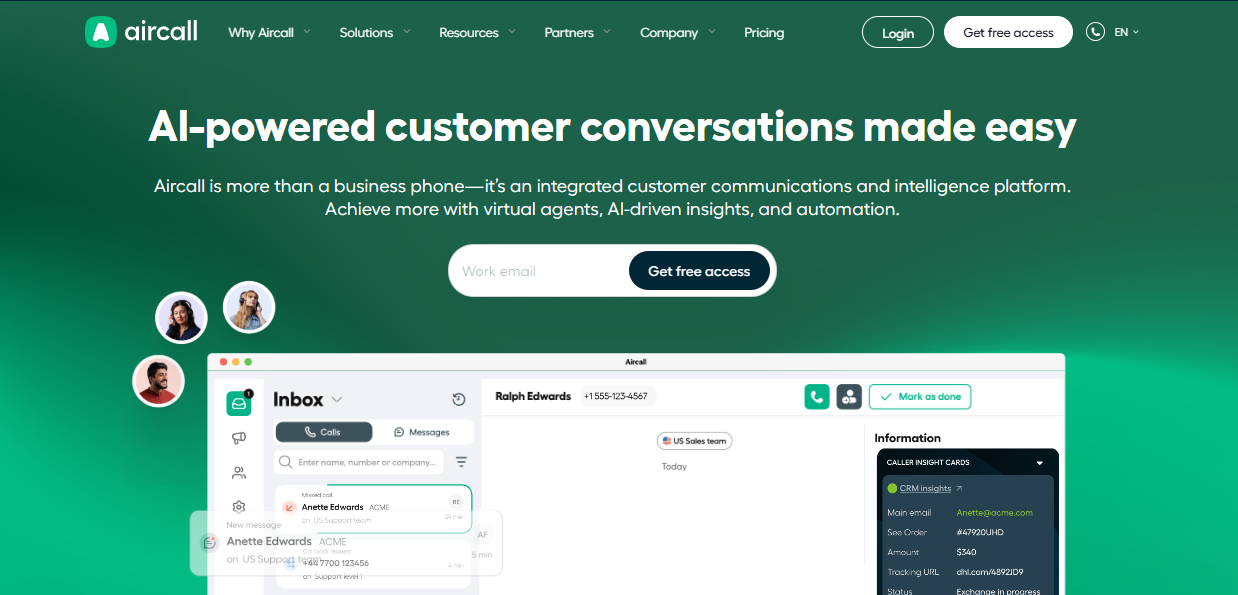
Aircall offers a cloud-based call center system designed for high-performing teams. It offers AI-powered customer communications, unifying channels, automating tasks, and providing insights. Aircall integrates easily with popular CRMs and helpdesk tools, making it ideal for customer support and sales teams.
What you get:
- Reach more customers faster with power dialers
- Set up an IVR to route calls automatically
- Access real-time call analytics
- Enable Click to Dial for instant calling from your dashboard
- Monitor performance with live dashboards
Pros:
- Easy integration
- User-friendly interface
- Reliable call quality
- Scalable plans
- Good customer support
Cons:
- Higher pricing tiers
- Limited advanced features
- Basic reporting tools
- Occasional bugs
- No free trial
Best For: Businesses from Education & E-learning, Financial Services, Healthcare, Marketing & Advertising sectors
Additional Offering: NA
8. Ameyo by Exotel
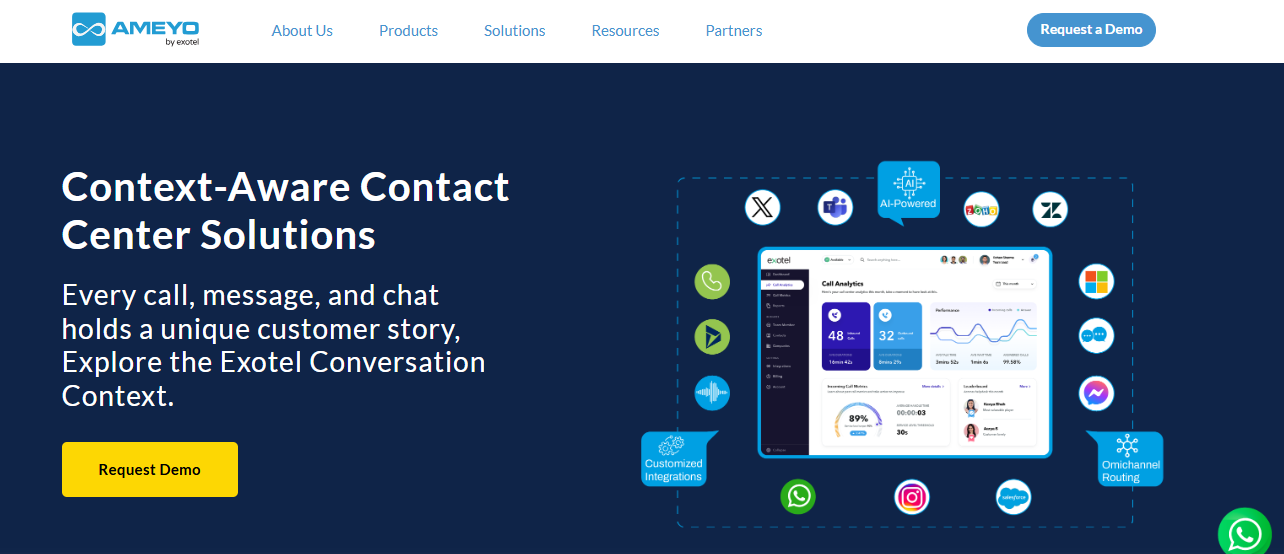
Ameyo, now part of Exotel, offers a comprehensive cloud contact center platform. Their solutions include omnichannel support, IVR systems, call recording, analytics, CRM integrations, and more, making them suitable for large enterprises needing advanced cloud contact center solutions.
What you get:
- Serve customers across voice, chat, and social channels
- Guide calls through an intelligent IVR system
- Track and analyze performance with detailed reports
- Connect with CRMs to streamline workflows
- Boost call efficiency with auto dialers
- Monitor and record calls for quality and training purposes
Pros:
- Advanced features
- Scalable for enterprises
- Robust analytics
- Wide integration options
- Reliable uptime
Cons:
- Expensive plans
- Technical issues
- Steep learning curve
- Occasional call delays
- Limited customization
Best For: Businesses from Education, Banking, BPO, Healthcare, Telecommunications, Insurance and Financial Services sectors
Additional Offering: Free trial available
9. 8×8
 8×8 offers cloud-based contact center software with services like VoIP calling, video conferencing, and team messaging. Their solutions are designed to be affordable, scalable, and enhance collaboration, catering to small to medium businesses seeking cost-effective communication tools.
What you get:
- Provide a role-specific workspace for each team member
- Host team meetings via video conferencing
- Generate customizable reports with automatic alerts
- Use IVR to route customer calls smartly
- Integrate seamlessly with major CRMs
- Set up auto-attendants to manage calls
- Add call summary notes for quick reference
Pros:
- Affordable pricing
- Scalable plans
- Reliable uptime
- Wide integration options
- Strong security
Cons:
- Complex application
- Limited advanced features
- Basic reporting tools
- Occasional call quality issues
- Limited customization
- No free trial
- Poor customer support
Best For: Businesses from Finance, Healthcare, Logistics, Education, Retail & Ecommerce sectors
Additional Offering: NA
10. RingCentral
RingCentral is a global provider of cloud-based business unified communications and collaboration solutions. Their platform offers voice, text, and fax business communications with enterprise-grade security, 30+ digital channels, and an industry-leading 99.999% uptime SLA. RingCentral’s services are available in over 40 countries, supporting global business operations.
What you get:
- Host HD video meetings and webinars
- Keep teams aligned with in-app messaging
- Route calls using a flexible IVR system
- Get detailed call analytics
- Sync data with CRMs and business tools
- Greet callers with an auto-attendant
- Stay connected via mobile or desktop apps
- Fax documents securely through the app
Pros:
- Comprehensive features
- Scalable plans
- Reliable uptime
- Wide integration options
- Strong security
Cons:
- Expensive plans
- Complex setup
- Steep learning curve
- Limited customization
- Basic AI in high tiers
- No NLP or real-time assist for all plans
Best For: Businesses from Financial services, Healthcare, Education, Government, Retail, and Professional services sectors
Additional Offering: Free trial available
How to Choose the Right Cloud Contact Center Solution?
With so many platforms on the market, choosing the right contact center software can be challenging. Each tool offers a different mix of features, Acefone’s pricing, and support. Hence, it’s important to focus on what matters most to your business. Think about how your team works, the channels you use, and where you see your operations growing in the next few years.
Many leading cloud contact center platform also work closely with auto dialer solution providers to offer complete packages. Below are some key factors to consider that will help you make a smarter, more confident choice:
-
Cloud vs On-premises
Cloud-based solutions are easier to set up, scale, and manage. They’re ideal for remote or distributed teams. On-premises setups offer more control and customization but usually come with higher setup and maintenance costs.
Recommended Read: Call Center Software Costs
-
Industry-specific requirements
Some industries, like finance, healthcare, or e-commerce, have unique compliance or workflow needs. Look for software that’s built with those in mind, or at least flexible enough to adapt.
-
Third-party integrations
Your contact center shouldn’t work in isolation. The best platforms integrate easily with CRMs, helpdesk tools, ticketing systems, and other business apps you already rely on.
-
AI and automation features
Modern contact centers run smart tools. Features like predictive dialing, sentiment analysis, and AI-powered assistants can save time, reduce errors, and boost customer satisfaction.
-
Support and uptime
Even the best tools need support now and then. Look for providers that offer reliable uptime (ideally 99%+) and responsive customer support. Look for a contact center provider with higher uptime, especially if your operations run 24/7.
Taking the time to evaluate these factors can help you pick a solution that not only fits your current needs but also grows with your business.
Trends Shaping Contact Centers in 2026
In 2026, contact centers are shifting from being cost centers to experience hubs.
Here are a few big trends are driving this change:
-
Generative AI Brings Quick CX Gains
Though still developing, generative AI is already reshaping contact centers. According to experts, it could add $2.6 trillion to $4.4 trillion annually to the global economy. Its potential is still unfolding, but it’s already improving self-service, enhancing agent coaching, and accelerating support workflows.
-
Employee Experience Rises to the Same Level as CX
While contact centers have always focused on customer satisfaction, 2024 brings a parallel priority: supporting agent well-being.
Leaders are increasingly embracing omnichannel operations that break down data silos and create smooth, connected workflows. This helps reduce handling times and improves both agent and customer experiences. Generative AI and automation further lighten workloads by taking over routine tasks and assisting agents in real-time.
-
Personalization Becomes Standard Practice
Customers no longer want generic service; they expect agents to recognize them. This includes knowing their history, preferences, and needs instantly. In 2024, contact centers are tapping into their vast customer data to deliver deeper personalization across every touchpoint.
With omnichannel platforms and analytics, agents can identify preferred communication channels, resolve issues faster, and tailor conversations more effectively.
-
Strategic Partnerships Gain Momentum
Even with advanced technology and improved agent support, rising interaction volumes and heightened customer expectations make transformation difficult to achieve quickly. While digital and self-service channels offer temporary relief, most of contact centers are turning to strategic partnerships with third-party providers to maintain service levels.
These partners supply trained remote agents, specialized coaching programs, and access to cutting-edge AI and automation tools. With these partnerships in place, contact centers gain scalability, reduce hiring and cut technology costs. .
Find the Right Ccaas Provider for Your Business
There’s no one-size-fits-all when it comes to contact center software. The right platform depends on your team size, industry, and goals. Whether you’re after advanced AI tools, smooth CRM integrations, or something that just works as you grow, the list above covers a range of strong contenders.
A few names, like Acefone, strike a nice balance between power and simplicity. Hence, it’s worth taking a closer look. With features like AI-powered analytics, voice bot, built-in sentiment checks, unified shared inbox, and a proven 99.5% uptime, it’s built to support growing teams without complexity.
FAQs
The 80/20 rule in call centers means answering 80% of incoming calls within 20 seconds, a common industry benchmark for service speed. It reflects a contact center’s ability to minimize wait times, maintain customer satisfaction, and manage staffing effectively while balancing call volume and service expectations.
The best CRM for call centers depends on business size and needs, but popular choices include Salesforce, HubSpot, Zendesk, and Freshdesk. These platforms offer strong integrations, ticketing, automation, and analytics, helping agents manage interactions smoothly and ensuring streamlined workflows, better reporting, and consistent customer experiences.
The four pillars of a contact center typically include People, Processes, Technology, and Strategy. Together, they ensure efficient operations, high-quality customer support, consistent service delivery, and long-term scalability. Strong alignment between these pillars helps contact centers optimize agent performance, customer satisfaction, and overall communication management.
The three C’s of contact centers are Communication, Consistency, and Customer-Centricity. These principles guide how centers manage interactions, uphold service standards, and prioritize customer needs. Focusing on the three C’s ensures smoother workflows, better issue resolution, and improved customer trust and loyalty across all touchpoints.
A good customer service agent demonstrates empathy, patience, communication skills, problem-solving ability, product knowledge, adaptability, and a positive attitude. These qualities enable agents to handle diverse customer situations effectively, resolve issues quickly, and create pleasant, trust-building experiences that reflect well on the organization.
Choose a contact center sofwtare by evaluating its core features, omnichannel capabilities, scalability, security, AI tools, and integrations. Assess reliability through uptime SLAs, consider ease of use for agents, and compare pricing models to ensure the platform supports long-term growth and CX goals.
Cloud contact centers lead in 2026 because they offer unmatched scalability, faster deployment, lower infrastructure costs, and built-in AI automation. They support remote teams, integrate easily with CRMs, and deliver consistent performance globally. With rising customer expectations and hybrid work, cloud platforms outperform on flexibility, reliability, and overall cost efficiency.