


 6 mins read


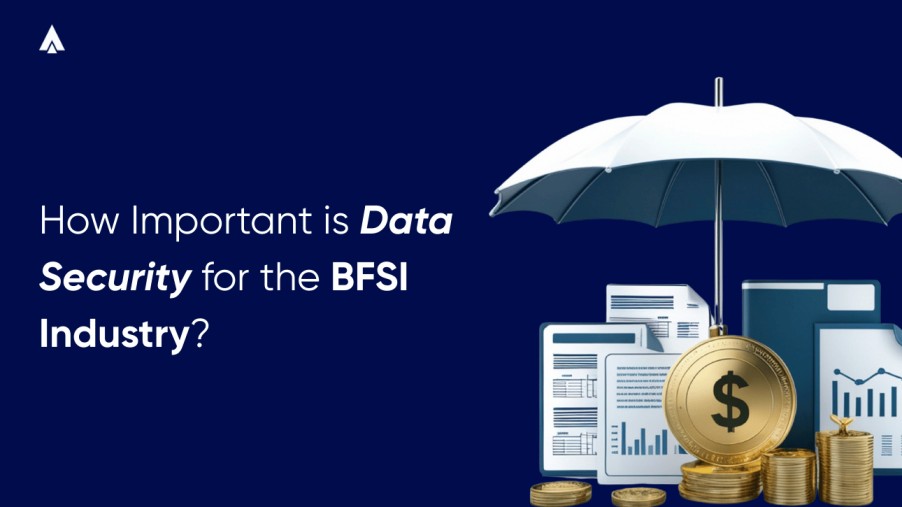
In 2024, the average cost of a data breach in the financial sector reached $6.08 million, 22% above the global average across all industries. That number isn’t just a statistic. For leaders in financial data security, it represents something far more tangible.
It can be the cost of a single phone call where an agent reads out a card number to the wrong person. It might stem from a poorly configured contact center platform. In some cases, that platform logged sensitive authentication data it never should have stored.
Financial data security is no longer a concern that lives exclusively in the IT department. It lives in your contact center queues, your chat transcripts, your voice recordings, and CRM integrations. Every interaction where a customer shares account details, verifies their identity, or processes a payment is a potential exposure point, and regulators are watching closely.
In this blog, we will discuss why you need to start talking about financial data security, what the regulatory landscape looks like today, and where the real vulnerabilities tend to hide.
Read on.
What Is Financial Data Security?
Data security involves all the processes and measures used to protect digital information from unauthorized access, misuse, theft, or destruction. Within the financial services industry, this means securing highly sensitive data, including:
- Personally Identifiable Information (PII): Details such as names, home addresses, Social Security numbers, and other identifying records.
- Financial Information: Bank account numbers, credit card data, loan records, and related financial details.
- Transaction Records: Documentation of payments, transfers, purchases, and other financial activities.
In financial services, data security goes beyond defending against cybercriminals. It also involves ensuring information is managed with regulatory compliance and is available only to properly authorized individuals.
Why is Financial Data a Prime Target?
Financial institutions handle a uniquely valuable mix of personally identifiable information (PII), payment card data, transaction histories, and authentication credentials. When that data falls into the wrong hands, the consequences are immediate and concrete. Your customers can face identity theft, fraudulent transfers, and account takeovers.
Financially motivated attacks account for a majority of all cybercrime activity. The financial sector is also one of the most impersonated in phishing campaigns. This makes your BFSI institution a constant target for social engineering.
What’s worse?
This kind of attack doesn’t require breaking through a firewall, just tricking one customer service agent.
From a contact center perspective, the risk is amplified. Agents interact with customers across multiple channels including phone, email, and chat. Each channel carries its own data exposure profile. A phone call where a customer reads out their card number. An email thread that logs sensitive account details. A chat transcript stored indefinitely on an unsecured server. The surface area is wide, and standard security tooling rarely covers all of it.
What Financial Data Security Compliance Actually Demands?
One of the most significant challenges for financial services organizations is that financial data security compliance isn’t governed by a single framework. It’s a layered, overlapping set of regulations that vary by geography, transaction type, and company structure. Getting it wrong in any one of these areas can be expensive.
Achieving business communication compliance requires understanding every regulatory layer that touches how your teams communicate, record, and store customer data. Here is a practical view of the regulatory landscape that you need to understand:
| Regulation | What It Covers | Penalty for Non-Compliance |
| PCI DSS | Protects cardholder data across any entity processing card payments. Directly relevant to contact centers that handle phone or chat-based payments. | Up to $100,000/month in fines; loss of card processing rights |
| GDPR | Governs personal data handling for EU residents. Applies to any financial firm with EU customers, including call recording consent and data retention. | Up to €20 million or 4% of global annual revenue |
| GLBA (Gramm-Leach-Bliley) | Requires US financial institutions to explain data-sharing practices and protect non-public personal financial information. | Up to $100,000 per violation; up to 5 years imprisonment for executives |
| SOX (Sarbanes-Oxley) | Mandates data integrity and audit trails for US publicly traded companies’ financial reporting systems. | Fines and up to 20 years imprisonment for executives |
| CCPA | Grants California residents rights over their personal data, including access and deletion requests. | Up to $7,500 per intentional violation |
What makes financial data security compliance particularly demanding is the overlap between these frameworks. A UK-based financial institution processing card payments for EU customers while listed on a US exchange could simultaneously be subject to PCI DSS, GDPR, GLBA, and SOX. Each regulation has distinct requirements around data retention, access controls, breach notification timelines, and audit trails.
For contact center leaders, the most immediate implication is around call recordings, transcript storage, and agent access to customer account data. These are areas where multiple regulations intersect and where non-compliance can go undetected for months.
Regional Compliance Considerations: What Financial Institutions Need to Know
For financial institutions operating in India, compliance obligations extend to telecommunications regulations as well. The 160 code in India refers to the numeric series designated by the Telecom Regulatory Authority of India (TRAI) for service and transactional calls made by businesses.
Using the correct dialing series is not optional. It directly affects your outbound customer communication compliance with TRAI guidelines, and their likelihood to be answered or flagged as spam.
This regulatory requirement has direct implications for contact center infrastructure. You have to ensure your telephony setup supports compliant outbound calling under the correct number series.
Local telecom compliances like the 160 framework, end-to-end encryption, and access controls must be non-negotiable criteria while evaluating the best phone system for banks. Systems that cannot configure outbound call routing per TRAI requirements create both regulatory exposure and operational risk.
Where Data Breaches Actually Start in Financial Contact Centers?
The majority of security-related conversations in financial services are often around perimeter defense like firewalls, DDoS protection, and endpoint security. These matter. But for contact centers, the most frequent exposure points are operations, not infrastructure.
Here is where risk tends to accumulate in day-to-day operations:
1. Verbal Card Data Collection
When agents take card numbers verbally, those numbers are captured in call recordings. Standard pause-and-resume recording controls are frequently missed under call pressure, and a single recorded CVV can constitute a PCI DSS violation.
2. Unmanaged Data Across Channels
Omnichannel contact centers handling customer interactions via phone, chat, and email create multiple data repositories. Without unified security policies across channels, sensitive information can end up in unmonitored transcript stores or third-party integrations.
3. Insider Threats
Not all threats are external. Agents with access to customer financial records can misuse that access, whether intentionally or through negligence. Insider risks are often more difficult to detect and can cause significant financial and reputational damage compared to many external threats.
4. Third-Party and Integration Risk
Contact center platforms often integrate with CRMs, payment gateways, ticketing systems, and analytics tools. Each integration point creates a data flow that may not meet the same security standards as the core platform. Third-party connections can expand the attack surface and introduce vulnerabilities outside the organization’s direct control.
5. Remote Agent Environments
The shift to distributed workforces expanded the attack surface considerably. Agents working from personal networks on personal devices create exposures that office-based controls cannot address.
What Strong Financial Data Security Looks Like at the Platform Level
When you look at how the risks mentioned above show up in everyday operations, it changes how you think about infrastructure decisions. For sales and support leaders evaluating contact center platforms, financial data security compliance isn’t something to think about later. It’s a core part of the buying decision.
The right call center solutions should help you reduce operational risk in these day-to-day workflows without adding friction to the customer experience.
Here are the key security capabilities worth examining in your next omnichannel contact center solution:
1. DTMF tone masking
Instead of asking a customer to read their card number out loud (and risking that number ending up in a recording), DTMF tone masking lets them enter it through their keypad. The tones are suppressed or replaced before they ever reach the agent screen or the call recording.
From a compliance standpoint, this is one of the simplest and most reliable ways to reduce PCI scope for phone payments. It removes human error from the equation and dramatically lowers the risk of accidentally storing sensitive card data.
2. End-to-end encryption
Encryption shouldn’t be limited to just one part of the interactions. Data needs to be protected both while it’s moving (in transit) and while it’s stored (at rest). That includes call recordings, chat transcripts, CRM integrations, and any customer financial data housed on the platform. Strong, up-to-date encryption standards ensure that even if data is intercepted or accessed improperly, it remains unreadable and unusable.
3. Role-based access controls (RBAC)
Not every agent needs full visibility into a customer’s financial profile. With proper role-based access controls, agents only see the specific data required to resolve the issue in front of them. Nothing more. This “least privilege” approach limits unnecessary exposure and reduces insider risk. Just as important, detailed audit logs should track who accessed what and when, so there’s a clear accountability trail if questions arise.
4. Multi-factor authentication (MFA)
Passwords alone aren’t enough anymore, especially in distributed, remote contact center environments. Multi-factor authentication adds another layer of protection to the structure. It demands something the user knows (like a password) plus something they have or are (such as a code or biometric factor).
For financial systems and remote access in particular, MFA is now an expectation under modern regulatory frameworks. Your contact center platform should treat it as standard, not optional.
5. Data minimization and retention controls
The safest sensitive data is data you don’t keep longer than necessary. Your contact center platform should allow you to configure how long recordings, transcripts, and customer records are retained. When data reaches the end of its required lifecycle, it should be securely deleted. And if a customer exercises their right to erasure under regulations like GDPR, the system should support that request without manual workarounds.
Taken together, these controls shift security from being reactive to being built directly into the way your contact center operates every day.
The Role of Voice Technology and Transcription in Secure Contact Centers
Beyond access controls and encryption, you also need to think about how your voice data is captured and processed in real time. If you run a modern contact center, you likely rely on voice streaming. It is the live transmission of audio to speech analytics engines, quality monitoring tools, or AI-powered agent assist systems.
Voice streaming gives you powerful real-time capabilities. But it also creates a continuous flow of data that you are responsible for encrypting and managing according to the applicable consent laws.
Transcription is closely connected to this. If you use call center transcription software, you are converting spoken conversations into text records that can be stored, searched, and analyzed. For BFSI institutions, this is extremely useful for quality assurance, dispute resolution, and audit readiness.
At the same time, if those transcripts contain account numbers, authentication details, or card data, you must protect them to the same standard as your original recordings. That means enforcing strict access controls, setting clear retention limits, and ensuring secure deletion. If your transcription tools are not configured to automatically redact sensitive data before storage, you may be introducing compliance risk without realizing it.
If you operate at scale in the BFSI sector, you cannot evaluate these capabilities in isolation. You should assess them as part of a broader infrastructure decision.
Your enterprise call center platform should bring together voice streaming, transcription, and compliance controls within a unified security framework. It should not rely on stitching together separate vendors. When you combine disconnected tools, each one can introduce its own data handling risks.
When your transcription pipeline, voice infrastructure, and access controls all operate under a single governance model, you create a more consistent security posture. This significantly reduces the gaps where sensitive financial data can slip through.
Bottom Line
Financial data security is not an abstract infrastructure concern. It shows up in decisions that you as a leader make regularly and is increasingly becoming a criterion in those decisions.
When evaluating contact center solutions, the questions worth asking include:
- Does the platform support PCI DSS-compliant payment flows natively, or does compliance require custom configuration?
- How are call recordings and chat transcripts stored, and can retention periods be configured per regulatory requirements?
- What audit capabilities exist for agent access to customer account data?
- How does the platform handle data subject access requests under GDPR?
These questions are not just for IT or legal. They affect agent workflows, customer experience design, and operational risk, all of which sit squarely within sales and support leadership remit.
FAQs
For financial institutions and contact centers handling payment data, several frameworks typically apply: The exact mix depends on geography, customer base, and the type of financial services provided.
Testing environments are often overlooked risk areas. Best practices include: In short, test data should be treated with the same security standards as production data — or replaced entirely with safe alternatives.
The consequences typically extend far beyond immediate financial loss. They can include: In financial services especially, trust erosion can have long-term revenue implications that far exceed the initial incident cost.
When deployed responsibly, AI can strengthen security by: AI doesn’t replace governance or human oversight, but it significantly reduces detection time and improves visibility across complex systems.
A structured incident response is critical: A breach response plan should be documented and rehearsed long before it is needed.
At minimum: In practice, compliance should be treated as an ongoing process, not a once-a-year event.