


 5 mins read


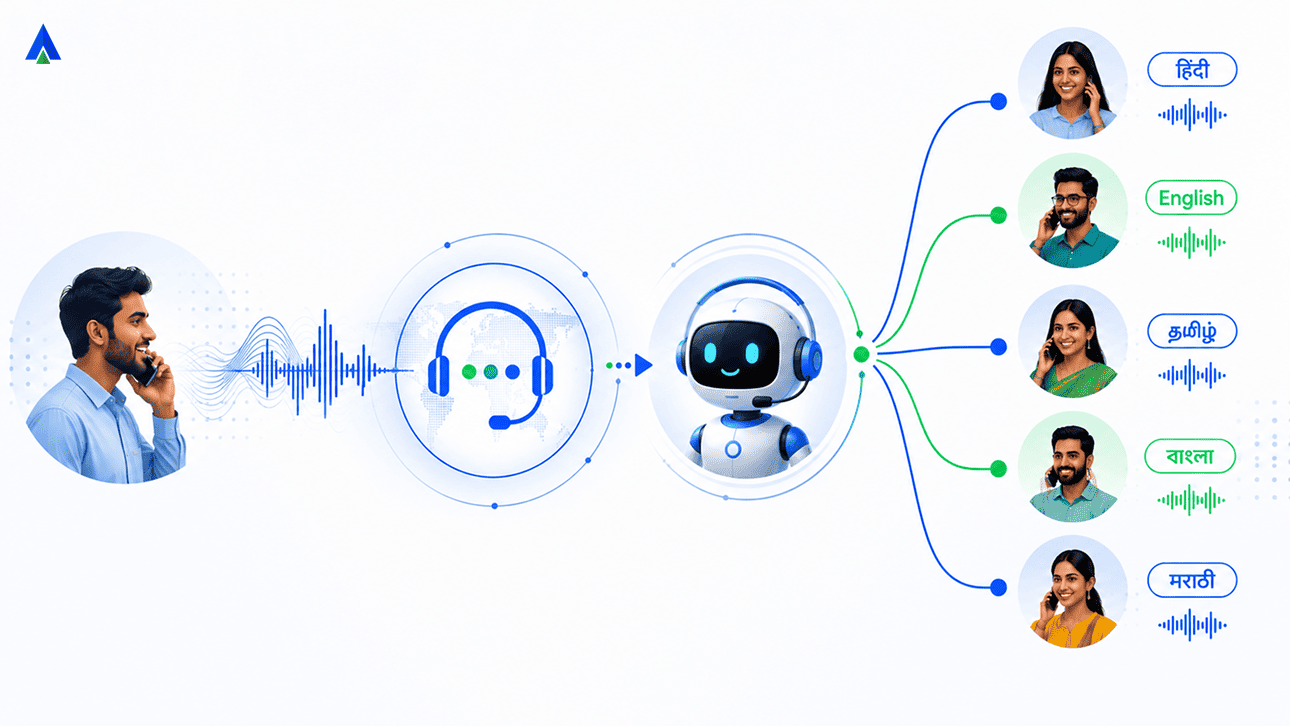
The biggest driver of COD return-to-origin rates in Indian e-commerce is not the technology powering your confirmation call. It is the COD confirmation voice bot script itself.
India’s e-commerce ecosystem runs on cash on delivery. A significant share of those COD shipments becomes return-to-origin events versus a tiny fraction for prepaid orders. For an operations team processing thousands of COD orders a month, that translates to hundreds of failed deliveries.
Each of the failures carries reverse logistics costs, wasted acquisition spend, and a contribution margin loss that compounds at scale.
Voice bots built for automated COD order confirmation calls solve the cost equation. What they do not automatically solve is the effectiveness equation. Operations teams that deploy a bot and see no improvement in RTO rates almost always share one characteristic: they shipped a generic script.
This playbook covers how to design a script that actually reduces your RTO rate, section by section, decision by decision.
Why Does Script Design Matter More Than the AI?
The AI handles speech recognition and response generation. It cannot improve a flawed question or fill a gap in fallback logic. Script quality determines your confirmation rate. AI quality determines how natural the conversation sounds. Both matter, but voice bot script design is the variable the operations team controls directly. Every percentage point of confirmation rate improvement driven by script quality translates directly into RTO reduction.
Consider two opening lines for a COD confirmation call:
- Generic: “Hello, I am calling to confirm your order. Please say yes or no.”
- Performant: “Hello Neha, this is an automated call from Zest Apparel about your COD order #ZA-84291. Is this Priya?”
The AI executes both with equal technical accuracy. The second version produces measurably higher answer and completion rates because it uses the caller’s name, names the brand, and asks a simple identity question rather than jumping straight to confirmation.
Industry data attests the leverage: confirmation of COD orders helps reduce RTO rate from 25% down to 12%. That 13 percentage-point gap is almost entirely a function of script quality, not AI capability.
The same principle applies to fallback logic (the instructions the script gives the bot when a caller’s response is unclear or unrecognized). A single-layer fallback (“I didn’t catch that. Please say yes or no” repeated twice before the bot ends the call) produces significantly higher hang-up rates than a multi-phrasing fallback:
- First re-prompt: “I didn’t catch that. Would you like the delivery to go ahead? Please say yes or no.”
- Second re-prompt: “If you’d like delivery to proceed, press 1. To cancel or speak with our team, press 2.”
Switching from a spoken re-prompt to a keypress option on the second attempt recovers a measurable share of calls that would otherwise terminate unresolved. This is voice bot script design, not AI engineering. It is within the direct control of every operations manager deploying a COD confirmation workflow.
What Should a COD Confirmation Voice Bot Script Ask?
A high-performing COD confirmation voice bot script asks exactly three things: identity confirmation, order intent confirmation, and address verification. The sequence matters as much as the questions. Each step acts as a natural filter before the next.
Callers who disconnect during identity confirmation are statistically more likely to RTO regardless of what the bot says next. Anything beyond these three steps adds call length without improving confirmation rates.
Here is the four-step structure that consistently outperforms generic templates:
Step 1: Identity confirmation (0–15 seconds)
“Hello Neha, this is an automated call from Zest Apparel about your COD order #ZA-84291. Is this Neha?” This frame establishes legitimacy, reduces hang-ups among genuine buyers, and filters wrong numbers before the bot proceeds to confirmation.
Step 2: Order intent confirmation (15–45 seconds)
“You have a COD order worth ₹1,499, scheduled for delivery on [Date]. Would you like us to go ahead?” Describe the order by category and value only, not a full product name. Brevity keeps calls under 90 seconds, the threshold above which completion rates begin to fall sharply.
Step 3: Address verification (45–75 seconds)
“The delivery address on record is [Address]. Is that still correct?” If the address is incorrect, route immediately to a human agent. Do not attempt to capture a corrected address via voice transcription. Errors on Indian addresses, particularly in tier 2 and tier 3 markets, create more failed deliveries than they prevent.
Step 4: Confirmation close (75–90 seconds)
“Your order is confirmed. You’ll receive an SMS with delivery details shortly. Thank you.” Trigger an SMS dispatch immediately after the close.
The 90-second ceiling is not arbitrary. It reflects the point at which buyers in high-COD-volume markets (particularly those receiving multiple confirmation calls per week) disengage from the call. Calls above this threshold consistently show lower confirmation rates regardless of AI sophistication.
Suggested Reading: Auto Attendant Script Dos and Don’ts
How Should a COD Confirmation Script Handle Escalation?
A COD confirmation bot should escalate in three situations:
- When the caller explicitly requests a human agent
- When the bot fails to capture a response after two re-prompts
- When the caller raises a concern the script cannot resolve such as a wrong product, a pricing dispute, or an address correction.
Escalation is not a failure state. An escalation that transfers the right context to a human agent is a better outcome than a bot that tries to handle every edge case and fails silently.
The most common voice bot escalation design mistake is treating escalation as a last resort. Operations teams that add escalation only as a final-fallback condition end up with agents receiving transferred calls with no context and no order data. This forces the agent to restart the entire conversation.
A properly designed escalation has three components:
- Defined trigger conditions
Specify the exact conditions that fire an escalation, not vague “failure” states:
- Caller says “agent,” “human,” “help,” or a recognized variant
- Bot fails to confirm identity after two attempts
- Caller disputes the product category or order amount
- Caller requests an address change (Always route. Do not attempt voice capture)
- Call exceeds 120 seconds without reaching the confirmation close
- Context handoff
When the bot escalates, it must pass the caller’s name, order number, what was confirmed or disputed, and the reason for escalation to the receiving agent. Without this, the agent repeats the process from scratch.
Platforms like Acefone AceX surfaces this call summary directly in the agent workspace via Contact Center Studio integration. This happens before the transferred call connects.
- Escalation disclosure
Inform the caller before transferring: “I’m connecting you with a team member who can help with that. One moment.” A silent transfer increases hang-up rates during handoff and undermines trust in the automated process overall.
How to Design COD Confirmation Script for E-Commerce Ops?
Here is how you can ensure that the script you design for your e-commerce operations turns out to be optimal:
- Design the script
Use the four-step structure: identity, intent, address, close, to build a script. Set escalation trigger conditions. Define fallback phrasing for each re-prompt level, ending with a keypress option on the second re-prompt. - Run the AI Evaluator
Run synthetic test calls against the live script configuration, identifying misrecognition failures, false confirmations, and premature escalation patterns before any real customer is reached. - Deploy and monitor
Track confirmation rate, escalation rate, and RTO correlation for the first 30 days. Adjust fallback logic based on misrecognition patterns that emerge from real production call data.
This design-test-refine cycle separates operations teams that achieve 10–15% RTO reduction from teams that deploy a bot, observe no measurable change, and conclude that ecommerce automation does not work for their customer base. The difference is almost always the script, not the AI.
Ready to see Acefone AceX run a live COD confirmation call against your actual script, before any real customer hears it?
FAQs
Target 60–90 seconds. Calls under 60 seconds typically skip the address verification step, leaving confirmations incomplete. Calls above 90 seconds see measurably lower completion rates as buyers disengage, particularly in high-COD-volume segments where buyers receive multiple confirmation calls per week.
Yes. Beyond regulatory alignment with TRAI’s evolving guidelines on automated call transparency, disclosure improves confirmation rates. Callers who realize mid-call that they are speaking to a bot often disconnect or dispute the confirmation afterwards.
Both channels have a role. WhatsApp confirmation performs well for urban buyers with high message read rates. Voice confirmation has higher reach in tier 2 and tier 3 markets, where app notification fatigue is lower and voice remains the default communication channel.
For low-value, low-risk orders, the cost of automated confirmation may exceed the value of the RTO prevented. If your average COD order value is under ₹300 and the historical RTO rate for that SKU category is below 8%, confirmation automation will not improve contribution margins. Segment your COD order base by order value, geography, and historical RTO rate before applying automation uniformly.