


 5 mins read


Here is a call your agents are going to take today. And tomorrow. And the day after.
“Hi, I placed an order three days ago. Can you tell me where it is?”
It takes about two minutes. The agent pulls up the order, reads back the status, confirms the delivery window, and hangs up. Then it happens again. By the time the shift ends, a meaningful part of the day has gone to answering the same question with slightly different names attached.
This is not a staffing problem. It is a structural one. And it does not get better by hiring more people to do the same thing faster.
Why Do So Many Order Tracking Calls Still Reach a Human Agent?
The short answer: because the alternative is bad.
Legacy IVR systems were built to deflect calls, not serve customers. They present menus. They ask callers to press a number. They require customers to know what category their problem falls into before anyone has heard the problem. Most people who call with a simple order status question bail out before they get an answer. They press 0. They get through to an agent.
This is not irrational behavior. It is a rational response to a system that was not designed to help.
The result is predictable. Agents absorb the call volume that IVR was supposed to handle. Not because those calls are complex. Because the IVR made reaching a person feel faster.
What Does Agent Burnout Look Like?
It does not usually look like someone walking out. It looks like something slower and harder to measure.
Response times creep up. Quality scores drift. The agent who used to resolve calls on the first try starts escalating more. The team that was hitting 85% CSAT is sitting at 78% and nobody is sure why.
Attrition in customer support is consistently high across the industry. Contact centers rank among the highest for staff turnover, and repetitive call monotony is one of the most cited reasons agents leave. When a capable person spends most of their shift reading out tracking numbers, they know they are not being used well. That awareness tends to show up in their work.
This is the real cost of unautomated order tracking volume. It is not the Rs. 150 cost-per-call. It is what happens to your team over three months of handling calls that a system should be handling.
Where Does an Order Tracking Voice Bot Fit in?
An AI voice bot for order tracking does something IVR cannot: it holds a real conversation.
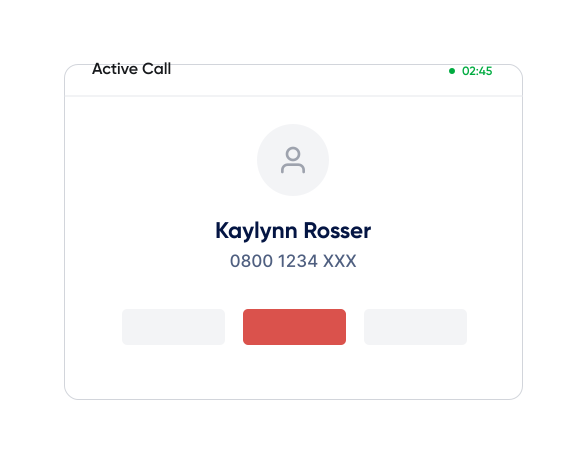
A customer calls. The bot greets them by name if the number is recognized. It asks what they need. The customer says, “I want to know where my order is.” The bot pulls the order status from the CRM in real time and responds: your order is out for delivery today, the estimated window is between 2 PM and 6 PM, and you will get an SMS when the driver is ten minutes away.
That is the whole call. No menu. No hold time. No agent.
For more specific queries, a customer asking about a particular order ID, checking whether an exchange request was processed, or confirming a new delivery date after a failed attempt, the bot handles those too. The customer speaks naturally. The bot retrieves data and responds.
This is different from a press-1 system in a meaningful way. The customer does not need to know what category their problem fits into. They just talk. The bot understands.
AceX, Acefone’s voice bot platform, supports exactly this workflow. Operations managers configure an inbound agent for order tracking, connect it to the CRM via tool calling, and deploy it without engineering support.
During a live call, the bot fetches real-time order data, delivers the update, and handles follow-up questions. If the call goes somewhere the bot cannot handle, it transfers to a human agent with the full call context already loaded.
What Should an AI Voice Bot Handle?
This matters. A voice bot that tries to do too much damages customer trust.
Good fit for automation:
- Order status queries
- Delivery window confirmation
- ETA updates after a delay or failed delivery
- Rescheduling a delivery attempt
- Confirming whether a return or exchange request is in progress
Not a good fit:
- Disputed deliveries marked as delivered but not received
- Damaged or incorrect item complaints
- Refund disputes requiring investigation
- Any situation where a customer is upset and the resolution requires judgement
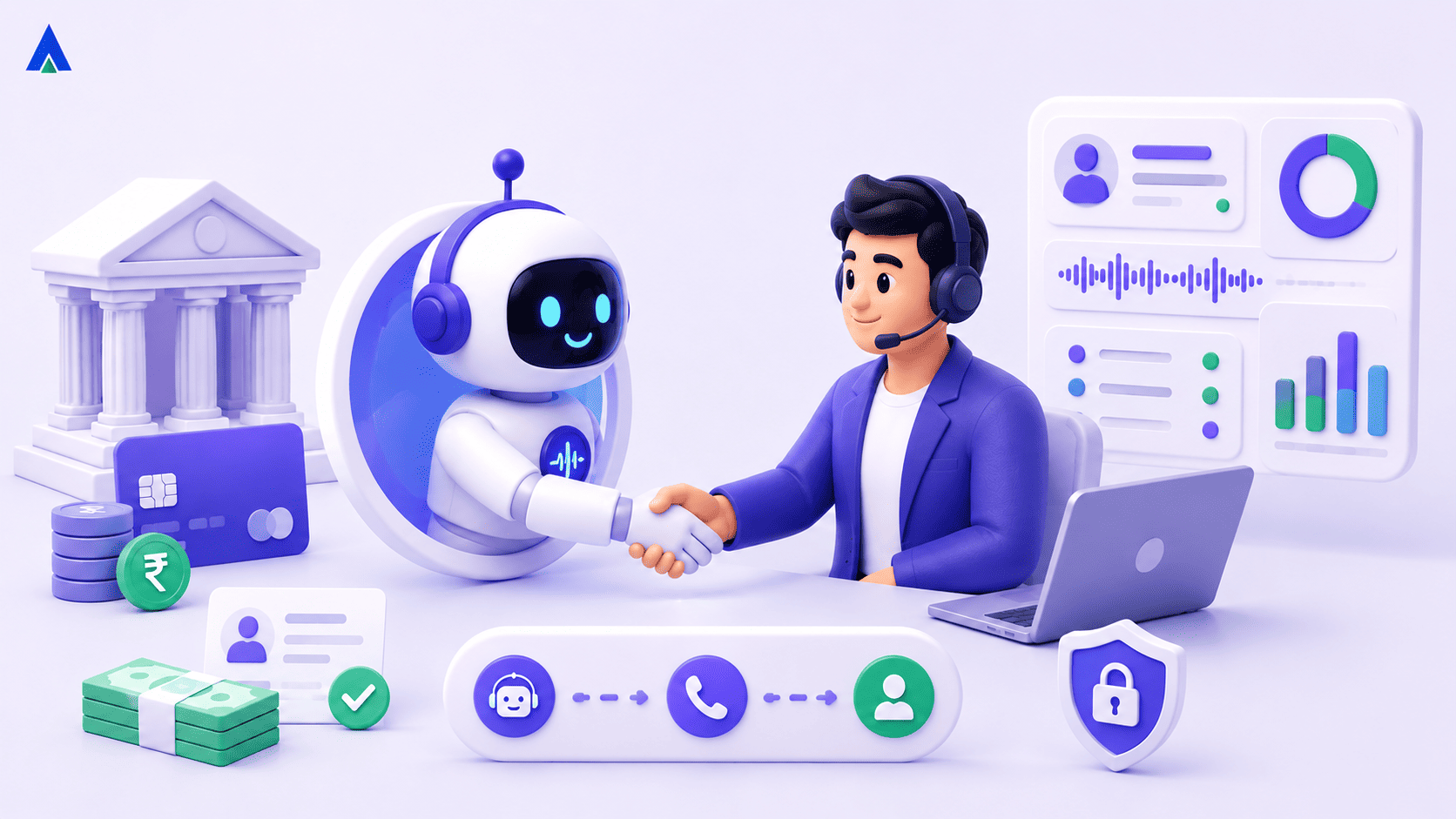
The point of a voice bot is not to prevent customers from reaching a human. It is to make sure that when a customer does reach a human, that agent has the time and energy to actually help. The bot handles the volume that does not need human judgement. Humans handle the volume that does.
Warm transfer is part of the design, not a fallback. An effective voice bot knows when to stop and hand over.
How Do Operations Managers Typically Get Started?
The most practical starting point is the inbound order status call. Not because it is the easiest, but because it is the highest-volume repetitive query for most e-commerce teams.
Define the scope narrowly at first. What questions should the bot answer? What data does it need to pull? What should it do if it cannot answer? Map this before configuring anything.
Test before going live. AceX includes built-in AI evaluators that let operations managers run simulated calls across multiple scenarios before a single real customer hears the bot. This step is not optional. A voice bot that gives wrong order statuses is worse than no voice bot.
Once the inbound bot is running, measure what changes. Look at the volume of calls reaching agents. Look at handle time on the calls that still come through. Look at whether agents are spending more time on complex queries. These signals tell you whether the configuration is working.
What Does the Team Actually Gain with Automation?
The obvious answer is time. Agents get back hours that were going to routine status calls.
The less obvious answer is quality. When agents are not exhausted by repetition, they are better at the calls that actually require them. A customer with a damaged-goods complaint handled by an engaged, focused agent has a different experience than the same complaint handled by someone on their fortieth order-status call of the day.
Automation does not replace the human layer in customer support. It protects it.
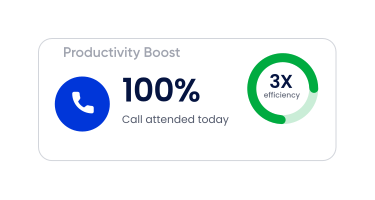
Operations managers who have deployed order tracking voice bots consistently report two outcomes: a meaningful drop in inbound call volume to agents, and an improvement in how agents describe their own working day. Both matter. One shows up in cost-per-call metrics. The other shows up in attrition and quality scores six months later.
The Operational Case is Straightforward
WISMO calls are not going away. E-commerce volumes are not shrinking. The question is not whether to handle order tracking calls. It is whether those calls should be handled by people who could be doing something harder and more valuable.
A voice bot does not care how many order-status calls come in during peak season. It does not get tired at hour six. It does not escalate unnecessarily because the queue is long.
Your agents do. That is not criticism. It is the reason you should let the bot handle what the bot can handle.
If your team is absorbing call volume that does not require human judgement, the problem is with the workflow, not the team. AceX lets operations managers fix the workflow without waiting for an engineering team. Configure an inbound order tracking agent, test it, deploy it, and measure what changes.
FAQs
AI tools help e-commerce stores by automating operations, personalizing product recommendations, analyzing customer behavior, and optimizing pricing strategies. They improve inventory management, detect fraud, and enhance marketing through targeted campaigns. AI-powered chatbots and analytics boost customer engagement, streamline workflows, and increase conversion rates, helping businesses scale efficiently and competitively in dynamic markets.
An AI voice agent is not always better than a chatbot; it depends on use cases. Voice agents offer hands-free, natural interaction, ideal for calls or accessibility. Chatbots excel in text-based, quick queries and multitasking environments. Businesses often combine both to provide flexible, efficient, and user-friendly customer support across different communication channels
Yes, AI systems can support multiple languages, enabling seamless communication with international customers. They translate queries, provide localized responses, and assist with shipping details, policies, and tracking. Multilingual AI improves customer experience, reduces misunderstandings, and helps businesses expand globally by catering to diverse audiences efficiently and consistently across different regions and languages.
AI is highly effective in recovering abandoned carts by analyzing user behavior and sending personalized reminders through emails, chatbots, or notifications. It can offer discounts, recommend similar products, and address concerns in real time. These targeted strategies encourage customers to complete purchases, improving conversion rates and reducing lost revenue for e-commerce businesses.
AI will not completely replace customer support teams but will augment their capabilities. It handles repetitive queries, allowing human agents to focus on complex, emotional, or high-value interactions. This collaboration improves efficiency, reduces workload, and enhances service quality, creating a balanced approach where AI and humans work together to deliver better customer experiences.