




TL;DR
- Virtual numbers run on licensed telecom infrastructure, so provider compliance is not optional.
- Coverage, activation speed, transparent pricing, and integrations separate serious providers from resellers.
- A compliance-first Indian provider protects businesses from blocked traffic, DLT issues, and data-handling gaps.
- Shortlist on compliance first, then match the provider to your call volume, location coverage, and use case.
- Use the checklist below before signing any virtual number platform contract.
Choosing a virtual number providers feels simple until compliance questions surface mid-negotiation. Ops and IT teams often discover too late that a provider lacks proper DoT licensing. That gap can mean blocked calls, DLT suspension, or a failed audit.
This guide compares virtual number providers in India. We have compared coverage, pricing, and compliance. So, if you are evaluating the full telephony stack rather than numbers alone, read on.
What Is a Virtual Number and Why Do Businesses Need One?
A virtual number is a cloud-hosted phone number that routes calls over the internet instead of a physical SIM. It lets a business answer, route, and record calls from anywhere. Indian businesses need one to run multi-location teams, track campaign performance, and stay reachable without provisioning hardware at every office.
DID (Direct Inward Dialing): a phone number assigned to the cloud that connects directly to an agent, IVR, or team, without a physical line.
Virtual numbers in India come in three main types: local numbers with a city area code, toll-free numbers customers can call for free, and vanity numbers with a memorable alphanumeric sequence. Which type you need depends on whether you are building local trust, national reach, or brand recall.
For an ops manager, the real value is control. You decide which agent takes a call, what happens after hours, and how every conversation gets recorded for audit.
Virtual Number Types: Quick Comparison
| Number type | Best for | Business value | Example use case |
| Local number | City or regional trust | Looks familiar to callers in a specific circle | Delhi sales line or Mumbai support number |
| Toll-free number | National customer access | Customers call without paying call charges | Support helpline or service desk |
| Vanity number | Brand recall | Easy-to-remember number for ads and packaging | Campaign number for a gifting or retail brand |
Who Are the Best Virtual Number Providers In India in 2026?
The best providers combine pan-India Direct Inward Dialing (DID) coverage, DoT-licensed infrastructure, transparent per-minute pricing, and dependable activation support. Weak providers resell capacity from someone else’s licence, which slows KYC and creates compliance risk you inherit later.
We see three broad categories in the Indian market today:
- Global VoIP resellers: Strong outside India, but coverage often stops at a handful of metro circles.
- Generic SaaS number aggregators: Fast signup, but pricing hides add-on charges and compliance documentation is thin.
- Compliance-first Indian providers: Work directly with DoT-licensed telecom partners and publish clear per-number rates.
Acefone sits in the third category. It provisions numbers through licensed telecom partners, so every DID you activate is traceable and audit-ready from day one.
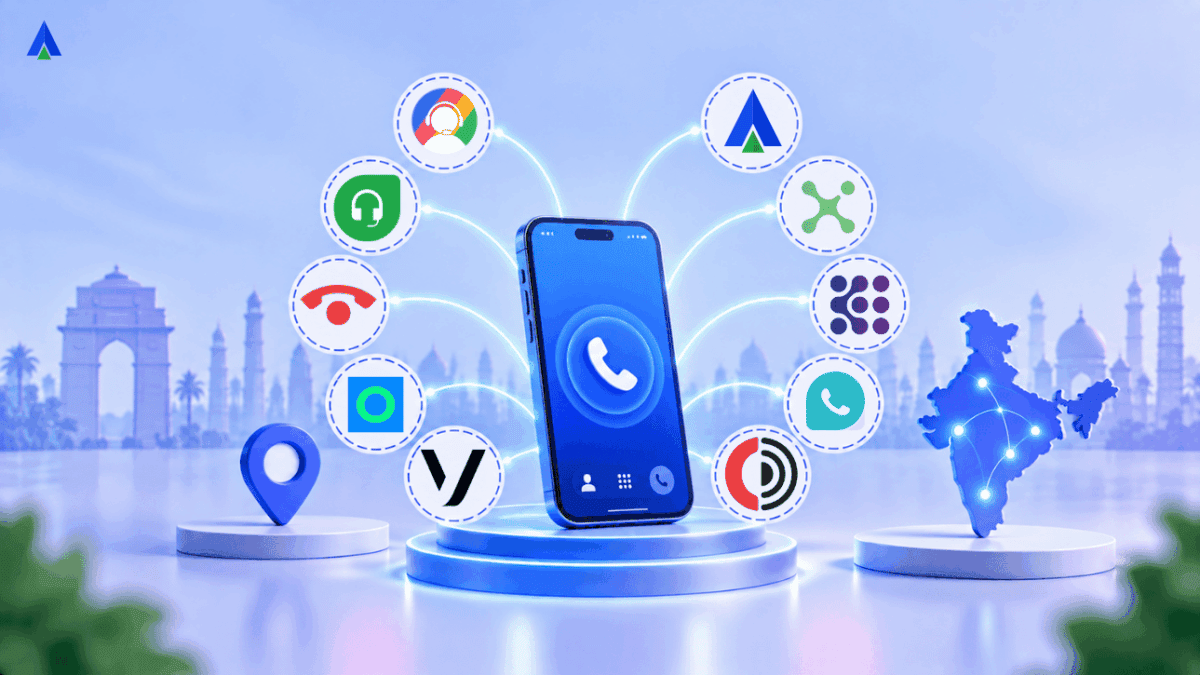
Top 10 Virtual Number Providers and Platforms in India
| Provider | Best for | Key strength | Fit |
| Acefone | Compliance-first businesses | Local, toll-free, vanity numbers via licensed partners | Best for Indian teams that want audit-ready setup |
| Exotel | High-volume enterprises | Calling APIs, number masking | Best for API-led teams and marketplaces |
| Knowlarity | Mid-market automation | IVR and AI voice bots | Best for teams needing automation |
| MyOperator | SMBs running ads | Call tracking for campaigns | Best for marketing-led SMBs |
| CallerDesk | Startups and D2C brands | Quick setup for small teams | Best for small support and sales teams |
| Vonage | Multinationals with India teams | Global cloud phone system and APIs | Best for global standardization |
| Ozonetel | Large contact centres | Full contact centre stack | Best for enterprise contact centers |
| TeleCMI | Developer teams | API-first calling | Best for engineering-led workflows |
| Freshdesk | Support teams on Freshworks | Calling built into the helpdesk | Best for Freshworks users |
| CallHippo | Global teams | Indian plus international numbers | Best for international calling teams |
1. Acefone

Acefone provisions local, toll-free, and vanity numbers through DoT-licensed telecom partners. Every DID you activate is traceable and audit-ready from day one. Plans start from ₹1,599 per month, including unlimited calling and one DID.
For businesses comparing Virtual Number Providers In India, Acefone’s strength is that the number is not treated as an isolated asset. It sits inside a broader cloud telephony environment where teams can configure IVR flows, route calls by department, business hours, or agent availability, record conversations, and review call activity from one place. That makes it useful for sales, support, collections, service desks, and multi-location teams that need one number without tying calls to one physical office.
Acefone is also a stronger fit when compliance and scale matter more than only quick signup. Because numbers are provisioned through DoT-licensed telecom partners, businesses get a cleaner audit trail for KYC, DID ownership, and call handling. Teams can start with one DID and expand into toll-free numbers, vanity numbers, IVR, contact center workflows, API-led calling, or number masking as call volumes grow.
Best fit: Indian businesses that want a compliance-first virtual number providers with local, toll-free, and vanity number options, built-in routing, call recording, and a clear upgrade path into a full cloud communication stack.
2. Exotel

Exotel is built for high-volume, API-led calling. Its APIs support number masking and programmable call flows. Marketplaces and product teams use it to embed calling into apps.
3. Knowlarity

Knowlarity is one of India’s older cloud telephony names. It offers virtual numbers with IVR, call routing, and AI voice bots. Mid-market teams use it for automation without enterprise complexity.
4. MyOperator

MyOperator targets Indian SMBs moving off legacy PBX setups. It bundles virtual numbers with IVR and call tracking. Marketing teams use it to link calls to Google Ads campaigns.
5. CallerDesk

CallerDesk targets Indian startups, D2C brands, and service businesses. It pairs virtual numbers with IVR, call tracking, and CRM integrations. Small teams use it for fast setup without enterprise overhead.
6. Vonage

Vonage is a global business communications brand, now owned by Ericsson. It offers a cloud phone system alongside voice APIs for developers. It fits multinationals that want Indian teams on the same platform as other regions.
7. Ozonetel

Ozonetel sells a complete contact centre stack, not just a number. It suits operations running large agent teams with diallers and routing. Pricing is usually custom, based on seats and call volume.
8. TeleCMI

TeleCMI is API-first. It suits developer teams building calling into their own product. Expect engineering effort rather than plug-and-play setup.
9. Freshdesk

Freshdesk Contact Center is Freshworks’ cloud calling product, formerly called Freshcaller. It connects calls directly to tickets in the Freshdesk helpdesk. It suits support teams that want calls and tickets in one place.
10. CallHippo

CallHippo suits businesses selling beyond India. Teams get Indian numbers alongside international numbers in one dashboard. Indian coverage centres on major metro cities.
What Compliance Rules Apply to Virtual Number Providers In India?
In 2016, the government introduced the Unified License-Virtual Network Operator (UL-VNO) framework. It lets a licensed reseller deliver telecom services over a parent network operator’s infrastructure rather than building its own network. This is the licensing route a compliant virtual number provider must operate through.
For official context, refer to the Department of Telecommunications’ Unified License – VNO guidance, which explains that the UL-VNO framework enables eligible entities to provide telecom services without owning the underlying network infrastructure.
On the messaging and calling-rules side, TRAI’s TCCCPR framework governs commercial communications and consumer preference. For businesses, that means the provider should support DLT-aligned processes where commercial communication is involved.
There is a second layer beyond call routing: what happens to the data those calls generate. Call recordings and customer data captured through a virtual number count as personal data. Your provider’s storage, retention, access control, and consent practices should align with India’s data protection obligations as they phase in.
For your business, this means asking every shortlisted provider two direct questions. Are your numbers issued through a DoT-licensed VNO partner, with KYC and DLT registration handled end to end? And how does the provider handle call recording storage and consent? If a provider hesitates on either, that is your answer.
How Much Do Virtual Number Providers Charge in India?
Pricing typically combines a number rental fee with a per-minute call rate. Transparent providers publish both. Opaque providers bundle features into tiers that make true cost hard to calculate until your first invoice.
For reference, Acefone’s cloud telephony plans start from ₹1,599 per month, including unlimited calling and one DID number. Use that as a benchmark when a provider refuses to itemize its own quote.
Watch for these common hidden costs:
- Setup or activation fees charged separately from the monthly rental.
- Higher per-minute rates for calls outside the number’s home circle.
- Charges for call recording storage beyond a short retention window.
- API access priced as a separate add-on tier if you need to push call data into your own systems.
Ask for an itemized quote before you commit.
Virtual Number vs Traditional Landline: What Is the Difference?
A landline ties your business to one physical location and one hardware line. A virtual number routes calls through the cloud, so any agent, anywhere, can answer.
Landlines still work for a single fixed office with low call volume. But most growing teams outgrow that model fast. A virtual number lets you add agents and expand to a new city without laying out a single new wire.
The bigger difference is visibility. Landlines give you a dial tone and little else. Virtual numbers give you call logs, recordings, and routing analytics by default.

How to Choose the Right Virtual Number Platform
Score providers on five factors: DID coverage depth, pricing transparency, KYC and compliance documentation, activation speed, and integration support for your existing CRM or helpdesk.
Use this checklist while you shortlist:
- Confirm the provider works with a DoT-licensed telecom partner, not an unlicensed reseller.
- Ask for circle-by-circle coverage, especially if you operate outside metro cities.
- Request an itemized price sheet covering rental, per-minute rates, and add-ons.
- Check average KYC-to-activation time from recent customers, not marketing copy.
- Verify API and CRM integration support matches your existing stack, including whether a virtual number API is available if you need custom workflows.
How to Get a Virtual Phone Number in India
Getting a virtual number typically takes four steps: submit KYC documents, select your number and circle, configure call routing, and go live once the provider confirms activation.
- Submit KYC documents: Business registration or GST certificate, plus an authorized signatory ID.
- Choose your number and circle: Pick coverage that matches where your customers call from, or a toll-free or vanity number if brand recall matters more than local presence.
- Set up call routing: Configure IVR menus, business hours, and agent assignment rules.
- Go live: Most compliance-first providers activate within 48 hours of KYC approval.
IVR (Interactive Voice Response): an automated menu that routes callers based on the keys they press.
If you are switching from an existing number rather than starting fresh, most providers can port it across rather than issuing a new one, so customers keep dialing the number they already know. For a deeper product explainer, read Acefone’s guide on what a virtual phone number is and how it works.
A Real Deployment: Vanity Numbers for a Gifting Brand
One of Acefone’s long-time clients, a prominent Indian greetings and gifting brand, needed a communication system that built brand recognition while supporting national customer support. Acefone set them up with virtual numbers and number masking, replacing a fragmented, location-tied phone setup.
The client wanted a memorable, brand-aligned number customers would recall instantly, plus the ability to run support helplines that any customer, anywhere in the country, could call. Acefone delivered this through vanity numbers paired with call recording, a unified call management suite, number masking to protect agent privacy, and voicemail transcription.
The result: a single, brand-consistent number replaced scattered local lines, giving the client’s support team one place to manage every call and giving customers one number to remember. It is a direct illustration of how the right virtual number type, matched to the right compliance-backed provider, solves a coverage problem and a branding problem at the same time.
Conclusion: Which Virtual Number Provider Should You Choose?
Not every virtual number provider in India matches on coverage, pricing clarity, or compliance depth. Generic listings compare features. They rarely test whether a provider’s numbers trace to a DoT-licensed partner, or how that provider handles your data under India’s data protection framework.
Three things matter most: pan-India DID coverage, transparent per-minute pricing, and TRAI-aligned compliance you can prove in an audit. Compliance-first providers cost about the same as resellers. They just do not leave you exposed when telecom rules tighten again.
FAQs
Yes. Virtual numbers are legal when issued through a DoT-licensed telecom operator and used under TRAI’s commercial communication rules. The number itself is not the risk; an unlicensed provider behind it is.
Activation typically takes 24 to 48 hours after KYC approval with a compliance-first provider. Reseller-model providers often take 3 to 7 days due to indirect licensing checks.
A local number carries a city area code for regional presence. A toll-free number lets customers call free of charge. A vanity number uses a memorable alphanumeric sequence for brand recall.
Yes, in most cases. Porting keeps the number your customers already know while moving it onto the new provider’s infrastructure, though timelines vary by circle and current operator.
Yes. A single number can route to agents across cities, provided the provider offers circle-matched coverage. This is why coverage depth matters more than headline pricing.
Most providers require a company registration or GST certificate, plus proof of identity for an authorized signatory. Requirements can vary slightly by provider and number type.
Not always. A single-location business with very low call volume may not need cloud routing or analytics. Virtual numbers pay off once you have multiple agents or locations to coordinate.
The best virtual number platforms in India are the ones that combine licensed telecom infrastructure, transparent pricing, fast KYC activation, routing controls, call recording, and CRM or API integrations. Acefone, Exotel, Knowlarity, MyOperator, and Ozonetel are common names on Indian shortlists.


