


 5 mins read


Most voice bots in use today are sophisticated script readers. They listen to what a customer says, match it to a pre-written response, and reply. They do this well and at scale. But they cannot do anything. They can tell a customer their order is delayed. They cannot reschedule the delivery. They can confirm a COD order is in the system. They cannot cancel it or update the address.
That boundary between telling and doing is exactly what agentic voice bots and tool calling are designed to cross.
Let’s break down what tool calling is, how it works inside a live phone call, and why it changes what a voice bot can actually accomplish for your customers.
What Is an Agentic Voice Bot?
A standard voice bot follows a script. It is given a set of responses and branches. It navigates them based on what the customer says.
An agentic AI, by contrast, can independently analyze a situation, initiate actions, and make decisions to solve multi-step problems in real time. Applied to voice, this means a bot that does not just respond to what the customer says. It acts on it.
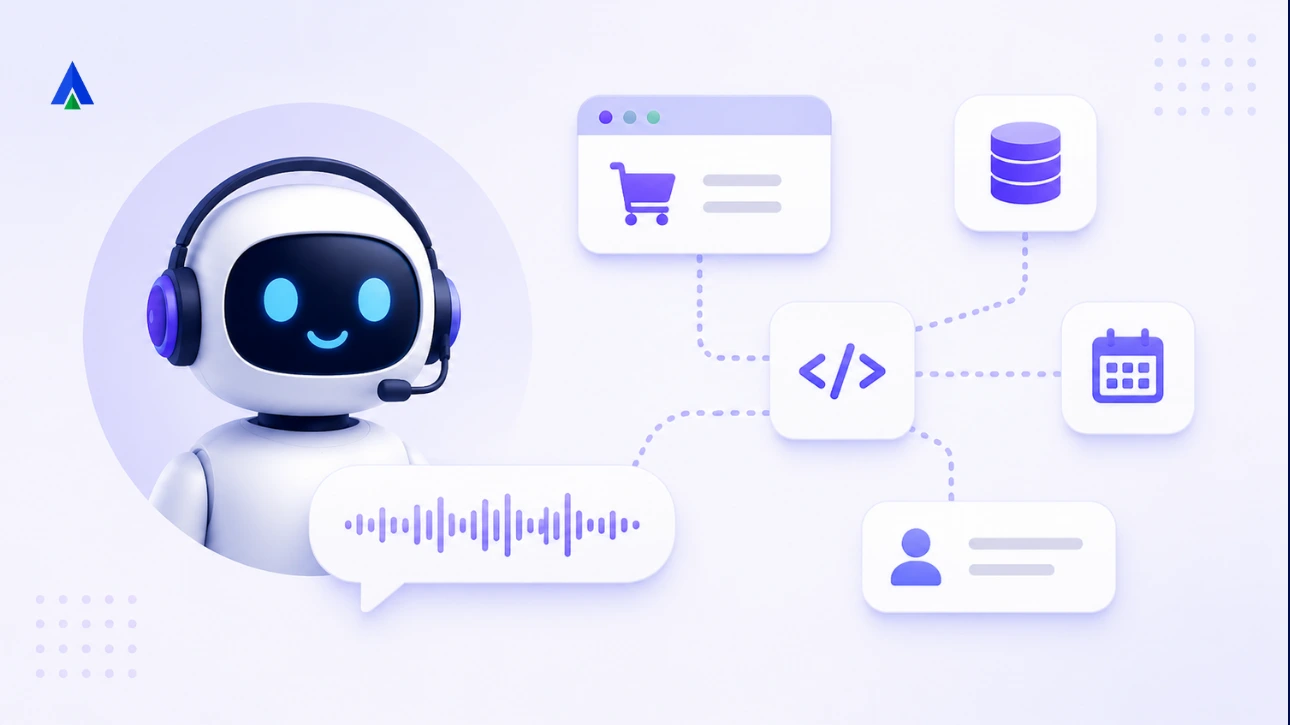
An agentic voice bot can look up a live order status mid-conversation. It can trigger a delivery reschedule through a logistics API. It can update a CRM record while the call is in progress. It can send a payment link via WhatsApp before the customer hangs up.
These actions are made possible by tool calling.
What Tool Calling Actually Means
Tool calling is the ability of an AI model to invoke an external function or API during a conversation, use the result, and continue the call naturally.
Here is what that looks like in practice.
A customer calls and says: “I placed an order yesterday and I need to change the delivery address.”
Without tool calling, the bot can only say: “I understand. Please hold while I transfer you to an agent.”
With tool calling, the bot does the following in sequence, all within the same call.
It authenticates the customer using their mobile number. It calls your OMS API to retrieve the order. It checks whether an address change is still possible given the shipment status. If it is, it updates the address via API. It confirms the change to the customer verbally. It sends a confirmation SMS. The call ends, resolved.
No agent. No hold time. No callback.
Each of those steps is a tool call. The bot invokes a function, receives a response, and uses that response to continue the conversation. The customer experiences it as a single, fluid interaction.
How Tool Calling Works Technically
You do not need to understand the technical architecture to evaluate whether a platform supports tool calling. But a working understanding helps when assessing vendor claims.
When an agentic voice bot is configured, it is given access to a set of tools. Each tool is a defined function — a database query, an API call, a workflow trigger, or a messaging action. The bot is told when to use each tool and what to do with the result.
During a call, the AI model decides in real time which tool to invoke based on the conversation. It passes the relevant parameters to the tool — an order ID, a customer phone number, a new address — and receives a structured response. It then interprets that response and continues the conversation.
The entire sequence happens in seconds. From the customer’s perspective, the bot simply answered their question and took action. They do not see the API calls happening in the background.
The key capability requirement for this to work well is low latency. A tool call that takes four seconds to return a result creates a noticeable pause mid-conversation. Well-built agentic voice bot platforms optimize for this. A poorly built one produces an experience that feels broken.
Real E-commerce Tool Calling Scenarios
Let’s look at the specific scenarios where tool calling changes what is possible in an e-commerce support or outbound call.
- WISMO resolution with live data: A customer calls asking where their order is. The bot authenticates them, calls the OMS and logistics API, retrieves the live tracking status, and reads it back. If the shipment is delayed, the bot checks the new estimated date and offers a discount code for the inconvenience. It applies the code via the promotions API and sends a confirmation WhatsApp. All within one call.
- COD cancellation before dispatch: A customer calls to cancel a COD order. The bot retrieves the order and checks fulfilment status. If the order has not been dispatched yet, it cancels via the OMS API and confirms the cancellation. If it has been dispatched, the bot explains the return process and initiates a return request. No agent required for either path.
- Delivery rescheduling: A customer cannot receive their order tomorrow. The bot retrieves the available delivery slots from the logistics API, presents two options, and books the customer’s preferred slot. It confirms via SMS. The logistics partner receives the updated booking automatically.
- Cart recovery with real-time discount application: A customer receives an outbound recovery call. They are interested but hesitant about the price. The bot checks their cart value against a discount eligibility rule, applies a discount code via the promotions API, and sends an updated checkout link during the call. The discount is live before the customer opens the link.
In each scenario, the bot is not reading from a static script. It is retrieving live data, making a decision, and taking an action. That is the operational difference tool calling creates.
What Separates a Tool-Calling Bot from a Basic Bot
The distinction is worth being precise about because many platforms claim conversational AI capability without actually supporting real-time tool calling.
A basic voice bot can recognize intent and respond with pre-written answers. It can route calls and transfer to agents. It can read back information that has been manually loaded into its knowledge base. It cannot retrieve live data mid-call. It cannot trigger actions in external systems. It cannot update a record or send a follow-up message during the conversation.
When evaluating a voice bot platform, ask specifically whether the bot can make API calls during a live call and use the response to continue the conversation. Ask about latency for tool call responses. Ask how many concurrent tool calls the bot can handle. These questions quickly separate platforms with genuine agentic capability from those offering a more limited automation layer.
Where Tool Calling Has Limits
Agentic voice bots with tool calling are powerful. They are not unlimited.
The quality of the tool calling outcome depends entirely on the quality of the APIs and systems it is calling. If your OMS returns inaccurate data, the bot will give the customer inaccurate information. If your logistics API does not expose real-time slot availability, the bot cannot offer real-time rescheduling.
Tool calling also has a scope defined by what tools the bot has been given access to. A bot configured for order status and delivery rescheduling cannot process a refund if the refund tool has not been set up. Expanding capability requires adding tools, which typically involves integration work.
There are also call types where tool calling does not eliminate the need for a human. A customer disputing a charge, expressing significant distress, or requesting an exception outside system parameters still needs an agent. The bot should recognize these situations and transfer with full context. The escalation logic is part of the agentic design.
Why This Matters for E-commerce Operations
The shift from script-based bots to agentic voice bots with tool calling is not incremental. It changes the category of problems a voice bot can solve.
A script-based bot deflects calls. An agentic bot resolves them. The difference shows up in containment rate, CSAT, repeat contact volume, and the proportion of calls that still need a human agent.
For e-commerce operations handling thousands of calls daily across order status, COD confirmation, delivery updates, and returns, the ability to resolve rather than deflect is the operational threshold that determines whether automation actually reduces cost and improves experience or simply moves the queue.
Conclusion
Tool calling is the capability that makes a voice bot an agent rather than a responder. It gives the bot access to live data, the ability to take actions in external systems, and the means to resolve a customer’s query in a single call rather than transferring it to someone who can.
For operations teams evaluating voice bot platforms, tool calling capability is not a nice-to-have feature. It is the architectural requirement that determines whether a platform can deliver the outcomes that justify the investment.
FAQs
Tool calling is the ability of an AI voice bot to invoke an external function or API during a live call, use the response, and continue the conversation naturally. It allows the bot to retrieve live order data, trigger actions in external systems, and resolve customer queries without agent involvement.
A standard voice bot matches customer inputs to pre-written responses. An agentic voice bot can analyze a situation, make decisions, and take real actions in connected systems mid-call. The difference is between a bot that tells a customer their order is delayed and one that also reschedules the delivery before the call ends.
Initial integration setup requires technical work to connect the bot to your OMS, CRM, or logistics APIs. Once connected, the tools are available to the bot without further development. Platforms like AceX support pre-built connectors for common e-commerce systems to reduce integration time.
A well-designed agentic bot has fallback logic for tool call failures. If an API returns an error or times out, the bot acknowledges the issue, offers what it can, and escalates to a human agent with full call context. The customer is not left in a loop.