


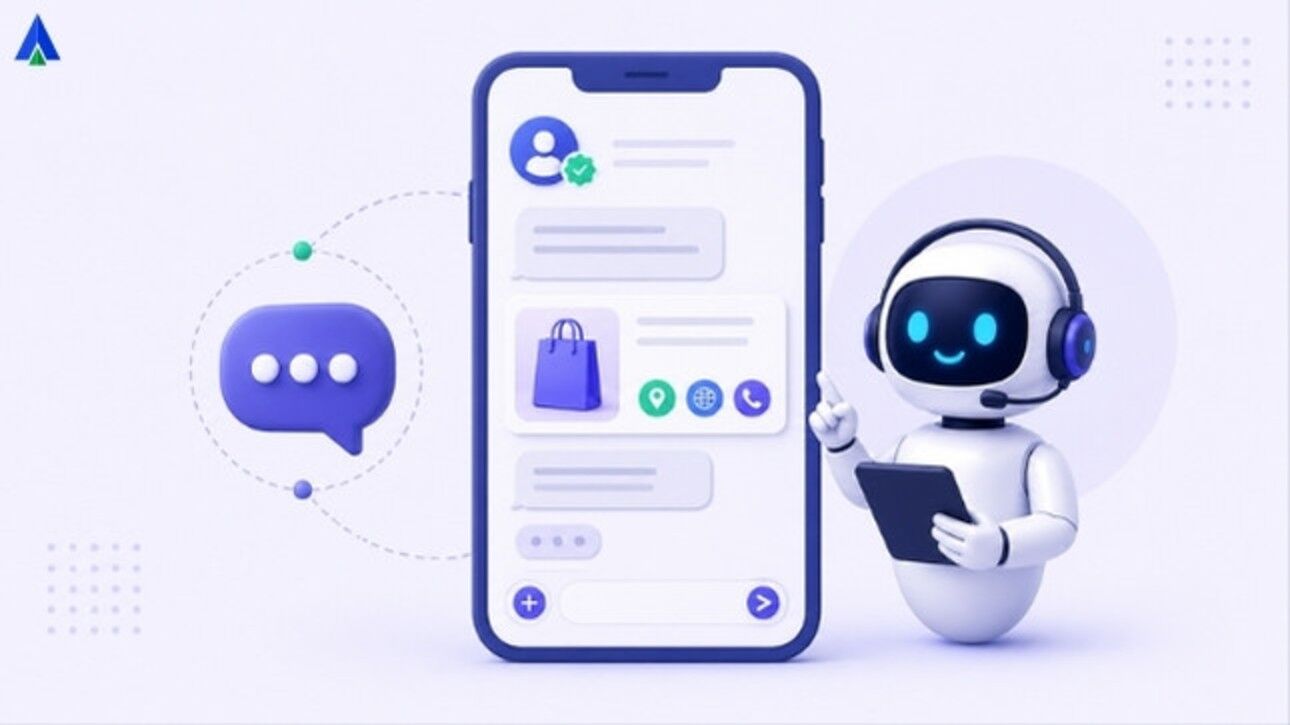


Open Google Messages on an Android phone in India right now. There’s a good chance RCS Chat is already switched on, quietly running in the background.
Most marketing and CX teams haven’t clocked this yet. They’re focused on WhatsApp Business, maybe still running SMS campaigns. RCS chat sounds like one more acronym competing for budget and attention.
Here’s the useful version of this story. RCS chat is real, and it’s built into the phone your customers already carry. Its business rollout in India, though, is genuinely still early. This piece walks through what RCS chat actually means. It covers how far India has got with it. And where it fits next to WhatsApp, not instead of it.
What Does RCS Chat Mean?
RCS chat means Rich Communication Services, a messaging standard built by the GSMA, the mobile industry body. On Android, Google Messages calls its version of this standard RCS Chat. It replaces plain SMS with a richer format. Think about reading receipts, typing indicators, and high-resolution photos. Add verified sender profiles that show a business name and logo before you even open the message.
RCS (Rich Communication Services), a messaging standard from the GSMA that upgrades SMS with rich media, read receipts, and verified business senders.
A quick bit of history helps here. SMS has barely changed since the 1990s. It’s plain text, no read receipts, no verified sender, and a 160-character limit.
RCS was designed to fix that. It uses the same phone number-based system SMS runs on, so there’s no app to download. The GSMA, the body representing mobile operators worldwide, sets the technical standard. Google built the most widely used client, Google Messages, and gave its version to the consumer facing the name RCS Chat.
For a business, this matters. RCS chat sits inside a channel your customer already has open, not a separate app to install. That’s a meaningfully different starting point from most messaging channels businesses evaluate today.
RCS chat is Google’s name for RCS on Android, a GSMA-built upgrade to SMS with no app download needed.
How Does RCS Chat Work for Business Messaging?
Businesses reach customers through RCS chat using something Google calls an RCS agent, similar to a verified sender ID. Messages carry the business name, logo, and a verification checkmark, visible before the customer opens the chat.
Agents can send rich cards, images, short videos, and buttons for actions like tracking an order or confirming a booking. If a customer device or carrier doesn’t support RCS, the message falls back to plain SMS automatically.
Setting this up isn’t something a marketing team does on its own. A business registers as a verified agent through Google or an approved partner. That’s similar to getting a WhatsApp Business API account approved. Once verified, the checkmark and branding show up automatically on every message.
The actual content options go well beyond SMS. A rich card can combine a product photo, a short description, and up to four action buttons. Think about booking now, track order, call us, or view details. Multiple cards can chain into a swipeable carousel, useful for showing several products or appointment slots in one message.
Customers don’t need to opt into a separate app first. If their phone and carrier support RCS, the message just arrives, branded and interactive, inside their normal texting app. If not, Google’s platform automatically drops it back to standard SMS. Delivery isn’t at risk even when RCS coverage is patchy.
One limit worth knowing early: RCS business messages aren’t end to end encrypted the way one to one RCS chats are. Google encrypts them in transit, but the message content can be accessed for delivery and moderation purposes.
For OTPs, order updates, and marketing, that’s a reasonable trade off. For anything genuinely sensitive, checking your own compliance requirements first is worth it. Our bulk SMS guide covers a similar trade off for plain SMS.
RCS chat lets verified businesses send branded, interactive messages with automatic SMS fallback, though business messages aren’t end to end encrypted.
Is RCS Chat Available in India for Businesses?
Yes, but the business side is still early. Android devices running Google Messages can receive RCS chat across India today, since it’s built into Google’s global infrastructure.
On the business messaging side, Jio runs its own RCS product called JioCX. Airtel has been part of the GSMA’s global RCS alignment since 2016. Exact coverage and adoption numbers, though, aren’t something we could verify from a primary source.
Here’s the distinction worth holding onto. Say your customer has an Android phone with Google Messages. If their carrier has switched RCS on, they can already receive RCS messages. That’s true whether the sender is a business or just a friend.
RCS chat as a business messaging channel, the kind you’d run a campaign through, is a different maturity level. Jio has its own product for this, JioCX RCS, confirmed on Jio’s own site, built on Google’s infrastructure.
Airtel’s involvement goes back further. It was one of the operators that signed onto the GSMA’s global push for a universal RCS profile. That was back in 2016.
What we couldn’t verify is the specific detail a marketing team actually needs for a budget. That includes what percentage of your audience is RCS reachable right now. It also includes city by city coverage and per message pricing in India. Several vendors publish these numbers. But they don’t trace back to TRAI, GSMA, Jio, or Airtel directly. And they don’t agree with each other.
Our honest read: treat RCS chat in India as available and worth watching. It’s not yet a channel with settled reach numbers you can budget a campaign against. For DLT and compliance basics that still apply while you wait, see our transactional and promotional SMS guide.
RCS chat works for consumers across India today, but business-side coverage and pricing numbers aren’t yet verifiable from a primary source.
RCS Chat vs WhatsApp Business: What Is the Difference?
The biggest difference is where the customer already is. WhatsApp Business needs the customer to have WhatsApp installed and to have opted in. RCS chat arrives in the phone’s default messaging app, no separate download or opt-in required for delivery.
WhatsApp conversations end to end encrypted. RCS business messages, as covered earlier, are not. Both support rich media, buttons, and verified sender branding.
Reach works differently between the two. WhatsApp’s reach is capped by who has installed the app and agreed to hear from you. In India that’s still the large majority of smartphone users. But it’s an opt-in majority, built one consent at a time.
RCS chat’s reach is capped differently, by which phones and carriers have RCS switched on. No install, no opt-in screen. But also, there is no guarantee the customer has ever noticed the feature exists. A message can arrive successfully and still go unread. That happens if the customer doesn’t recognize what RCS chat is yet.
Security is the other real gap. WhatsApp’s end-to-end encryption is a genuine selling point for OTPs, account alerts, and anything sensitive. RCS business messages travel encrypted between your provider, Google, and the device.
But Google can access content for delivery and moderation. For a one-time password tied to a bank account, some businesses will want WhatsApp’s stronger guarantee instead.
Cost structures differ too, though exact RCS pricing in India isn’t something we could verify precisely, as noted earlier. WhatsApp Business API pricing is publicly documented and predictable.
That predictability alone matters for budgeting. For a closer look at how WhatsApp Business actually works for marketing, see our detailed WhatsApp marketing guide.
RCS Chat vs WhatsApp Business
| Factor | RCS Chat | WhatsApp Business |
|---|---|---|
| Customer access | Arrives in the phone’s default messaging app, no separate download or opt-in required for delivery. | Needs the customer to have WhatsApp installed and to have opted in. |
| Reach limit | Capped by which phones and carriers have RCS switched on. | Capped by who has installed the app and agreed to hear from you. |
| Security | RCS business messages travel encrypted between your provider, Google, and the device. | WhatsApp’s end-to-end encryption is a genuine selling point for OTPs, account alerts, and anything sensitive. |
| Pricing clarity | Exact RCS pricing in India isn’t something we could verify precisely. | WhatsApp Business API pricing is publicly documented and predictable. |
WhatsApp needs opt-in and offers stronger encryption. RCS chat needs no install but has patchier awareness and less predictable India pricing.
Where Does RCS Chat Fit Next to WhatsApp and SMS?
RCS chat fits as an addition, not a replacement for WhatsApp Business. Use RCS for wide, low friction updates where you can’t guarantee opt-in yet. Think of delivery tracking or appointment reminders sent to a broader contact list.
Keep WhatsApp for ongoing, conversational engagement with customers who’ve already opted in, especially anything involving sensitive account information. Most SMBs in India will run both, alongside SMS as the fallback that always gets through.
Think of the three channels as a ladder, not a menu where you pick one. SMS sits at the bottom, plain text. But it reaches almost every phone with a signal, no data connection needed.
WhatsApp sits in the middle for most Indian businesses today. It’s rich, familiar, and already opted by a large share of your customers. It’s the right default for support conversations, order updates to known customers, and marketing to people who’ve said yes.
RCS chat slots in as a bridge, for the gap SMS and WhatsApp both leave open. That gap is reaching someone with branding and interactivity before they’ve opted into anything. A first delivery notification. A verification code with your logo attached.
A booking confirmation sent to a lead who hasn’t installed WhatsApp yet. None of that replaces your WhatsApp strategy. It extends what you can do before that opt-in happens. For ideas on where SMS still earns its place in this mix, see our piece on SMS in your marketing plan.
RCS chat is a bridge before opt-in happens, not a replacement for WhatsApp, which stays the default for engaged customers.
How an SMB Can Plan Its RCS Messaging Mix
Picture a D2C skincare brand in Pune with 40,000 customers on its list. Half have opted into WhatsApp updates. The rest get occasional SMS, and open rates on that SMS list have been sliding for two years.
Here’s how the mix could look this quarter. WhatsApp stays the primary channel for the 20,000 opted in customers, order confirmations, restock alerts, and personalized offers, all backed by end-to-end encryption for anything account related.
For the other 20,000, SMS keeps doing its job as the guaranteed fallback. That matters especially for OTPs and delivery updates that must land regardless of app or data connection. That’s not going away.
RCS chat becomes the pilot, not the plan. The brand picks a narrow use case, say order confirmations to Android customers who haven’t opted into WhatsApp. It registers a verified agent and runs the pilot for one quarter. If Jio or Airtel’s coverage turns out patchy for this list, SMS was already covering it anyway. So, nothing breaks.
The order matters here. WhatsApp first, because it’s proven and encrypted. SMS is the constant safety net. RCS chat comes last, as a contained experiment layered on top. Size it to what’s actually verifiable about coverage today, not to a vendor’s projection for 2027.
Conclusion
Three things worth carrying forward.
First, RCS chat is real and already sitting on many of your customers’ phones. It was built by the GSMA and named by Google inside Google Messages.
Second, in India, the consumer side works today. The business side, coverage, pricing, and adoption numbers, is still early. Most of it is unverified beyond Jio’s own JioCX product and Airtel’s long standing GSMA involvement.
Third, and most important, RCS chat is an additive. It doesn’t replace WhatsApp Business, which stays your default for opted in, encrypted, conversational engagement. It doesn’t replace SMS, which stays your guaranteed fallback. It fills a specific gap: reaching someone with branding and interactivity before they’ve opted into anything.
Plan your messaging mix around what’s proven today, WhatsApp and SMS. Treat RCS chat as a pilot worth running in parallel, not a channel to bet your budget on yet.
See Your Current Messaging Mix in One Place
If you’re already juggling SMS and WhatsApp across separate tools, that’s the more urgent fix. Acefone’s Interactions Hub unifies your voice, SMS, and WhatsApp conversations into one dashboard today. Book a demo to see your current messaging mix in one place. We’ll also walk you through how we’re tracking RCS chat’s rollout in India, so you’re ready when it matures.
FAQs About RCS Chat
RCS chat means Rich Communication Services, a GSMA messaging standard. Google Messages calls its Android implementation RCS Chat. It upgrades SMS with read receipts, high resolution media, and verified sender branding, all inside your phone’s default messaging app, no separate download needed.
No. WhatsApp needs the customer to install the app and opt in first and offers end-to-end encryption. RCS chat needs no install or opt-in for delivery, but business messages aren’t end to end encrypted the same way. They solve different problems, not the same ones.
Partially. Apple added basic RCS support in iOS 18, released September 2024, so iPhones can receive RCS messages from Android users. Full business features like verified sender profiles and rich cards aren’t yet available on iPhone the way they are on Android’s Google Messages.
One to one RCS chats between individuals end to end encrypted. Business RCS messages are not. Google encrypts them in transit between your provider, its servers, and the device, but can access content for delivery and moderation. For sensitive data, WhatsApp’s encryption is currently the stronger option.
Yes, at a basic level. Jio runs its own RCS product, JioCX. Airtel has been part of the GSMA’s global RCS alignment since 2016. Specific coverage percentages and pricing for business messaging in India aren’t verifiable from a primary source at this time.
Not yet, as a primary channel. RCS chat is worth a small, contained pilot alongside WhatsApp and SMS, not a wholesale switch. Coverage and pricing in India are still maturing, and most customers don’t yet recognize the RCS chat branding the way they recognize WhatsApp.


