


 8 mins read


A practical guide to deploying AI voice agents for BPO, handling Tier-1 call deflection across multiple oeprations.
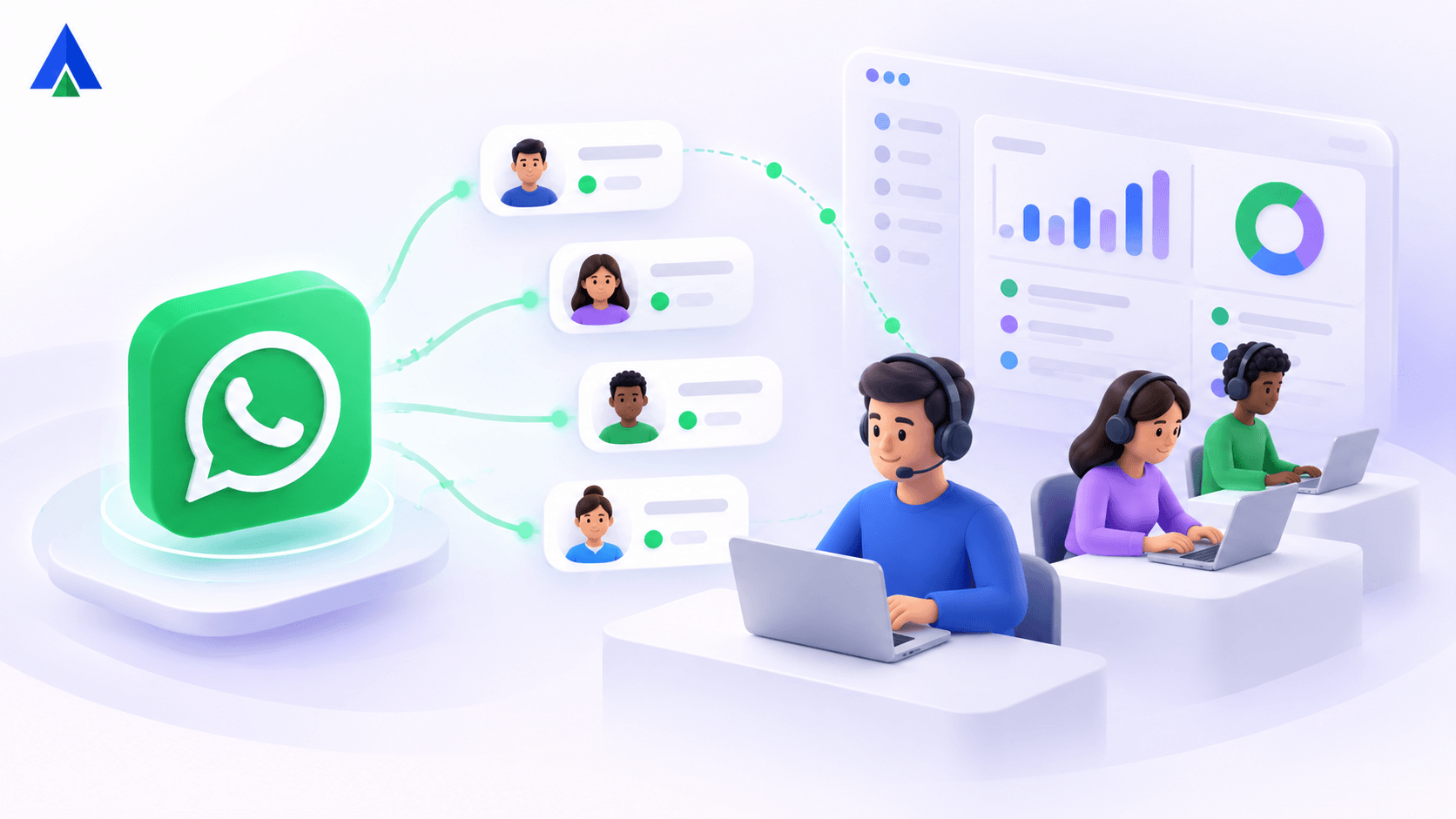
Every BPO ops manager knows the feeling. The queue fills with calls that do not need a human. Order status. Balance enquiries. Appointment confirmations. Your agents answer these every day. The cost adds up. The volume does not come down.
Voice bots change that equation. They take repetitive Tier-1 calls off your agents’ hands. Your team focuses on work that needs human judgment. Everyone else gets a faster answer.
This playbook covers three things. Which Tier-1 calls to automate first. How to calculate the ROI for your operation. And how to get a voice bot live in your BPO operations without a six-month implementation project.
Read this before your next client’s RFP. You will need it.
What Are AI Voice Agents for BPO Call Deflection?
A voice bot is an AI agent that handles phone calls through natural speech. It listens to what a caller says. It understands the intent. It retrieves data from connected systems and responds in conversational language. No menu trees. No “press 1 for billing.” The caller speaks. The bot responds.
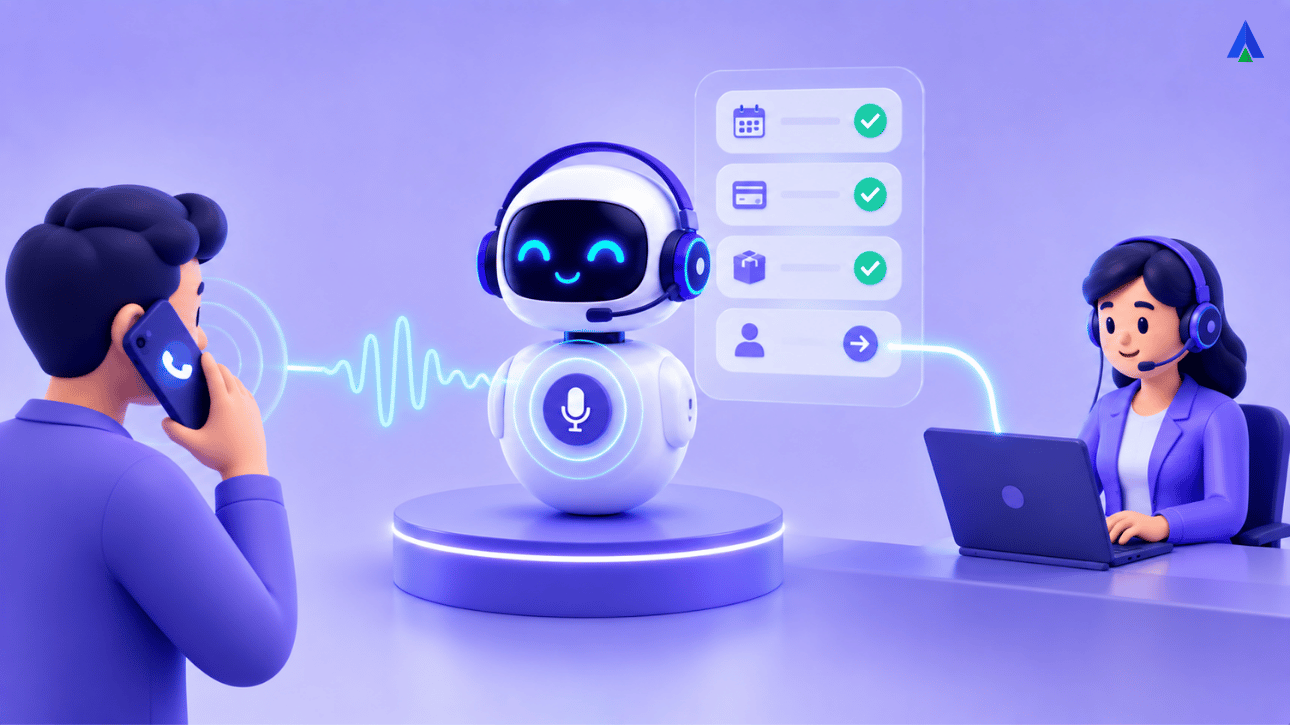
Voice agents for BPOs act as digital front-line agents. It manages defined call types without a human. When a call exceeds its scope, it escalates with full conversation context. The human agent knows exactly where the interaction stands before they say a word.
In the BPO industry, these are also known as AI voice agents for call deflection. Their core job is resolving or redirecting Tier-1 calls before a human ever answers.
Voice bot, an AI system that conducts phone calls using speech recognition, natural language processing, and text-to-speech to understand and respond to callers without human intervention.
How Does Acefone Build a Voice Agents for BPO?
The Acefone Voicebot platform, AceX, turns a one-line use case description into a configurable agent. The ops manager connects it to the CRM via webhook. Tests run against synthetic caller scenarios before any real customer hears the agent.
Voice-to-voice latency on AceX Voice Bot runs at 500-600ms. That is the gap between a caller finishing their sentence and the bot starting its response. At that speed, the conversation feels natural. In our deployments, callers rarely realise they are speaking to an AI until the bot identifies itself.
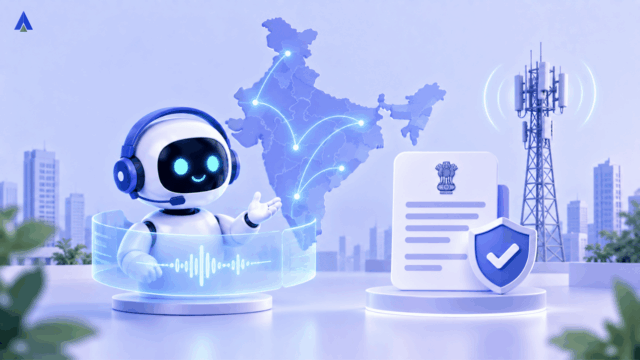
For BPOs serving Indian-market clients, our Sarvam AI integration handles Hinglish and regional Indian languages natively. No separate language integration is needed. A single AceX dashboard monitors all client deployments: call volume, containment rate, escalation triggers, and conversation-level recordings.
A voice bot handles Tier-1 calls autonomously, escalates with full context, and runs at 500-600ms latency for a natural caller experience.
Which Tier-1 Calls Voice Agents for BPO Automate?
Start with calls that are high-volume, low-variability, and fully resolvable without human judgment. These return the fastest containment rates and the clearest ROI signal.
Three properties mark a strong automation candidate. The call type has a defined outcome. The data needed to resolve it lives in a system the bot can access. A wrong answer carries low downstream risk.
Strong Candidates for Voice Bot Automation
- Order status and WISMO calls. “Where is my order?” is the single highest-volume Tier-1 call type in most e-commerce BPO operations. The bot identifies the caller, fetches live tracking data, and reads back the current delivery status and estimated arrival time. If an order has an exception, it routes to a human with the full tracking history already pulled.
- Balance and account enquiries. The bot authenticates the caller, queries the database, and reads back the information. Resolution under 60 seconds. No escalation needed.
- Appointment reminders and confirmations. Outbound reminders with options to confirm, reschedule, or cancel. The bot updates the scheduling system in real time based on the caller’s response.
- Tier-1 FAQ handling. Business hours, return policies, service eligibility. Any question with a consistent factual answer is a candidate for the voice bot.
- Payment reminders. Outbound calls informing customers of due payments. Options include confirming, receiving an SMS payment link, or speaking to an agent.
- COD confirmation calls. For India-market e-commerce BPOs, COD confirmation is often the largest single call category. The bot confirms delivery intent, updates the OMS in real time, and reduces return-to-origin rates.
What Should BPOs Protect from Voice Bot Automation?
Not every Tier-1 call belongs with a voice bot. Formal complaint, KYC dispute resolution, claims handling, and interactions where a wrong answer carries legal or financial risk stay with human agents. Voice bots handle routine and predictable. Human agents handle sensitive and consequential issues.
Automate high-volume, low-variability calls where resolution data is accessible, and error risk is low. Protect complaints, disputes, and regulatory interactions for human agents.
How To Calculate ROI of Voice Agents for BPO industry?
ROI for voice bot deployment comes from two directions: cost reduction and free agent capacity. Most BPOs focus on cost first. Both matter.
The cost math is straightforward. A voice bot handles a call at a fraction of human cost. In AceX Voice Bot deployments, BPOs typically reduce cost-per-call by 60-70%. The shift is from approximately Rs. 150 per manual agent call to approximately Rs. 50 per automated interaction. That gap compounds quickly at scale. Gartner projects conversational AI to cut contact centre labour costs at scale, reinforcing this shift industry-wide.
A Simple ROI Framework for Call Deflection AI Voice Agents
Step 1:
Count your monthly Tier-1 call volume for the target call types.
Step 2:
Estimate your containment rate. We typically see 60-75% containment for structured call types like order status and balance enquiries. FAQ handling with low variability can reach 80-85%.
Step 3:
Calculate monthly deflected calls. Multiply the total Tier-1 monthly volume by the containment rate.
Step 4:
Calculate cost savings. Subtract the voice bot cost-per-call from your human cost-per-call. Multiply your monthly deflected call count.
Step 5:
Add free agent value. Your human agents handle fewer repetitive calls. That capacity goes to upsell calls, retention calls, and complex support interactions. These do not appear in a cost line. They appear in client CSAT scores and contract renewals.
Speed of Payback
A BPO deploying AceX on a high-volume use case typically sees payback within the first billing cycle. The Rs. 75,000 starter package covers 12,500 minutes of voice bot interaction. We can run the ROI calculation with your actual cost-per-call numbers in 30 minutes.
ROI equals the per-call cost difference (human minus bot) multiplied by monthly deflected call volume. Add free agent capacity for a complete picture. Payback is typically within one billing cycle.
How Do AI Voice Agents Different from IVR?
This question comes up in every BPO sales conversation. Many operations already run IVR and assume an AI voice bot is simply an upgrade. It is not. The architecture differs. The caller experience differs. The containment potential differs.
Traditional IVR works on menu logic. The caller hears a list of options. They press a number or say one of the listed commands. The system routes them based on their selection. When the caller need does not match a menu option, they press 0 or say “agent” and transfer out. IVR routes calls. It does not resolve them.
A voice bot understands natural language. The caller says what they need in their own words. The bot interprets intent, fetches data from connected systems, generates a response, and completes the interaction. No menu navigation. No repeated command options.
The containment difference is significant. A well-configured IVR might redirect 20-30% of inbound volume toward self-service paths. A voice bot handling the same call types typically achieves 60-75% containment. It resolves the interaction directly, rather than routing it elsewhere.
Escalation quality also differs. When IVR transfers a call, the agent starts blind. The caller repeats everything they have already said. When a voice bot escalates, the human agent receives the full conversation context before the caller says a word. That changes the interaction quality from the first second.
IVR containment is routing. Voice bot containment is a resolution.
IVR routes calls through menus and rarely resolves them. Voice bots resolve calls through natural conversation and escalate with full context. Containment rates are typically 2-3x higher.
Recommended Blog: Voicebot vs IVR
How Do You Deploy AI Voice Agents for BPO Call Deflection?
Deploying a voice bot for BPO operations does not take months. On AceX Voice Bot, a single-use-case deployment takes 24 hours. The 24 hours only work if the preparation is done before the platform opens. Our guide on how to deploy AI voice agents in 24 hours breaks down the exact sequence we run with every BPO client.
Step 1:
Audit your call categories. Pull three months of recordings for your highest-volume Tier-1 types. Tag each call by intent and outcome. This reveals your actual containment opportunity. Most BPOs underestimate how many of their Tier-1 calls are truly repetitive.
Step 2:
Identify automation candidates. Rank call types by four factors: volume, variability, data accessibility, and risk level. High-volume, low-variability calls with accessible data and low escalation risk are your first wave.
Step 3:
Design the conversation flow. For each target call type, define the authentication approach, the data the bot retrieves, the outcomes it resolves, the escalation triggers, and the context it passes at transfer. Write this as a structured brief, not a script.
Step 4:
Configure and integrate. Build the agent on AceX using the no-code flow builder. Connect backend systems via webhook. Standard integrations (Salesforce, Zoho, Freshdesk, or custom CRM via API) take hours, not days.
Step 5:
Test with AI Evaluators. Run the configured agent through a synthetic scenario matrix. Primary call path, intent variations, edge cases, and escalation triggers. AceX generates a scored pass/fail report. Share this with your client before any live deployment happens. No other platform lets you validate before going live.
Step 6:
Run a pilot. Route a defined percentage of real Tier-1 calls to the voice bot. Monitor containment rate, escalation rate, and CSAT against the human-handled baseline.
Step 7:
Scale. Once pilot containment meets your target, increase routing. Our clients typically move from 20% to 80% voice bot routing within three weeks of pilot launch.
Seven steps from call audit to scaled deployment. Platform configuration on AceX takes less than 24 hours. Preparation adds 3-5 days for a first deployment.
How Do AI Voice Agents Apply to BPO Operations?
Enterprise clients are writing AI capability requirements into outsourcing RFPs. They want to see containment rates, interaction-level audit trails, and deployment timelines measured in days. McKinsey finds most organisations are now piloting AI agents to reshape support operations. BPOs that cannot demonstrate a working voice bot during the evaluation cycle are losing deals to those that can.
We work with BPOs across India using AceX in three distinct operational contexts.
AI-ready RFP response. The BPO configures a client-specific voice bot for the prospect use case before the presentation. They walk into the evaluation with a live demo, an AI Evaluator test report, and a documented deployment timeline. The competitor submitting a slide deck does not win that room.
Tier-1 deflection for existing clients. A BPO deploys voice bots inside its existing cloud contact center software for current clients’ highest-volume Tier-1 categories. Agent capacity shifts from repetitive calls to complex support, upsell, and retention interactions. The client sees better SLA performance. The BPO improves its margin on that contract.
New AI service line. The BPO adds AI-managed outbound as a new billable product. Collections of reminders, appointment confirmation campaigns, and COD confirmation workflows become chargeable AI services on top of existing seat-based contracts. The incremental revenue comes at significantly lower cost than adding headcount.
AceX handles Hinglish and regional Indian languages natively, which matters for BPOs serving clients with significant non-metro India customer bases. The compliance stack (DPDPA, DoT VNO license, ISO-27001, SOC-2 Type II) is built in. Your legal team signs off quickly because the framework is already in place.
Conclusion
AI voice bots are not a future investment for BPO operations. They are a current competitive requirement.
The BPOs winning AI-mandated contracts today are not those with the biggest engineering teams. They are those that can configure a working voice agent, validate it with AI Evaluator testing, and demonstrate it to a client before the evaluation closes.
Start with your highest-volume Tier-1 call types. Build the ROI case using your actual cost-per-call numbers. Deploy the first use case in less than 24 hours. Measure containment. Scale what works.
Your human agents are too valuable to spend their day answering the same questions. A voice bot handles those. Your team handles the calls that actually need them.
See AceX Handle Your Top Tier-1 Call Type
Want to see how AceX AgentStudio performs on your BPO’s most common Tier-1 call? Book a demo session with our team. We configure a live voice bot for your specific use case, run it through our AI Evaluator, and share the test results before you commit to anything.
Frequently Asked Questions
AI voice agents in BPO for call deflection are voice bots built to resolve or redirect Tier-1 calls. They authenticate the caller, pull data from connected systems, and either resolve the request or escalate with context. On AceX, these agents typically contain 60-75% of structured Tier-1 volume without human intervention.
Voice bots reduce costs by handling Tier-1 calls at a fraction of human cost. On Acefone AceX, BPOs typically achieve 60-70% cost-per-call reduction, moving from approximately Rs. 150 per manual agent call to approximately Rs. 50 per automated interaction. Freed agent capacity also reduces the need to scale headcount during volume spikes, which protects margins on existing client contracts.
Take your monthly Tier-1 volume for the target call type. Multiply your expected containment rate (typically 60-75% on AceX for structured call types). Multiply the deflected call count by the per-call cost difference between human handling and voice bot handling. Add the value of free agent capacity for higher-value interactions. The result is your total monthly financial impact.
Voice bots are not appropriate for formal complaints, KYC dispute resolution, claims handling, or interactions where a wrong answer carries legal or financial risk. They work best on high-volume, low-variability call types where the outcome is defined in advance, and the required data is accessible via API. If an interaction requires emotional sensitivity or regulatory compliance handling, keep it with a human agent.
On AceX, a single-use-case voice bot deploys in less than 24 hours. That covers platform configuration, webhook integration with your client’s CRM or OMS, and AI Evaluator testing against a synthetic scenario matrix. The preparation work (call audit, use case scoping, and conversation flow design) adds an additional 3-5 days for a first deployment. BPOs that have completed one deployment repeat the process significantly faster for each subsequent client use case.
Call deflection works by moving Tier-1 volume away from paid agent minutes. Every call an AI voice agent resolves is a call your human team never has to staff for. On AceX, that shift cuts cost-per-call by 60-70%. Spend moves from roughly Rs. 150 per agent-handled call to roughly Rs. 50 per automated one. The savings compound as containment rate rises across more call types.