


 9 mins read


Picking a customer experience management platforms used to mean choosing between three or four familiar names. Not anymore. Indian businesses now juggle WhatsApp, voice, email, and chat, often in a single customer conversation. A platform built for a US-first market rarely handles Hindi sentiment analysis well. It often misses a regional-language IVR menu too.
We’ve watched support teams choose a customer experience platform after one demo. They spend months patching gaps nobody flagged upfront. This guide breaks down the customer experience management platform landscape for Indian businesses in 2026. You’ll learn what these platforms do, how to evaluate one, and which ten customer experience management providers deserve a shortlist spot.
What Is a Customer Experience Management Platform (CXM Platform)?
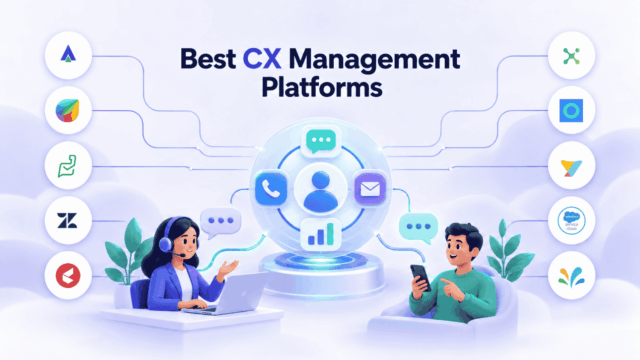
A customer experience management platform (CXM platform) unifies voice, chat, WhatsApp, email, and social into one system. It captures data at each touchpoint and automates responses across channels. That’s different from pure cloud telephony or call center software. If you’re specifically comparing calling and IVR systems rather than the full customer experience stack, see our 10 best contact center providers in India roundup instead.
Support teams get one view of the entire customer journey. Unlike a plain CRM, it centers on the experience itself: sentiment, wait times, and resolution quality. It’s the difference between recording a conversation and improving it. That improvement gets tracked through journey-mapping metrics such as CSAT (customer satisfaction score) and NPS (net promoter score), which show whether a fix changed how a customer feels, not just whether a ticket got closed.
In India, that distinction matters more than most vendors admit. A support team might field WhatsApp queries in Hindi, calls in Tamil, and email in English. That team needs a platform that treats language and channel as core features, not add-ons. That’s also why Customer Experience Management platforms increasingly fold in AI: sentiment scoring, auto-routing, and chatbots. These aren’t extras anymore. They’re baseline expectations for any team handling real volume.
Why Do Indian Businesses Need Dedicated CX Software in 2026?
India’s customer experience management market is growing fast, and the way Indian customers communicate is unlike most global markets. WhatsApp dominates as a service channel. Voice remains critical for trust-heavy categories like BFSI (banking, financial services, and insurance) and healthcare. Yet most Indian businesses haven’t built the backend to match that channel adoption. The result: teams add channels faster than they add the infrastructure to connect them.
According to Grand View Research, India’s customer experience management market was worth USD 690.9 million in 2025. It’s projected to reach USD 2,373.8 million by 2033, growing at 16.8% a year. That’s still only 4.4% of the global Customer Experience Management market, so the room to grow is real.
How to Choose the Right CX Platform in India: 5 Checks
Choosing a customer experience platform for an Indian business comes down to five checks. Language support, channel coverage, integration depth, AI maturity, and industry fit. Skip any one of these and the platform looks complete in a demo, then breaks down with real customers. Real customers means real languages, across real channels, at real volume.
- Regional language support: Native handling of Hindi, and other regional languages in chat, voice, and sentiment scoring, not just translation.
- WhatsApp and SMS as core channels: WhatsApp is now a primary support channel in India, not a bolt-on.
- CRM and telephony integration depth: A platform should offer seamless CRM integration otherwise it will just add another data silo.
- Genuine AI orchestration: Check if automation connects channels; most Indian brands still don’t.
- Industry-specific fit: A BFSI contact center and a D2C brand have different compliance and routing needs. Make sure the platform fits your specific needs. For India specifically, check whether the vendor stores customer data locally and how it handles DPDPA (Digital Personal Data Protection Act) compliance before signing.
Which 10 CXM Platforms Lead in India in 2026? (Quick Comparison)
India’s CXM market spans global enterprise suites and India-built specialists. The ten platforms below span cloud telephony, helpdesk ticketing, unified Customer Experience Management, and conversational AI. Each profile includes real G2 ratings, so you can weigh reviewer feedback, not just feature lists.
| Platform | G2 Rating | Pros | Cons | Best For |
| Acefone | 4.7/5 | Fast setup, responsive support, reliable calls, strong CRM integrations | Less suited for smaller enterprises | Omnichannel Requirements |
| Freshworks (Freshdesk) | 4.4/5 | Intuitive UI, strong automation, quick deployment | Limited live chat on base plans; can slow at high volumes | SMB and mid-market support teams |
| Zoho Desk | 4.4/5 | Affordable, strong ticketing, deep Zoho integrations | Steep learning curve, nested settings | Indian SMBs using the Zoho ecosystem |
| Salesforce Service Cloud | 4.4/5 | Deep CRM integration, strong case management, highly scalable | Expensive, complex, expert help often needed | Large enterprises already using Salesforce |
| Zendesk | 4.3/5 | Clean UI, strong ticketing, broad integrations | Advanced features require configuration; costs rise at scale | Mid-market and enterprise teams focused on ticketing |
| Sprinklr | 4.3/5 | Unified channels, strong support, reduces tool-switching | Expensive, steep learning curve, occasional lag | Large enterprises unifying marketing, sales, and service |
| Kapture CX | 4.5/5 | Easy navigation, strong support, 1,000+ integrations | Can slow at high volumes; learning curve | Indian retail, travel, and e-commerce teams |
| Exotel | 4.4/5 | Easy setup, strong APIs/CRM integrations, reliable calls | Occasional call-log issues; support can be slow | Indian startups and SMBs needing core telephony |
| Ozonetel CloudAgent | 4.6/5 | CRM integration, skill-based routing, live analytics | Dated UI, limited reporting customization and predictive AI | High-volume Indian contact centers |
| Yellow.ai | 4.4/5 | Easy bot building, strong NLP, multi-channel deployment | Learning curve; support can be slow | Indian enterprises automating conversational support |
1. Acefone:
Acefone is a cloud telephony and contact center platform built on India’s own DoT-licensed infrastructure. It combines omnichannel routing across voice, WhatsApp, email, and SMS. AI voice agents and post-call sentiment analysis cover 99+ languages, including Hindi and Hinglish.
G2 Rating: 4.7/5
Pros: Fast setup, responsive support, reliable call quality, strong CRM integrations (Salesforce, Zoho, HubSpot, Freshworks, etc.).
Cons: Less suited for smaller enterprises.
Best for: Indian contact center and support teams that need telephony, CRM data, and AI voice agents in one system.
Professional plan starts at ₹1,599/agent/month (minimum 6 seats), with unlimited domestic calling, one DID, 3-month call recording, and 24×7 chat support; Enterprise tiers are quote-based. Bot-to-agent handoff, AI-powered analytics, and multilingual voice AI, which replies in whatever language the customer is speaking, are available as paid add-ons on top of the base plan, helping lift the overall customer experience. Because Acefone runs on DoT-licensed infrastructure based in India, customer data stays hosted locally, a direct fit for DPDPA’s data-residency expectations, a real advantage for BFSI and healthcare teams that can’t move data offshore. Ready to see it in action? Book a demo now.
2. Freshworks (Freshdesk):
Freshworks’ Freshdesk is an omnichannel helpdesk built for fast-growing support teams. Its Freddy AI layer handles ticket triage, chatbots, and agent copilot tasks across email, chat, and social.
G2 Rating: 4.4/5
Pros: Intuitive interface, strong automation and ticket routing, quick to deploy.
Cons: No native live chat on base plans; performance can slow at high ticket volumes.
Best for: SME and mid-market teams that want a quick-deploy helpdesk with built-in AI.
The Growth plan starts at ₹1,804/agent/month (~$19) billed annually, covering ticketing with a shared inbox, a customer portal and knowledge base, and out-of-the-box analytics. It also launched a single screen where agents can see every channel, email, chat, WhatsApp, Instagram, Facebook, and calls, together with a customer’s full history, instead of switching between tabs (rolled out November 2025).
3. Zoho Desk:
Zoho Desk is an India-built helpdesk that plugs directly into the wider Zoho ecosystem. Its Zia AI assistant handles sentiment tagging and reply suggestions across tickets.
G2 Rating: 4.4/5
Pros: Affordable, strong ticket management, deep integrations across Zoho apps.
Cons: Steep learning curve; settings are deeply nested and hard to locate.
Best for: Indian SMBs already using Zoho apps who want budget-friendly CX tooling.
The Express plan starts at ₹420/agent/month billed annually, covering email, social, and web-form ticketing plus workflow automation and contact management; a free tier exists for up to 3 agents. It also now lets an agent select up to 50 tickets on their phone and send a WhatsApp message to all those customers in one go, instead of messaging each one separately (added Q1 2026).
4. Salesforce Service Cloud:
Salesforce Service Cloud (now under the Agentforce Service banner) is a CRM-native customer service platform. Einstein AI powers case classification and next-best-action suggestions for agents.
G2 Rating: 4.4/5
Pros: Deep Salesforce CRM integration, strong case management, scales to large teams.
Cons: Steep learning curve, high licensing costs, limited customization without expert help.
Best for: Large Indian enterprises already running Salesforce as their CRM of record.
The Starter Suite begins at ₹2,374/user/month (~$25), covering lead, account, contact, and opportunity management with built-in routing and Slack-connected conversations; Enterprise runs ₹16,616/user/month (~$175) and up. It also launched an AI agent that can hold a live spoken phone conversation with a customer and hand off to a human agent when the issue needs one (launched October 2025).
5. Zendesk:
Zendesk (Support Suite) is a ticketing-first platform with AI-powered triage and answer automation across channels.
G2 Rating: 4.3/5 (7,042 reviews)
Pros: Clean interface, strong ticket organization, solid integration ecosystem.
Cons: Advanced features need real configuration effort; pricing climbs quickly at scale.
Best for: Mid-market and enterprise teams that want ticketing depth over unified Customer Experience Management breadth.
The Support Team plan starts at ₹1,804/agent/month (~$19) paid yearly, including email ticketing, routing, prebuilt analytics dashboards, and pre-written responses. It also rolled out AI agents that keep getting better at handling requests by learning from every conversation they complete, without a company having to manually retrain them (announced May 2026).
6. Sprinklr:
Sprinklr’s Unified-Customer Experience Management platform combines marketing, sales, and service into one AI-native system spanning 30+ digital channels.
G2 Rating: 4.3/5
Pros: Genuinely unified channel management, strong customer support, reduces tool-switching.
Cons: Steep learning curve, high cost at scale, occasional performance lag on large volumes.
Best for: Large enterprises that want one platform across marketing, sales, and service globally.
Sprinklr publishes no public pricing; every plan is quote-based after a demo call, positioned mainly for large enterprise budgets. It also added a way for teams to test and verify how well its AI agents are actually performing before trusting them with more customer conversations on their own (added April 2026).
7. Kapture CX:
Kapture CX is an India-origin CX platform tuned for retail, travel, and BFSI workflows. It offers omnichannel ticketing with over 1,000 ready integrations.
G2 Rating: 4.5/5
Pros: Smooth navigation, strong customer support, effective omnichannel dashboard.
Cons: Slower performance during high ticket volumes; a real learning curve for new users.
Best for: India-based retail, travel, and e-commerce teams wanting industry-tuned CX workflows.
Kapture also doesn’t publish set pricing; cost scales with product mix, user count, interaction volume, and which AI features are switched on, all on a custom quote. It also launched a setup where AI handles routine requests on its own and automatically brings in a human agent, with full context ready, for anything that needs a personal touch (launched mid-2026).
8. Exotel:
Exotel is an India-first cloud communications platform built around virtual numbers, IVR, and call masking.
G2 Rating: 4.4/5
Pros: Simple setup, strong API and CRM integrations, reliable call quality on patchy networks.
Cons: Some users report intermittent call log issues and slow support response.
Best for: India-first startups and SMBs needing reliable telephony without full contact-center overhead.
The entry-level Dabbler plan costs ₹9,999 for 5 months’ validity, including 5,000 call/SMS/WhatsApp credits, one virtual number, 3 agent slots, and multi-level IVR. It also launched a platform that brings calls, chat, and messaging into one system that remembers each customer’s history, so AI can resolve routine questions on its own and hand over trickier ones (launched November 2025).
9. Ozonetel CloudAgent:
Ozonetel CloudAgent is a cloud-native contact center platform used by 2,500+ customers across India.
G2 Rating: 4.6/5
Pros: Strong CRM integration, intelligent skill-based routing, real-time supervisor analytics.
Cons: Interface feels dated; reporting lacks deeper customization; limited predictive AI features.
Best for: High-volume Indian contact centers that need skill-based routing and live supervisor monitoring.
Ozonetel doesn’t publish public pricing for CloudAgent’s India contact-center plan; it’s quote-based (the $30-65/month tiers on its site are for a separate North America telephony product, not CloudAgent). It also launched a drag-and-drop tool that lets a business design a customer’s entire support journey without any coding, across 13 Indian languages (launched September 2025).
10. Yellow.ai:
Yellow.ai is a Bengaluru-built conversational AI platform for chat and voice bots across WhatsApp, web, and app.
G2 Rating: 4.4/5
Pros: Easy chatbot building, strong NLP, deploys across multiple channels quickly.
Cons: Real learning curve to master fully; support response times can lag.
Best for: Indian enterprises wanting to automate high-volume conversational support with generative AI.
The Free plan includes one AI agent, 500 monthly chat sessions, two agent seats, and 1,000 User360 records, with paid Basic and Enterprise tiers priced on request. It also launched a system that builds and manages support automations on its own from a plain-language request, testing them and fixing problems before asking a human to approve the result (launched February 2026).
How Much Do Customer Experience Management Platforms Cost?
Customer Experience Management platform pricing in India ranges from a few hundred rupees per agent a month to fully custom enterprise contracts, so it’s worth comparing entry-level rates side by side before you request a quote.
| Platform | Entry plan | Starting price | Billing |
| Acefone | Professional | ₹1,599/agent/month | Monthly, minimum 6 seats |
| Freshworks (Freshdesk) | Growth | ₹1,804/agent/month (~$19) | Billed annually |
| Zoho Desk | Express | ₹420/agent/month | Billed annually; free tier for up to 3 agents |
| Salesforce Service Cloud | Starter Suite | ₹2,374/user/month (~$25) | Monthly |
| Zendesk | Support Team | ₹1,804/agent/month (~$19) | Paid yearly |
| Sprinklr | Custom | Custom quote | After a demo call |
| Kapture CX | Custom | Custom quote | Usage-based (users, volume, AI features) |
| Exotel | Dabbler | ₹9,999 | 5-month validity |
| Ozonetel CloudAgent | Custom | Custom quote | India plan not publicly listed |
| Yellow.ai | Free | Free (limited usage) | Paid tiers on request |
Prices in INR are as published by each vendor. Where only a USD price is published (Freshdesk, Salesforce Service Cloud, Zendesk), the INR figure shown is an approximate conversion at roughly ₹95/USD (checked 2026-09-02), not a vendor-published rate; actual billing may vary with card or bank FX rates.
How Do CXM Platforms Work in a Real Contact Center?
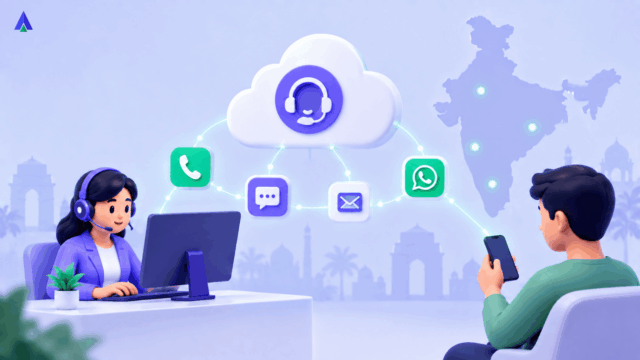
Picture a mid-size Indian D2C brand running support across WhatsApp, a helpline number, and email. Without a connected Customer Experience Management platform, three agents in three tools handle the same customer differently. A ticket doesn’t know the customer already called twice.
With a connected omnichannel setup, voice feeds call transcripts and sentiment scores straight into the helpdesk. A WhatsApp query from the same number then pulls up prior call history on its own. This kind of connected routing drives faster query resolution. That’s because agents stop hunting across systems for context.
For a support manager, the upside is simple: fewer repeated questions, shorter handle times. A supervisor dashboard shows the full journey, not just one channel’s slice of it. That’s the real case for a Customer Experience Management platform over a patchwork of point tools.
Conclusion:
Three things matter more than the vendor’s logo when picking a customer experience management platform in India. First, Customer Experience Management and CRM aren’t the same thing: a Customer Experience Management platform tracks experience quality across channels, not contact records. Second, Indian deployments live or die on regional language support and WhatsApp readiness, not generic global feature lists.
Third, the market’s growing rapidly, but most Indian brands still lack real channel orchestration. That gap is your opportunity, not just a vendor’s talking point.
Shortlist three or four platforms from the ten above using the checks in this guide. Then run them against your actual ticket volume and language mix, not a generic demo script.
Frequently Asked Questions
A customer experience management platform unifies customer interactions, voice, chat, WhatsApp, email, and social, into one system. It tracks experience quality: sentiment, wait times, and resolution, not just contact records. This differs from a CRM, which mainly tracks deals and contact history.
A CRM manages contacts, deals, and sales pipelines. A Customer Experience Management platform manages the quality of every interaction across channels, including sentiment and resolution speed. Many businesses run both together: CRM for relationship data, CXM for experience delivery and channel orchestration.
Costs vary widely by platform and team size, from per-agent helpdesk pricing to custom enterprise contracts. Rather than compare list prices, request quotes based on your actual agent count, channel mix, and integration needs. Most vendors offer tiered plans that scale with usage. See the pricing table above for a quick reference on where each platform starts.
The strongest ones do, and in India this isn’t optional. WhatsApp usage in India grew 314% between 2021-2025, and roughly 70% of the population now uses the app, per Infobip’s 2026 messaging trends report. Look for native regional-language handling in chat and voice, not just translated templates, before shortlisting a platform.