




Two borrowers land in the same DPD bracket. One gets a routine reminder call. The other gets escalated by mistake and hangs up angry.
Why does this keep happening? Most collections floors still route calls the same way for every case, round robin or by agent seniority. A DPD-1 reminder and a DPD-30 escalation are not the same conversation. One needs a nudge. The other needs real negotiation skill.
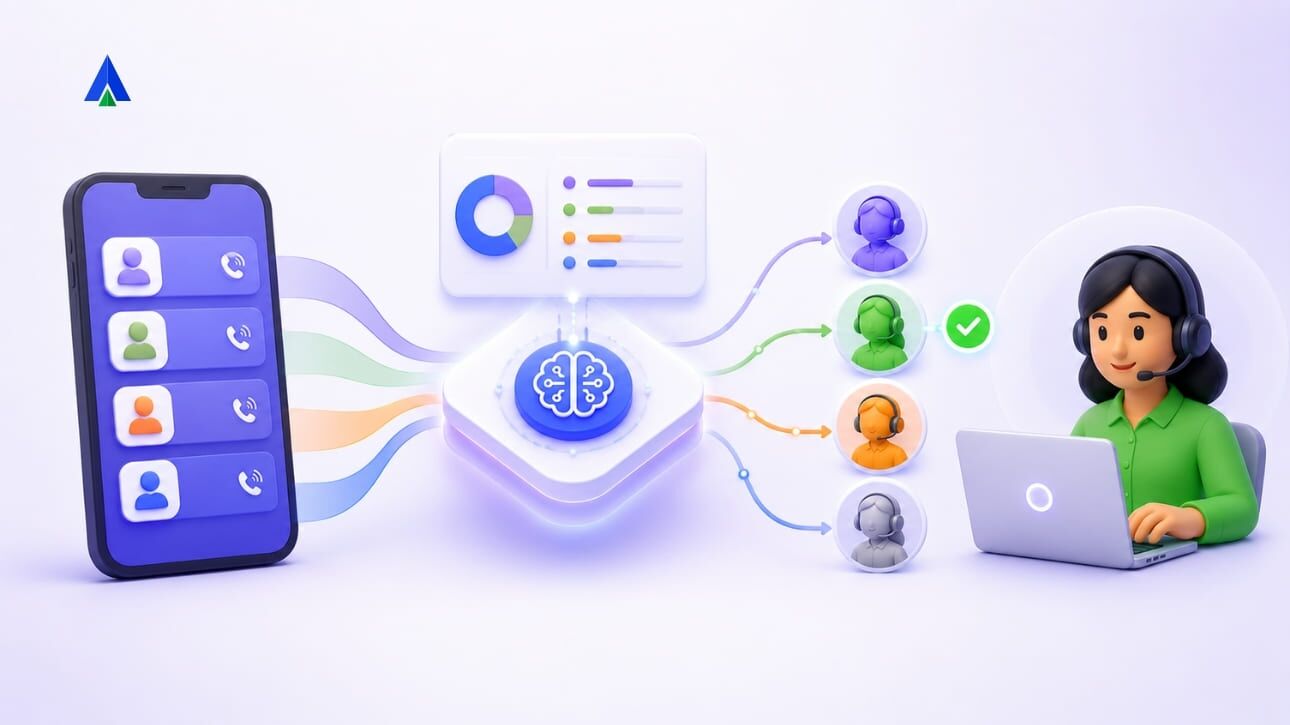
An automated call routing system decides which agent gets which borrower, and that single decision shapes your recovery outcome. This article shows how business call routing built on risk-based segmentation and skill-based routing fixes what manual assignment cannot.
DPD (Days Past Due): the number of days a borrower has missed a scheduled repayment.
Why Do DPD-1 and DPD-30 Calls Need Different Routing?
A DPD-1 call is a reminder. A DPD-30 call is a negotiation under pressure, often with an upset borrower. Round-robin routing hands both to whichever agent is free next, regardless of fit.
[/av_toggle_container]
Call TypeConversation TypeAgent Fit NeededRouting Risk
DPD-1Routine reminder callAgent sharp at scripted remindersWrong fit adds repeat calls.DPD-30Negotiation under pressureCalm negotiator who can de-escalateWrong fit creates borrower fatigue.
That approach ignores something every collections lead already knows. Agents are not interchangeable. Some are calm negotiators who de-escalate well. Others are sharper at scripted reminders but freeze on pushback. Seniority-based routing is not much better. It assumes tenure equals skill, when the two often diverge.
Regulators are pushing collections teams toward more deliberate borrower handling, not less. RBI digital lending guidance and industry recovery guidelines from FACE, the digital lending self-regulatory body, push the opposite.
They call on lenders to use borrower history and behavioral scorecards, not treat every account the same way. Flat, convenience-based routing works against that intent. It also quietly increases repeat calls and borrower fatigue, since mismatched agents rarely close the conversation.
TL;DR: DPD-1 and DPD-30 calls demand different agent skills, so routing both calls the same way hurts recovery and borrower experience.
How Does Risk-Based Call Routing Build a Priority Queue?
Score each borrower on DPD, payment history, loan amount, and prior contact outcomes. That score turns a flat call list into a prioritized, risk-ordered queue.
Once borrowers are scored, segment them by recency and risk band, not just DPD alone. A high-value DPD-15 account with a broken promise-to-pay needs a different script and escalation path than a DPD-15 first-time miss. Building this logic into the dialer means the right script and escalation trigger fire automatically. Agents stop deciding case-by-case, which removes inconsistency and judgement calls from the floor.
This is not just an efficiency play. RBI’s proposed recovery norms for NBFCs, effective 1 July 2026, already call for behavioral scorecards to differentiate borrowers. NBFCs building segmentation into their systems now are simply ahead of where the framework is heading.
TL;DR: Scoring borrowers by risk and recency turns a flat queue into a prioritised, auto-routed one.
Does Skill-Based Call Routing Match Agents to Borrowers Better?
Yes. Routing high-risk, high-value accounts to your strongest negotiators improves right-party contact and resolution rates measurably.
RPC (Right-Party Contact): successfully reaching the actual borrower, not a wrong number or third party.
Skill-based routing in debt collection specifically directs calls to agents with the right skills for tough scenarios. Think difficult debtors or payment negotiations, exactly the DPD-30 problem above. The same logic extends to language and region. Route Tier-2 and Tier-3 city borrowers to agents fluent in the local language. Connect rates rise because the borrower is not straining to follow a Hindi or English-only script.
None of this needs a senior agent manually eyeballing each account and reassigning it. It needs the routing rules to already know who is strong at what.
TL;DR: Matching agent skill and language to borrower profile lifts right-party contact without adding headcount.
How Does Contact Center Studio Run Inbound Call Routing Software?
Here is what this looks like inside a dialer, not a spreadsheet. Configure skill levels 1 to 30 once, covering negotiation strength, language, and product familiarity. Define borrower segments by DPD band, risk score, and recency. Contact Center Studio then routes each call to the matching skill level automatically. Escalation paths are built into the same rule set.
Team leads stop manually reassigning calls based on gut feel about a borrower’s file. That reassignment work, done by hand across hundreds of daily calls, quietly eats a team lead’s entire shift.
Automating it frees that time for coaching and exception handling instead. Pair this with structured outreach campaigns and the segmentation carries through to reminders and follow-ups too. A connected dialer keeps the same segmentation logic across reminders and follow-ups.
Better-matched calls also mean fewer repeat contact attempts per account. Fewer attempts lowers cost-per-recovery. It also cuts the borrower fatigue that comes from being called by the wrong agent thrice.
CTA: See how Contact Center Studio’s skill-based routing supports your collections workflow, from DPD-1 reminders to DPD-30 escalations.
What Should Collections Teams Take Away?
DPD-1 and DPD-30 calls need different agents, not the same round-robin queue. Risk scoring and segmentation turn borrower lists into prioritised, auto-routed queues instead of flat ones.
As NPAs rise across NBFCs, fintechs, and MFIs, an automated call routing system is how collections teams lift recovery rates without adding headcount. Teams that route by risk and skill, not convenience, pull ahead first.
For teams planning a modern inbound call routing software setup, the next step is to connect borrower risk, agent skill, and routing rules inside one workflow.
FAQs About Call Routing for Collections
A: Skills-based call routing matches each borrower’s call to an agent based on negotiation skill, language, and risk band. It is not availability alone. It replaces round-robin or seniority-based distribution with rules matched to borrower risk and difficulty.
A: Round-robin sends calls to the next free agent regardless of fit. Skills-based call routing checks the borrower’s risk score and segment first. It then sends the call to an agent configured for that exact profile.
A: Use DPD, payment history, loan amount, and prior contact outcomes to score borrowers. Match high-risk, high-value segments to senior negotiators, and route by language for regional accounts.
A: Yes. Borrowers in Tier-2 and Tier-3 cities connect and negotiate better in their own language. Routing these calls to fluent agents raises right-party contact and reduces repeat attempts.
A: Yes. Segmentation and skill-based rules run inside the dialer automatically. Existing agents get matched to the right calls, so recovery improves without hiring more staff.
A: Not necessarily overkill, but the return depends on volume. Very small teams with under 20 daily calls may manage manually. Once volume or agent count grows, manual matching breaks down fast.


