


 6 mins read


✨TL;DR:
- Number masking connects callers through a virtual proxy number. Real numbers never get exchanged.
- It protects customer and driver privacy. It also cuts harassment risk and supports compliance with India’s DPDP Act.
- A proper number masking solution needs DID scale, call recording, and built-in compliance. A bare proxy API isn’t enough.
- Acefone’s number masking service bundles all three, giving you privacy and a usable audit trail in one platform.
Ever had a customer call your delivery rider directly, at midnight, over a missed address?
That’s the moment ops teams dread. Once a personal number gets exchanged, you lose control of it. You can’t audit the call. You can’t stop the follow-up texts. And if the rider changes shifts or leaves, that number keeps floating around. There’s no record of who has it now.
Number masking fixes this. It routes every call through a temporary proxy number instead of a real one. In this guide, we’ll cover how masking works, what it protects, and what to check before you pick a provider.
What is Number Masking?
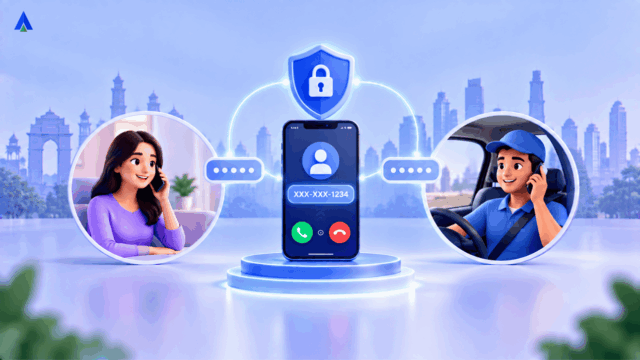
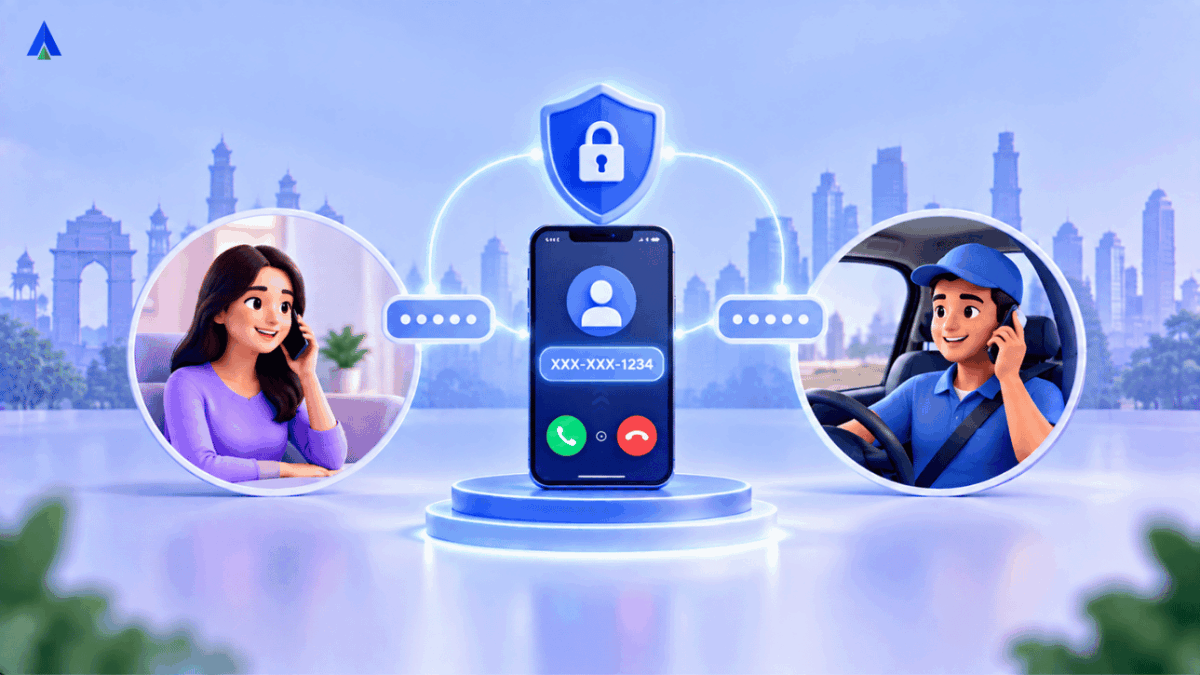
Number masking is a privacy technology that connects two parties through a temporary virtual number instead of their real phone numbers. Neither side ever sees the other’s actual digits. The system routes the call, then discards or recycles the proxy number once the interaction ends.
How does Number Masking Work?
Here’s the mechanic in practice. When a customer books a cab or places an order, the platform assigns a proxy number for that one interaction.
VoIP (Voice over Internet Protocol): technology that carries voice calls over internet networks instead of traditional phone lines.
The call rides on VoIP infrastructure. It uses SIP trunking to route the call dynamically between the two real numbers behind the scenes. Neither the customer’s app nor the driver’s phone ever stores the other party’s actual number, only the temporary proxy.
DID (Direct Inward Dialing): a block of virtual phone numbers a business can assign to route calls without physical phone lines.
Masking typically comes in three flavours. Session-based masking assigns a number per order or ride, then expires once the transaction closes. Permanent masking assigns one proxy number to an agent for ongoing relationships. It suits real estate or recruitment, where the same two people talk repeatedly. Variable masking rotates numbers by campaign or location, mostly for call tracking and marketing attribution.
CPaaS (Communications Platform as a Service): a cloud platform that lets businesses add calling, messaging, or video into their own apps through APIs, instead of building telecom infrastructure from scratch.
UCaaS (Unified Communications as a Service): a cloud platform that bundles calling, chat, and video into one business communication tool.
Most modern masking runs on CPaaS or UCaaS platforms. These handle the routing logic, so businesses don’t need their own telecom infrastructure.
Want a deeper look at how each masking type applies across industries? Our earlier post on number masking use cases breaks it down further.
What Are the Key Benefits of Number Masking?
Privacy is the obvious win with call masking. Neither your customer nor your driver has to hand over a personal number to a stranger.
That matters more than ever under India’s Digital Personal Data Protection Act, 2023. The Act places clear duties on how businesses collect, store, and share personal data such as phone numbers. Number masking limits how much personal data your systems touch in the first place. That also narrows your compliance surface.
There’s also a hard cost argument for call masking. Data breaches in India hit an average organizational cost of ₹220 million in 2025.That’s according to IBM’s Cost of a Data Breach Report. Fewer real numbers stored means fewer numbers that can leak, and fewer records to explain if a regulator comes asking.
Beyond compliance, phone masking builds trust. Customers who see a masked number feel safer sharing pickup instructions or delivery notes. Once a rider or agent leaves your company, a customer’s real number doesn’t leave with them. It’s never saved on their phone, which cuts the risk of unsolicited calls after the relationship ends.
Masking also protects your own staff. Agents and delivery riders get the same privacy shield. Customers can’t call, message, or track them once a task is done.
Why Number Masking is a key feature for the business?
Not every number masking API is built the same way. A generic proxy service can hide numbers, but that’s often where it stops.
1) Data Security
Numbers are not exposed between the two parties, thus removing the question of data lapse. Companies gets a feature of not sharing the database with their staff and also, keeping the business on course.
2) Call Monitoring and Tracking
To track the call data, recordings, Acefone provides a Panel which is easy to use and accessible from anywhere. These recordings, call duration can be accessed through the Acefone Mobile Application as well.
3) Superior Customer Experience
Knowing that personal numbers does not get reflected to both parties makes them comfortable to communicate.
4) Faster Communication
Instead of calling to a centralized number, the calls get mapped to the destination number based on the response received from the API.
5) Cost-Effective
With the setup done on the internet, it saves cost. While the business runs globally, single setup achieves this solution thus cutting the cost.
A virtual number with strong DID capacity is the backbone of all of this. Without enough numbers in the pool, masking breaks down exactly when you need it most. That’s during peak hours, when order volumes spike, and every proxy number is already in use.
Number Masking vs Call Forwarding: What’s the Difference?
Call forwarding redirects a call to another number. That number still stays visible to the caller. Number masking hides both real numbers behind a proxy, so neither party ever sees the other’s actual digits.
| Call Forwarding | Number Masking | |
| Who sees real numbers | Recipient sees the forwarded number | Neither party sees the other’s number |
| Privacy | One-way at best | Two-way, both sides hidden |
| Callback risk | Recipient can redial the visible number directly | Proxy expires or recycles, blocking direct redial |
| Call logging | Not built in | Logged and recordable by design |
Forwarding was never built for privacy. It just reroutes a ring, so anyone who dials the visible number can still call it back directly later. Masking is a two-way shield, applied to every call your business sends or receives. If your goal is privacy and compliance, forwarding alone won’t get you there.
How Do You Choose a Number Call Masking Provider?
Choose a number masking provider with enough DID capacity for your call volume. It should also offer built-in recording, compliance tools, and easy integration with your stack.
Run through this checklist before you sign:
- Can they handle your peak call volume without number shortages, especially during festive or lunch-hour spikes?
- Is call recording and CDR analytics included, or a costly add-on?
- Do they support DPDP-aligned data retention and India data residency out of the box?
- Can their API plug into your existing dispatch or CRM system without heavy engineering work?
- Is pricing transparent, with no hidden per-minute surprises once you scale up?
Pricing is often the deciding factor here. It’s worth reading up on why pricing matters when you’re comparing cloud telephony providers, masking included.
Which Industries Use Number Masking?
Delivery and ride-hailing platforms are the most visible users of number masking, but far from the only ones.
Picture a delivery platform at lunch rush. A rider needs to call a customer about a locked gate. The app assigns a session-based proxy number for that one call. The rider dials it, the system bridges the call, and neither party sees the other’s real number. Cab platforms use the same flow for pickup coordination.
Marketplaces use masking, so buyers and sellers can confirm order details without swapping personal contacts. That also discourages deals made outside the platform. BFSI teams use it for field sales and collections calls. That way, a customer’s number never sits in a field agent’s personal phone. Healthcare providers use it for doctor-patient consultation calls. Real estate agents use permanent masking to keep buyer and seller numbers private across a long deal cycle.
In each case, the call gets logged, recorded, and tied back to the order or case ID automatically. That matters when a dispute lands on your support desk. Your team can pull up the exact call, instead of relying on someone’s memory.
Conclusion
Number masking isn’t nice to have anymore. It’s how you protect customer and rider privacy at scale, while staying on the right side of the DPDP Act.
Three things matter most. Masking hides real numbers behind a proxy. A proper solution bundles recording and compliance with that proxy. Generic masking APIs usually leave you to build those extra layers yourself.
That’s exactly the gap Acefone’s number masking solution closes. It comes with two-way masking, CDR analytics, and compliance handling built in from day one.
Privacy is Key for Future Business
According to whitepaper ‘Current State of Cybercrime-2019’, released by RSA Security, social media fraud has increased by 43% in 2018.
Thus, it creates an urgency of preserving the customer’s information from get leaked. People respect their privacy and anonymity more and more, considering the fact that we’re living in the world where social media has made an impact where we let people have an insight at our lives – but this happens on our condition, the authority remains with us what we have to share. Using Number Masking, you make sure the customer’s feel secure thus growing your business. Get started with the feature according to your business needs. To get started with the process and creating a secure environment for your customers through number masking, please contact Acefone.
FAQs
Number masking connects two callers through a temporary virtual number, hiding both real phone numbers. Delivery, cab, and marketplace apps use it to protect customer and driver privacy during calls.
Yes, when done through a licensed virtual number provider. TRAI regulates virtual number and CLI allocation under the Unified License framework, and licensed masking providers operate within those rules. It also supports compliance with the Digital Personal Data Protection Act, 2023.
Not by default. Basic masking APIs only route calls anonymously. A full solution, like Acefone’s, adds call recording and CDR analytics so businesses can resolve disputes and meet audit requirements.
Caller ID blocking hides your number entirely and shows nothing to the recipient. Number masking replaces it with a working proxy number, so calls still connect and get answered normally.
Not by either party on the call. The mapping between proxy and real number sits only on the provider server. Session-based numbers typically expire or recycle after the interaction ends.
Core number masking covers voice calls. Some providers extend the same proxy logic to SMS. WhatsApp and other app-based messaging usually need a separate masking integration.
Not necessarily. Small businesses with low call volume and no privacy risk may not need it. It’s most valuable for platforms connecting strangers, like delivery, ride-hailing, and marketplace apps.