


 5 mins read


Every e-commerce operations manager has a number burned into their memory— the cost of a single COD confirmation call.
At ₹25–40 per call, 50,000 monthly confirmation calls cost ₹12–20 lakh. Just to ask customers if they still want what they ordered. Then 30–40% of those orders come back anyway.
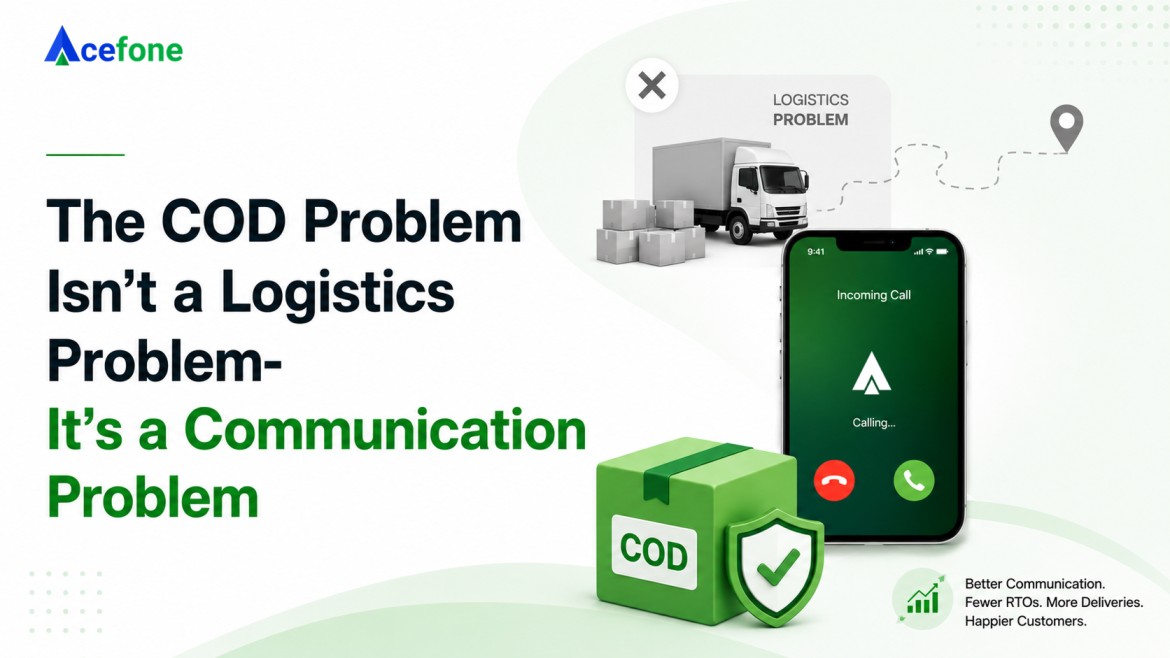
Most teams respond by hiring more agents, tightening delivery windows, or switching logistics partners. None of it moves the needle. Because the problem was never logistics.
It was always communication.
Why COD Return Rates Stay High Despite Confirmations?
COD return rates stay high because most confirmation calls happen too late — after purchase intent has already faded.
An order placed three days ago is a cold lead by the time your agent calls. The customer said yes in a purchase moment of excitement, impulse, and intent. By confirmation time, that moment is gone. They’ve seen the product elsewhere for less. They forgot what they ordered.
The reason doesn’t matter. What matters is that the gap between order and confirmation is where intent dies.
Logistics can’t fix that. Faster delivery doesn’t help if the customer has already moved on. What kills the return isn’t delivery speed — it’s a timely, contextually relevant conversation that re-engages the customer before the intent window closes.
Most COD workflows call too late, say too little, and offer no room for the customer to respond with anything other than yes or no.
That’s not a delivery problem. That’s a last-mile communication failure.
Why Manual Calling Doesn’t Reduce COD Return Rates?
Manual calling can’t solve COD return call rates at scale because it was never designed for the precision, timing, and repeatability the problem requires.
The instinct is to add more agents, more calls, faster outreach, better scripts. But COD volume outgrows manual capacity faster than you can hire.
Human agents can’t reach every order within the optimal confirmation window. They can’t personalise at scale. They can’t process signals in real time without a coordinator and a workflow that most ops teams don’t have.
The math is brutal. A 10% RTO reduction on 50,000 monthly orders saves significant revenue annually. But getting there with manual agents means more headcount, higher training costs, and a team that churns every festive season when call volumes triple overnight.
The economics of COD confirmation break at scale. Not because your agents are bad. Because human calling is the wrong tool for a problem that requires precision, timing, and repeatability.
How Does Omnichannel Communication Reduce COD Return Rates?
Omnichannel communication reduces COD RTO by delivering the right message on the right channel at the right moment — not routing messages blindly across channels.
An omnichannel platform like Acefone’s Interactions Hub sequences them intelligently:
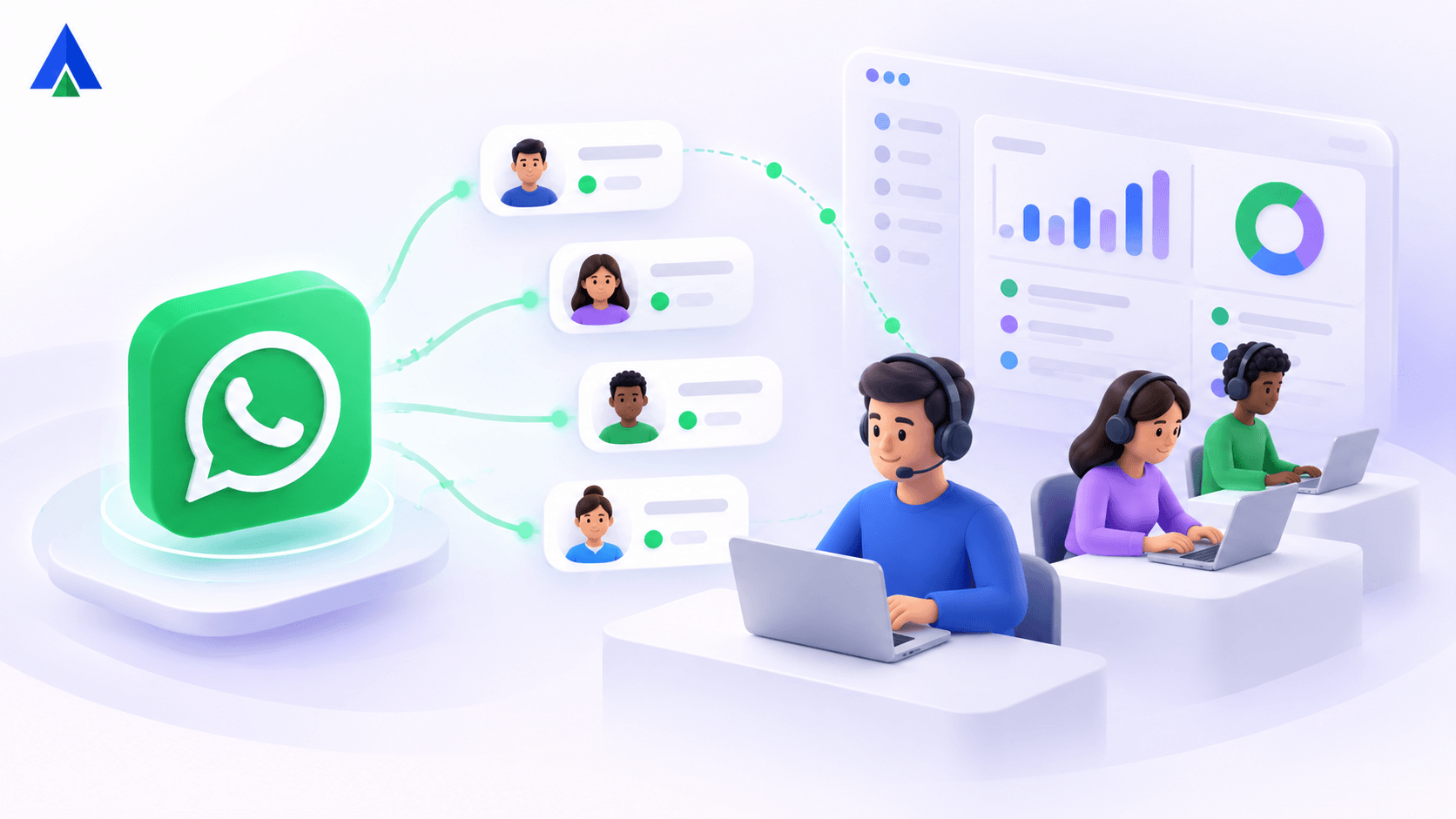
Voice call → WhatsApp fallback → SMS confirmation
The voice agent reaches out first. If the call goes unanswered, a WhatsApp ping follows. Once the customer confirms, an SMS confirmation lands immediately. The customer experience feels coherent. The workflow costs a fraction of the manual alternative.
73% of shoppers use multiple platforms before making a single purchase decision. A single-channel COD workflow misses most of them.
But the real unlock is what happens inside the call.
A voice agent can confirm the order, answer basic product questions, reschedule delivery, and send a payment link — all in one interaction, without transferring to a human agent. That’s not a phone call. That’s a 90-second support session that replaces three separate touchpoints.
How E-commerce Teams Use Voice AI for COD Confirmation?
E-commerce teams are using AI voice bots to fix two failure modes that manual calling can’t address: incomplete coverage and incomplete resolution.
A typical operation running 50,000 COD confirmation calls a month struggles on both fronts. Not every order gets called in time. And even answered calls don’t capture the full signal — reschedule request, address change, product question — because the agent is moving too fast.
AI voice agents fix both.
Coverage becomes total. Every order gets a confirmation attempt within a defined window, at consistent quality, regardless of call volume spikes. Resolution improves because the voice agent handles multiple conversation paths — not just collecting a yes/no.
Teams running voice bots for COD confirmation are seeing cost-per-call drop by 60–70%. Not because AI is magic. Because you’ve replaced a variable, brittle human process with a defined, repeatable one. It frees your agents to handle escalations that actually need a human.
Learn more: How E-commerce Brands Cut Cost-Per-Call with Voice Bots
Will Customers Accept a Voice Agent for COD Confirmation?
Customers will accept a voice agent for COD confirmation if the implementation is right.
The concern — “our customers won’t respond well to a bot” — is valid. But it’s an implementation question, not a category question.
A bot with a two-second response delay, a robotic tone, and no ability to handle a simple rescheduling request will lose customers. That’s a build problem, not a category problem.
A voice agent with sub-600ms latency, natural conversation flow, and the ability to confirm, reschedule, and send a payment link doesn’t feel like a bot to the end customer. It feels like a fast, capable interaction that resolves what they need.
The question isn’t whether to use AI voice. It’s whether your vendor can deliver the interaction quality that earns customer trust. Latency, language handling, and action capability are the three things to evaluate before anything else.
What You Should Look for in a COD Voice Agent?
The right COD voice agent platform must deliver five things.
1. Voice latency under 600ms
Anything slower breaks conversation flow. Customers hang up. The benchmark is 500–600ms voice-to-voice.
2. Action capability
A voice agent that only says “your order is confirmed” is a glorified IVR. You need a bot that can reschedule, send WhatsApp follow-ups, fetch order status, and transfer to a human — within the same call.
3. No-code configuration
If your implementation needs three months of engineering work, you’ll miss two sale seasons before going live. The right platform lets you configure and deploy without developer dependency.
4. Pre-deployment testing
Before a single customer hears your voice agent, test it against real scenarios. If your vendor doesn’t offer this, you’re shipping to production blind.
5. India regulatory compliance
If customer data routes through US servers, your legal team will stall the deployment indefinitely. Look for DPDPA-compliant infrastructure with India data residency as a standard feature, and not an add-on.
Learn more: How to Choose AI Voice Agent Platform
What ROI Can You Expect from Voice AI For E-commerce?
E-commerce teams using AI-powered COD communication are seeing cost-per-call drop by 60–70% — from ₹25–40 per manual call down to approximately ₹2–5 — without sacrificing resolution quality.
60–65% of India’s e-commerce orders are placed via COD, with 25–30% resulting in RTOs. On 50,000 monthly calls, the savings compound fast. Before you count RTO reduction. Before you factor in the festive season, when volumes triple and manual infrastructure buckles.
The COD problem has always been solvable. What changed is that the communication infrastructure to solve it now exists — and it doesn’t require an engineering team, a 6-month implementation, or a leap of faith.
It requires a clear-eyed look at where the breakdown happens. Not in the warehouse. Not at the door. In the conversation that never happened on time.
Acefone’s Interactions Hub and AI voice agents are built for exactly this workflow — omnichannel COD communication, deployed in hours, without writing a single line of code.