


 9 mins read


TL;DR
- VoIP provider fit for India means compliance: DoT’s liberalized OSP framework, TCCCPR telemarketing rules, DPDP Act data handling.
- Real cost sits beyond the sticker price. Recording, CRM integration, and per-minute overages add up fast.
- Match provider to scale. Small teams want speed and transparency; large teams want proven uptime at volume.
- 10 best VoIP phone service providers: Acefone, Exotel, Ozonetel, Knowlarity, Kaleyra, MyOperator, CallHippo, Freshdesk Contact Center, Airtel IQ, JustCall.
- Run a two-week evaluation before signing: peak-hour load test, written compliance statement, one live CRM integration test.
Most ops teams pick a VoIP provider the way they pick a SaaS tool: compare feature lists, pick the cheapest plan, move on. Then six months in, an audit flags an unregistered call route, or a 200-seat scale-up finds its “unlimited” plan throttling at peak hour. We’ve watched this pattern play out across dozens of Indian businesses.
This guide is built for the person who has to live with that decision: an ops or IT manager who owns the phone stack after the contract is signed.
We’ll walk through what actually separates a VoIP service provider built for India from one that just serves India as an afterthought. We’ll then break down 10 providers worth shortlisting.
How Do You Shortlist a VoIP Provider for Your Team Size?
A 10-person sales team and a 300-seat contact center need almost nothing in common from a VoIP provider. Match the shortlist to your actual call volume and workflow, not to a generic “best of” ranking.
Small teams should prioritize fast setup, transparent per-user pricing, and CRM integrations that work out of the box. Larger contact centers should prioritize proven uptime at volume, predictive dialing, live agent monitoring, and dedicated account support.
Suggestion reading – VoIP call center
Best VoIP Software & Providers in India : Quick Comparison
We ran each provider through the checks above: compliance posture, published G2 ratings, real user pros and cons, and starting price. Acefone is our own product, listed first for disclosure, followed by nine independent providers ranked by relevance to Indian ops buyers.
| Provider | G2 Rating | Starting Price | Best For |
| Acefone | 4.8/5 | ₹1599/user/mo | All-in-one compliant contact center |
| Ozonetel | 4.6/5 | Custom quote | High-volume outbound contact center |
| CallHippo | 4.5/5 | $18/user/mo | Fast multi-country number rollout |
| Kaleyra | 4.5/5 | Usage-based, on request | Voice + WhatsApp + OTP on one platform |
| Exotel | 4.4/5 | Custom (credit-based) | Budget-conscious Indian startups |
| JustCall | 4.3/5 | $29/user/mo (2-seat min) | Sales teams needing CRM + AI calling |
| Knowlarity | 4.1/5 | Custom quote | Simple IVR and call routing |
| Freshdesk Contact Center | 4.1/5 | $15/agent/mo | Teams already on Freshworks |
| MyOperator | 3.8/5 | ₹2,500/3 users/mo | Small teams wanting WhatsApp + calling |
| Airtel IQ | Not widely listed | Pay-as-you-go | Enterprises on Airtel’s network |
10 Top VoIP Software Providers
Here are the top 10 best voip software providers in India:
Acefone
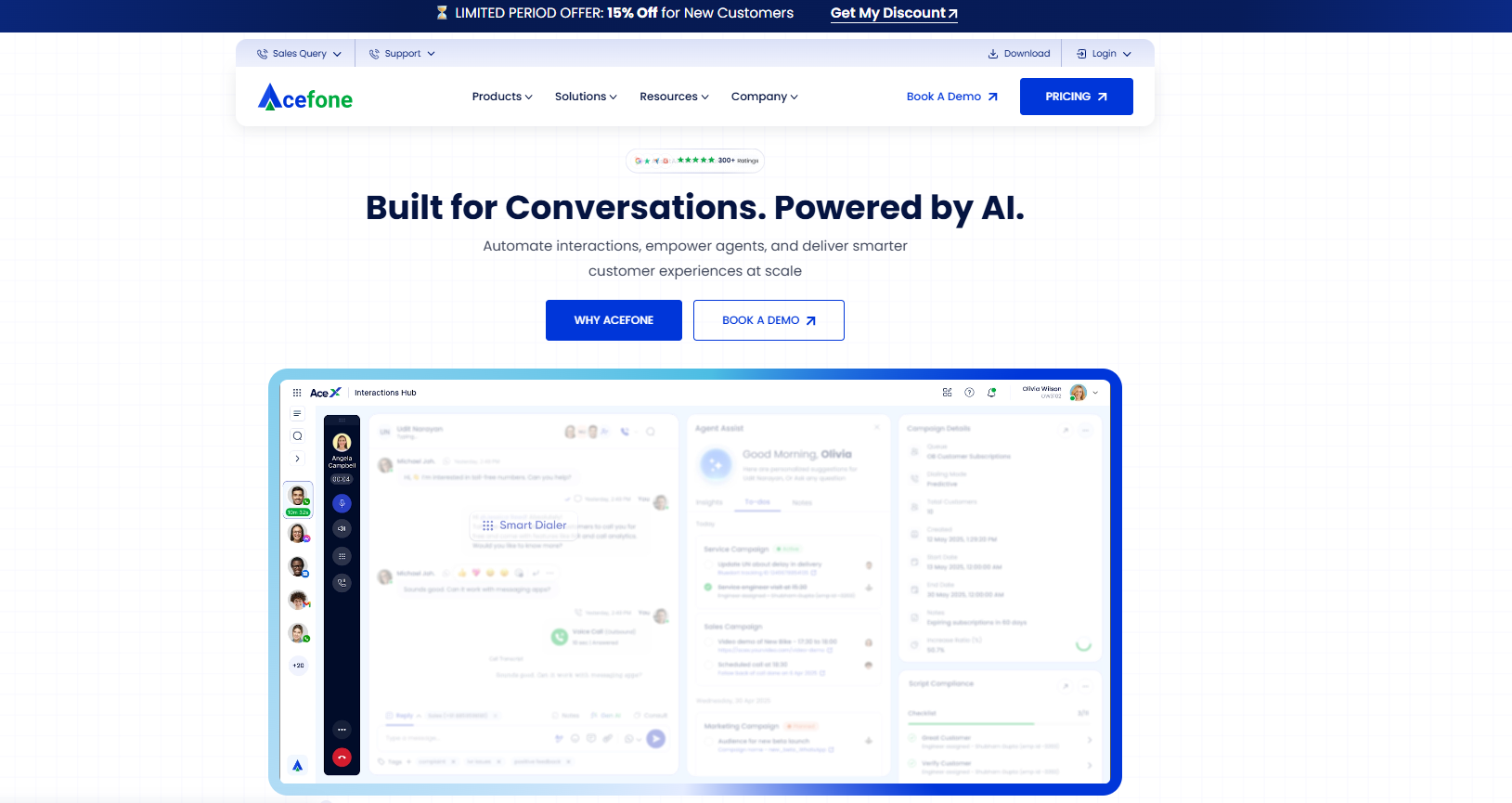
We built Acefone as an all-in-one cloud communications suite, running contact center tools, virtual numbers, and toll-free calling on a single platform. Our VoIP phone services help businesses handle over 5 billion calls annually.
Pros:
- Mobile app rated easy to use for on-the-go calling
- One-click calling with built-in recording
- Fast backend support response, per reviewer feedback
- Straightforward IVR and voicemail setup
- 65+ business features bundled at the entry tier
Cons:
- Some reviewers want richer incoming-call pop-up notifications
- Billing and account complexity flagged more on Trustpilot than on G2
- Predictive dialer versus auto dialer distinction has confused some buyers pre-sale
- Smaller G2 review base than category leaders like Ozonetel or JustCall
- Advanced analytics sit above the entry plan
Best for: Ops teams wanting one compliant, India-first platform instead of stitching together point tools.
Pricing: ₹1599/user/month
Ozonetel
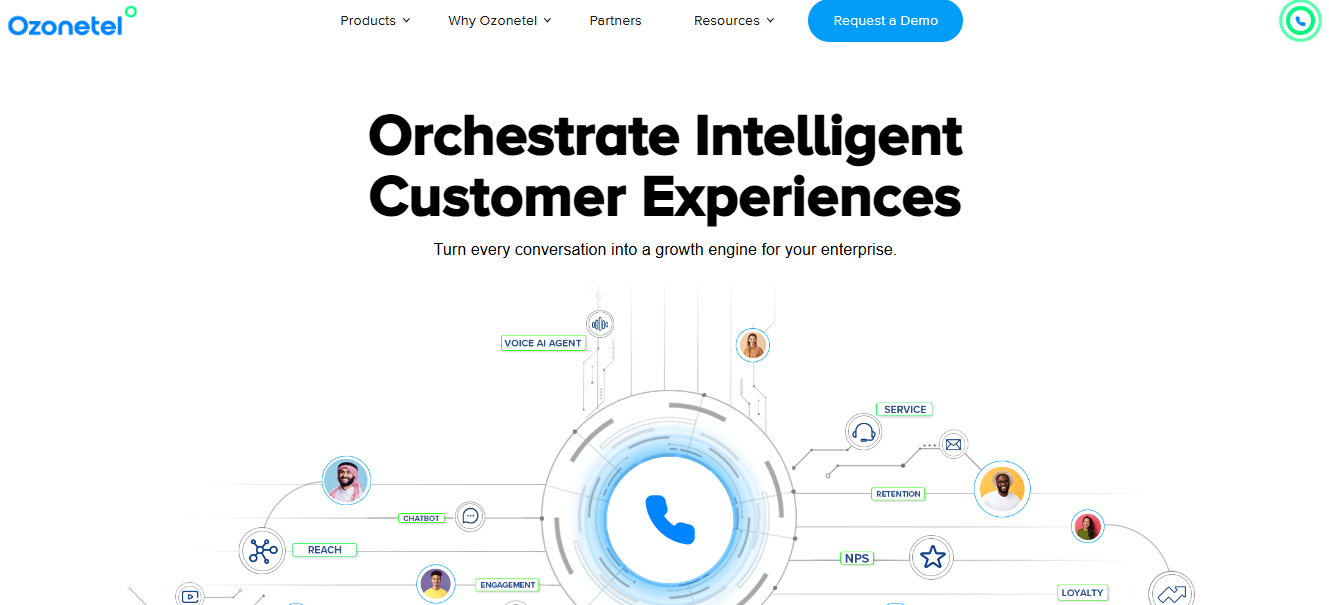
Ozonetel is a Hyderabad-based CCaaS platform, best known for CRM-native outbound calling and AI-assisted agent management at scale.
G2 rating: 4.6/5
Pros:
- Highest overall G2 satisfaction score among India-founded providers here
- Easy integration with existing CRM and support systems
- Strong reputation for support, an area rivals score lower on
- Comprehensive toolset including recording and high-volume call handling
- Published per-agent pricing includes unlimited minutes for NA and EU plans
Cons:
- India-specific pricing is quoted through sales, not published
- Built more for larger organisations than very small teams
- KooKoo API product is billed separately on per-minute CPaaS rates
- Onboarding pace trails smaller, more agile competitors per comparison data
- Feature depth can be more than a 5-person team needs
Best for: Mid-size to large contact centres running high call volumes with CRM depth.
Pricing: $25-55/agent/month published for NA/EU; India pricing via sales.
CallHippo
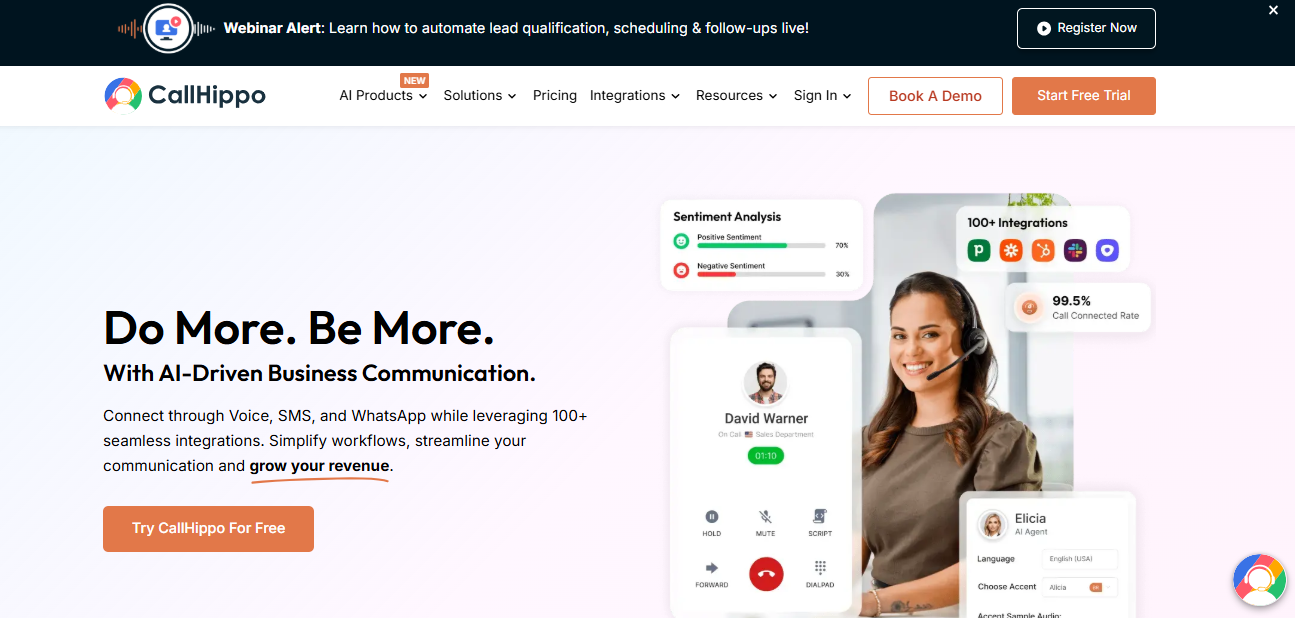
CallHippo is an India-founded (Ahmedabad) virtual phone system built for global reach, with local numbers across 50+ countries.
G2 rating: 4.5/5
Pros:
- Clean, user-friendly interface, per multiple reviewers
- Setup reported to take minutes, not hours
- Competitive entry pricing versus international rivals
- Wide CRM integrations including HubSpot and Pipedrive
- Strong software-level scores on both G2 and Capterra
Cons:
- Trustpilot rating sits far lower than its G2 score, driven by billing complaints
- Some outbound numbers get flagged “Spam Likely” by carriers
- Per-minute overage charges apply once bundled minutes run out
- Premium features like the power dialler sit on higher tiers
Best for: Distributed or international sales teams needing fast multi-country number rollout.
Pricing: From $18/user/month, billed annually.
Kaleyra
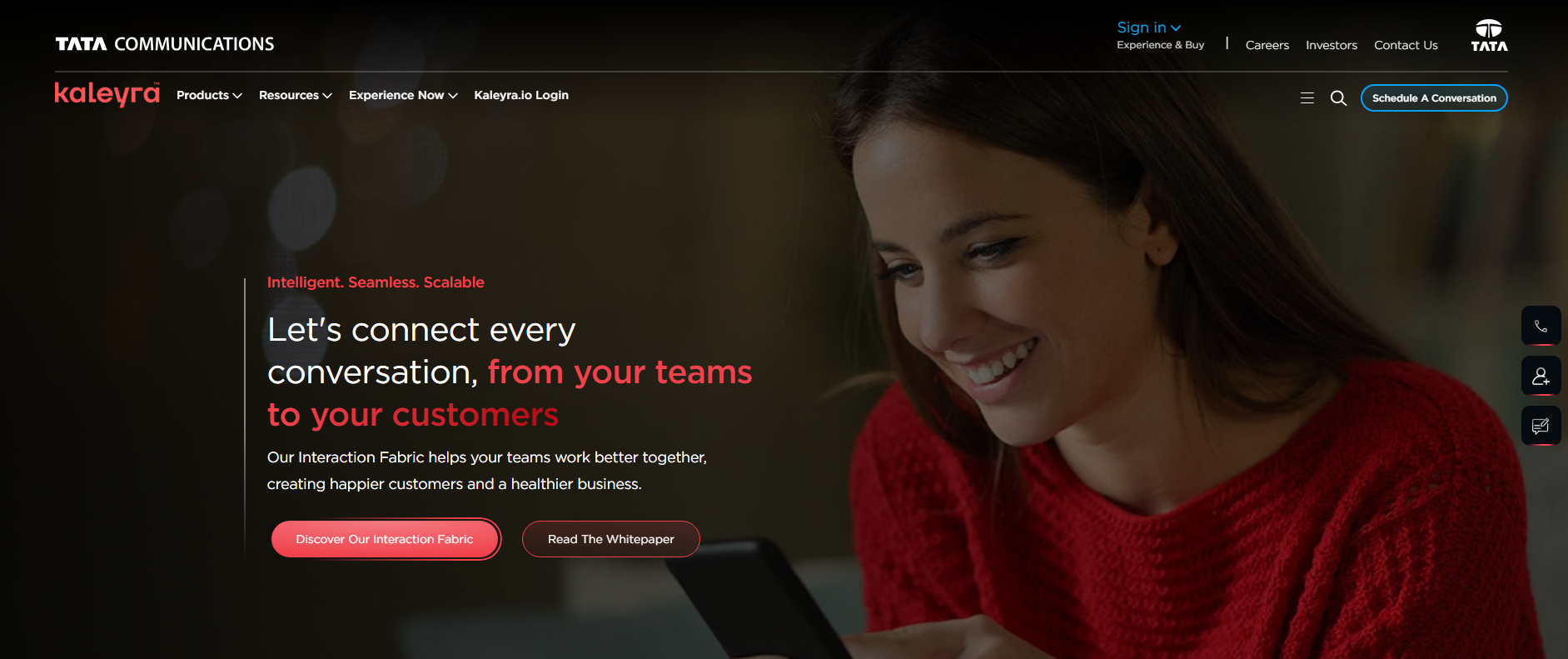
Kaleyra, formerly India’s Solutions Infini before its 2018 rebrand, is a global CPaaS platform covering voice, SMS, WhatsApp, video, OTP verification, and IVR flow building.
G2 rating: 4.5/5
Pros:
- Intuitive onboarding, per G2 reviewers, with minimal training required
- Pricing seen as reasonable for small businesses in head-to-head G2 comparisons
- Straightforward integration for OTP and messaging use cases
- Simple UI for managing voice, SMS, and WhatsApp from one dashboard
- Helps track weekly inbound and outbound call volume, per reviewer feedback
Cons:
- At least one reviewer flags pricing as high once usage scales up
- Occasional audio dropouts reported between agent and customer
- Support response time flagged as needing improvement by a reviewer
- Pricing is available only on request, with no published plans
- Small G2 review base (14) limits confidence versus larger competitors here
Best for: Businesses wanting voice, WhatsApp, and OTP messaging combined on one CPaaS platform.
Pricing: Usage-based, quoted on request.
Exotel
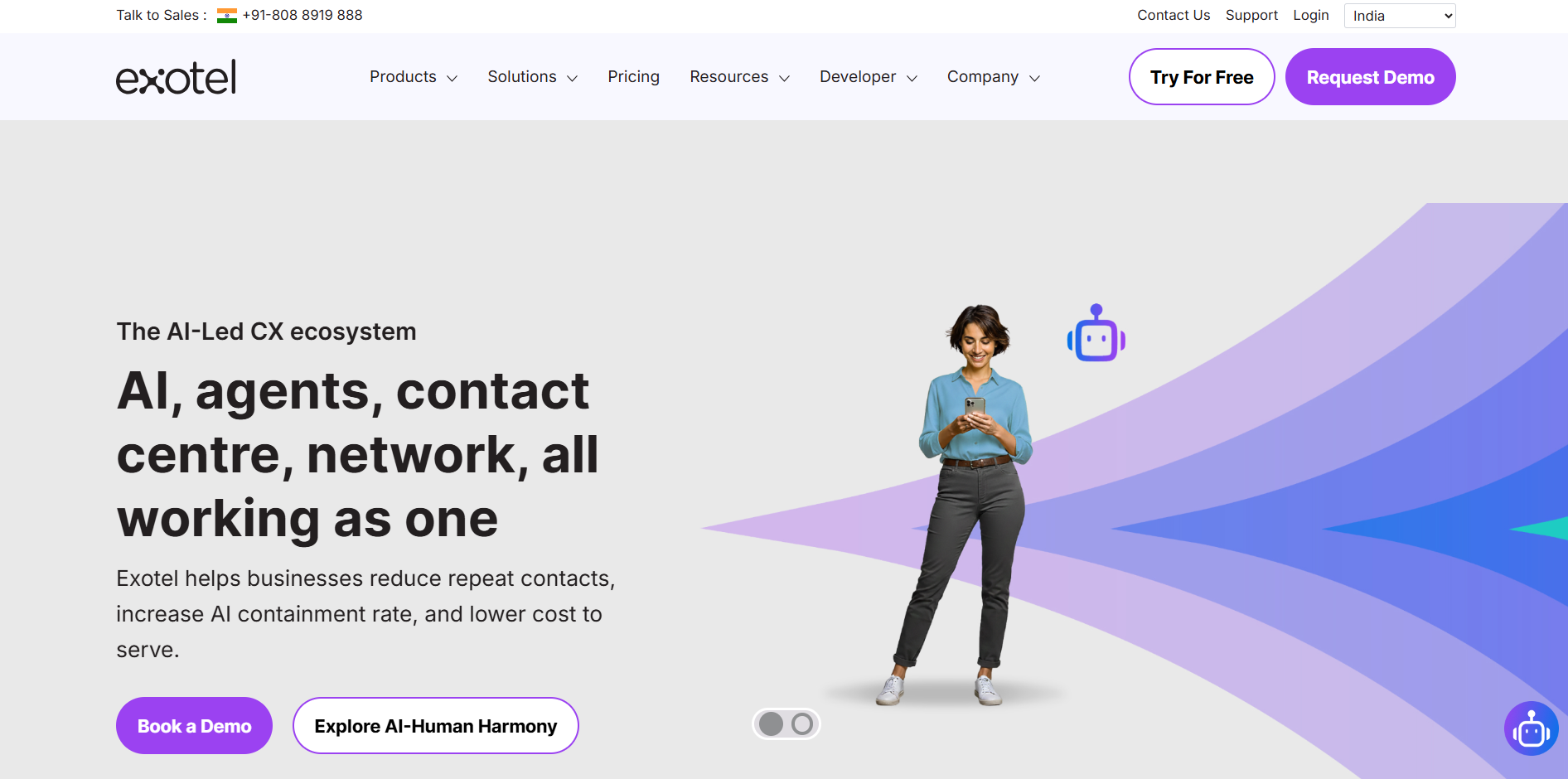
Exotel is a Bengaluru-based cloud telephony pioneer, splitting its catalogue across a business phone system, an enterprise contact centre, and communication APIs.
G2 rating: 4.4/5
Pros:
- Reviewers consistently call it affordable for Indian telephony
- Clear call quality and straightforward setup
- Strong ease-of-setup and ease-of-admin scores on G2
- Good value for money for small and mid-sized teams
- Multi-level IVR usable without heavy customisation
Cons:
- Interface and reporting flagged as needing updates by reviewers
- Occasional call log sync issues during maintenance windows
- Support rated more critical than category leader Ozonetel
- No published pricing, so every quote needs a sales call
- Customisation on its Ameyo contact centre line carries added fees
Best for: Startups and mid-market teams wanting reliable Indian telephony without enterprise pricing.
Pricing: Custom, credit-based billing.
JustCall
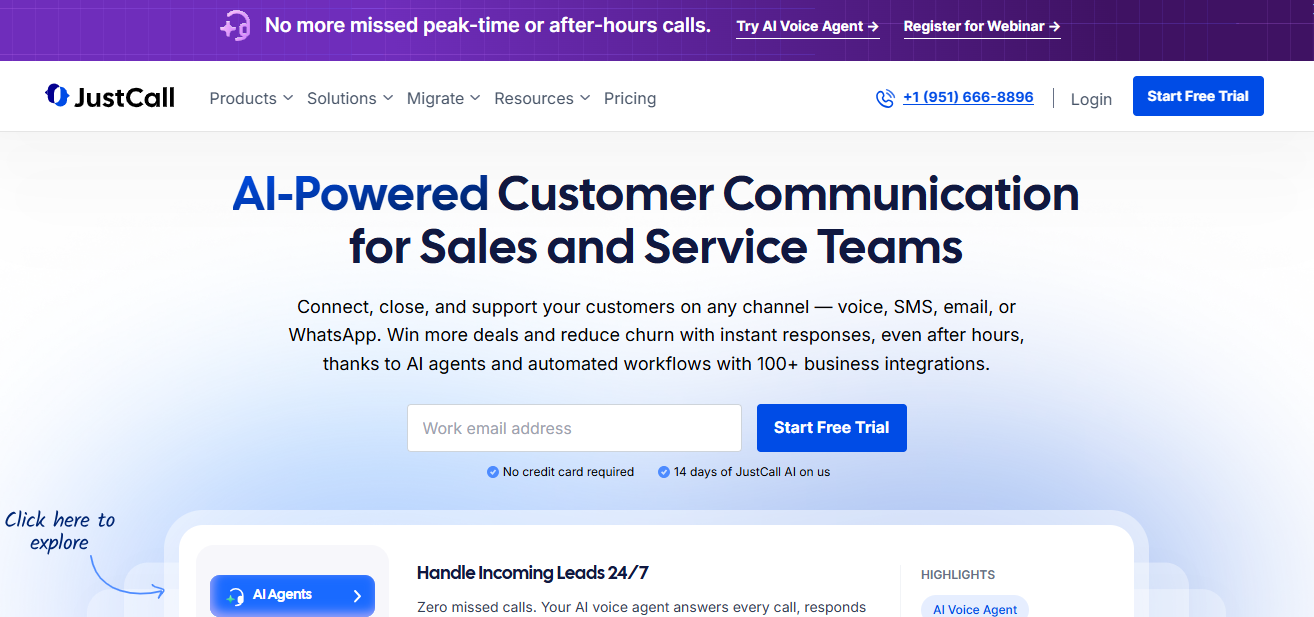
JustCall, built by SaaS Labs, is an India-founded calling and SMS platform used globally by sales and support teams.
G2 rating: 4.3/5
Pros:
- Large, verified review base among providers on this list
- Deep CRM integrations, including automatic ticket creation
- AI transcription and call summaries included on paid tiers
- Easy day-to-day interface, per reviewer feedback
- Strong fit for async sales and support workflows
Cons:
- Two-seat minimum means the real entry price is higher than advertised
- Many AI features cost extra even on higher-tier plans
- Reliability complaints during peak hours, per G2 and Capterra reviewers
- Trustpilot billing and renewal complaints run higher than its G2 score suggests
- Additional local numbers cost extra per month, per user
Best for: Sales-led teams wanting deep CRM integration and AI-assisted calling.
Pricing: From $29/user/month (2-seat minimum).
Knowlarity
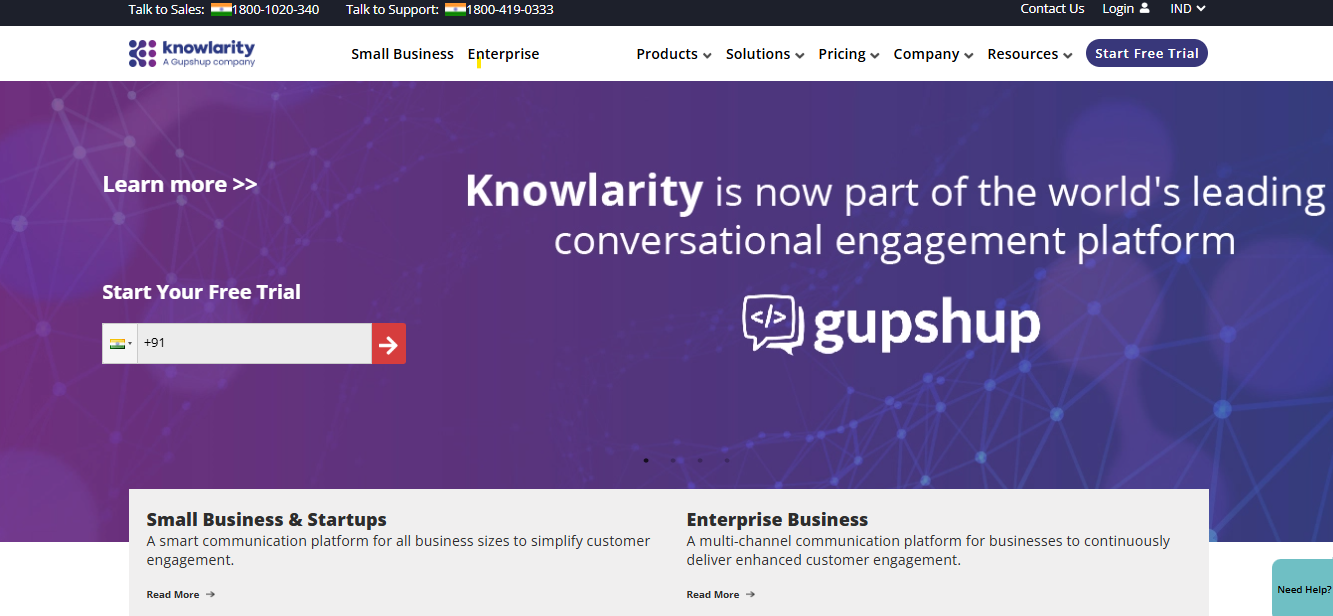
Knowlarity is a cloud communications provider serving India alongside Southeast Asian and Middle Eastern markets, with IVR and call routing as its core strength.
G2 rating: 4.1/5
Pros:
- Easy-to-use interface for call routing across extensions
- Reliable call recording, per Capterra and G2 reviewers
- Intelligent routing and live monitoring for high call volumes
- CRM sync praised for improving decision-making
- API access included across price plans
Cons:
- Call log synchronization can lag, affecting real-time tracking
- API routing described as basic, limited to one URL per integration
- Support response delays noted by some reviewers
- Independent review scores range from 3.9 to 4.1 across platforms
- No published India pricing; quotes are custom
Best for: Teams that need dependable IVR and routing without heavy customization.
Pricing: Custom quote.
Freshdesk Contact Center
Freshdesk Contact Center, formerly Freshcaller, is Freshworks’ cloud contact centre product, sold as part of its broader omnichannel suite.
G2 rating: 4.1/5
Pros:
- User-friendly IVR, call notes, and custom voicemail greetings
- Free number porting from a previous carrier
- Tight integration with Freshdesk and Freshsales
- Real-time dashboard for queues and agent availability
- Genuine free-forever entry tier for very small teams
Cons:
- Scores lower on G2 than Freshworks’ flagship Freshdesk ticketing product
- Smaller standalone review base than dedicated India-first players
- Costs scale quickly moving from Growth to Pro to Enterprise tiers
- Best value depends on already running on Freshworks tools
- Less India-specific compliance messaging than local cloud telephony vendors
Best for: Teams already using Freshdesk or Freshsales wanting calling in the same suite.
Pricing: From $15/agent/month.
MyOperator
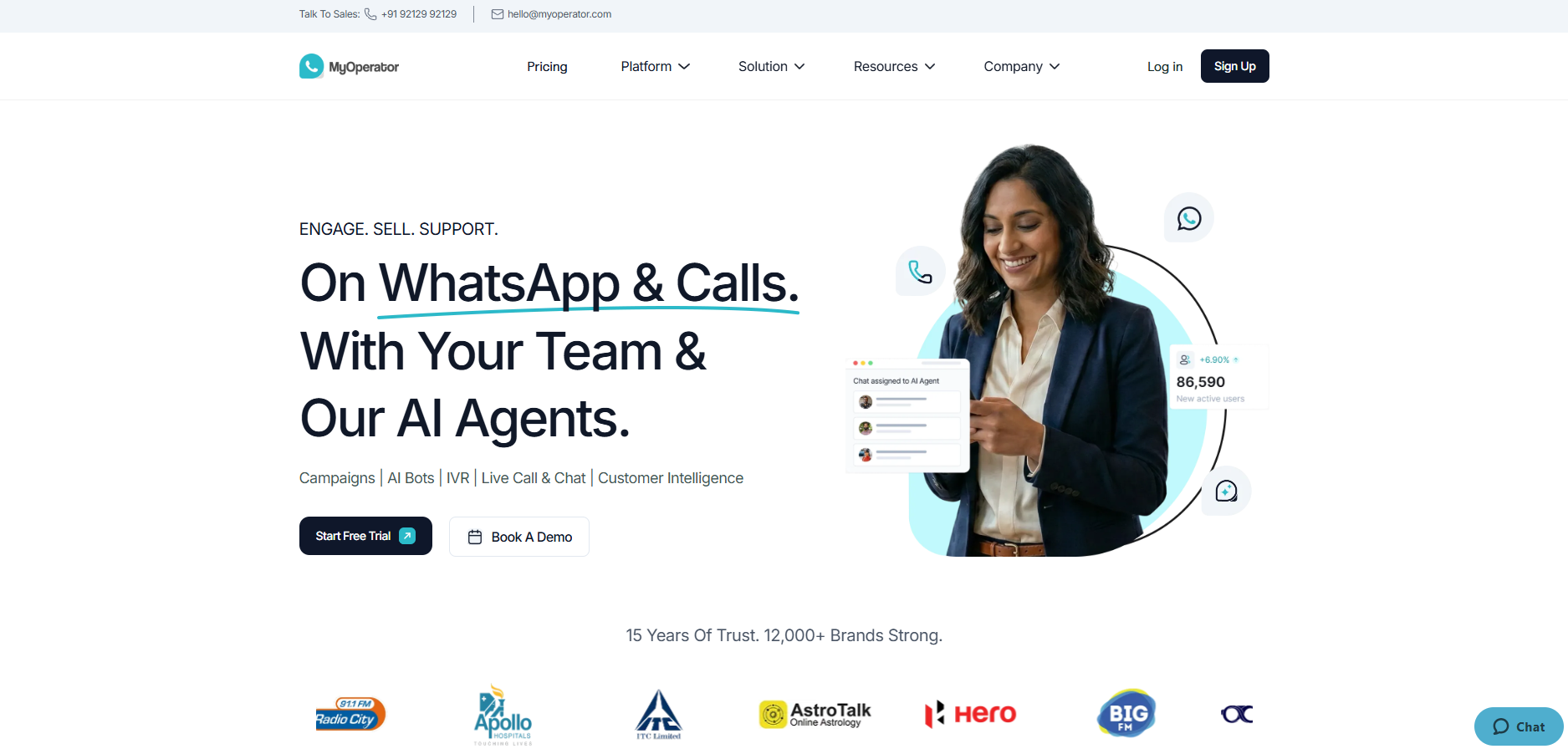
MyOperator is an India-focused business phone and WhatsApp platform built for SMBs.
G2 rating: 3.8/5
Pros:
- Combines missed-call and WhatsApp campaigns with calling
- Quick setup aimed at small teams
- Lower entry price point than most on this list
- Positive product-direction feedback from a share of reviewers
- Plans start with a single number and shared WhatsApp inbox
Cons:
- Quality-of-support score trails Exotel and Knowlarity in head-to-head G2 data
- Ease-of-use and ease-of-setup scores also trail category peers
- Fewer enterprise-grade features than larger competitors
- Smaller review base signals lighter enterprise adoption
- Meets-requirements score is the lowest among compared providers here
Best for: Small businesses wanting a simple calling plus WhatsApp combination.
Pricing: From ₹2,500 for 3 users/month.
Airtel IQ
Airtel IQ is Bharti Airtel’s telco-grade cloud communications platform, unifying voice, SMS, WhatsApp, and video on Airtel’s own network.
G2 rating: Not widely listed; review volume is too thin for confident benchmarking.
Pros:
- Telco-grade network reliability from India’s largest telecom operator
- DoT and TRAI compliance built into a carrier-owned backbone
- Nationwide inventory of STD and local virtual numbers
- End-to-end encryption with number masking by design
- Single platform spanning voice, SMS, WhatsApp, and video
Cons:
- Some reviewers cite poor customer support and slow loading
- A subset of reviewers describe setup as difficult
- Pay-as-you-go pricing makes budgeting less predictable upfront
- Fewer independent case studies than pure-play cloud telephony vendors
- Thin G2 review base limits confidence in the rating
Best for: Enterprises already on Airtel’s network wanting carrier-backed compliance.
Pricing: Pay-as-you-go, usage-based.
What Makes a VoIP Service Provider Compliant and Fit for India?
A VoIP provider fit for India clears two bars: it operates within DoT’s telecom framework, and it handles Indian-language, Indian-number-format calling without friction. Global feature parity does not guarantee either.
Cloud telephony sits inside India’s OSP framework. An OSP is a company that delivers voice or data-based services, like call centers or cloud telephony, using resources from a licensed telecom operator.
Until November 2020, every OSP needed a DoT registration before it could operate. That registration requirement was removed under the liberalized OSP guidelines. However, telecom and data security obligations still apply.
This matters for your shortlist. A provider that predates 2020 has already been through registration scrutiny. A newer entrant should still be able to show you how it meets the surviving telecom and data safeguards.
Telemarketing adds a second layer. The Telecom Commercial Communications Customer Preference Regulations (TCCCPR), 2018 govern consent, registration, and call timing for any outbound campaign your provider routes.
How Do You Check VoIP Call Quality, Uptime, and Security?
Ask for the SLA number in writing, then ask what it excludes. Most “99.9% uptime” claims quietly carve out scheduled maintenance and third-party network failures.
Security matters just as much as uptime for an ops buyer. Ask whether calls are encrypted with SRTP and TLS in transit, since these are the baseline protocols for protecting voice data on the internet.
Push for a load test before signing anything. A demo call in a quiet office tells you nothing about call quality when 150 agents are dialing simultaneously during a sale. Ask for a trial period long enough to run your own peak-hour test, not just a sales call.
Which VoIP Compliance Checks Matter Most in India (DoT, TCCCPR, DPDP)?
Compliance risk in India runs wider than the OSP framework. Two more laws shape what your provider can legally do with your call data.
The Digital Personal Data Protection Act, 2023 governs how customer voice recordings and call metadata must be stored, secured, and disclosed once its provisions are enforced. The DPDP Act and Rules, notified in November 2025, govern how voice recordings and call metadata must be stored, secured, and disclosed.
TCCCPR compliance is not optional if your ops team runs outbound campaigns of any kind. A provider that cannot show you its telemarketer registration process is a provider that puts your business, not just theirs, at regulatory risk.
Ask for a written compliance statement covering DoT’s telecom safeguards, TCCCPR registration, and DPDP data handling before you shortlist anyone. Verbal reassurance from a sales team is not a compliance record.
How Much Does Business VoIP Cost in India Beyond List Price?
India’s cloud telephony market is growing fast, and new entrants are chasing that growth with aggressive headline pricing. That growth pulls in providers still working out their support and billing operations.
The sticker price rarely covers what your ops team will actually use. Call recording, CRM integration, advanced analytics, and additional local numbers frequently sit behind add-on fees that only surface after onboarding.
Watch for these four cost traps specifically:
- Per-minute overage charges once a bundled credit allowance runs out
- Per-agent or per-seat minimums that inflate your real entry price
- Premium features like predictive dialing gated to higher tiers
- Annual lock-in required to access the advertised entry rate
How Can Ops Teams Evaluate VoIP Providers in Two Weeks?
Picture a 150-seat support team migrating off a legacy PBX. The ops manager can’t rely on a sales deck. A two-week evaluation window settles it instead.
In week one, the team runs a peak-hour load test on the shortlisted providers’ trial accounts, watching for dropped calls and lag. They pull each vendor’s OSP and TCCCPR compliance statement in writing, not just a verbal assurance. They test one real CRM webhook end to end, confirming call logs land in the ticketing system without manual export.
In week two, they compare the real, all-in cost: seat price, plus recording, plus the CRM integration fee, against the published headline rate. Only then do they sign, with the compliance statement and load-test results filed for their own audit trail.
Conclusion
Three things separate a good VoIP decision from a costly one. First, compliance is not optional. Confirm OSP, TCCCPR, and DPDP Act posture in writing before you sign anything.
Second, the real cost lives past the sticker price. Recording, CRM integration, and per-minute overages routinely double what a headline rate suggests.
Third, match your shortlist to your actual scale. A 10-person team and a 300-seat contact center need almost nothing in common from a provider.
Run the two-week evaluation we outlined above before committing to a multi-year contract. It costs you two weeks. A bad VoIP decision costs a lot more.
Frequently Asked Questions
A VoIP service provider routes voice calls over the internet instead of traditional phone lines. It handles call routing, virtual numbers, encryption, and features like IVR and call recording for businesses.
We shortlist ten VoIP providers built or proven for Indian teams. The list runs Acefone, Exotel, Ozonetel, Knowlarity, Kaleyra, MyOperator, CallHippo, Freshdesk Contact Center, Airtel IQ, and JustCall. We ranked each on compliance posture, published G2 ratings, and real starting price.
VoIP is the underlying technology for calling over the internet. Cloud telephony is the broader business service built on VoIP, adding IVR, call center tools, analytics, and CRM integrations.
Business VoIP costs in India vary according to the providers. At Acefone, our plans start from ₹1599/user/month.
Skip VoIP if your team works in areas with unstable internet and no fallback line. Also reconsider if your compliance needs require on-premises infrastructure your industry regulator mandates directly.
No. A 10-person startup and a 300-seat contact center need different things from a provider. Match your shortlist to call volume, compliance needs, and existing CRM stack before comparing pricing.
Confirm OSP, TCCCPR, and DPDP Act compliance in writing before you shortlist anyone. Then price the real cost, seat fee plus recording, CRM integration, and overage charges, not just the headline rate. Finally, match the provider to your team size. A 10-person team and a 300-seat contact centre need different things.