




TL;DR
An AI Call Assistant uses artificial intelligence to manage phone conversations or support human agents during calls.
Here’s what businesses should know:
- AI-powered systems can answer routine enquiries, recognize customer intent, and automate suitable tasks.
- Advanced voice agents can schedule appointments, qualify leads, and retrieve authorized business information.
- Unlike traditional calling menus, conversational systems can understand requests expressed in different ways.
- Real-time assistance can help employees access information and respond more effectively.
- Successful implementation requires reliable integrations, clear escalation processes, and regular performance reviews.
Imagine calling customer support to check an order status and waiting several minutes for a simple answer. Now imagine a business receiving hundreds of similar enquiries throughout the day. These repetitive interactions consume employee time and create unnecessary frustration for customers.
An AI Call Assistant offers a practical approach to managing these conversations. It can understand spoken requests, retrieve relevant information, and automate suitable tasks without continuous human involvement. For organizations considering an AI call assistant for business, understanding its capabilities is an important starting point.
But not every solution works in the same way. Some handle customer conversations independently, while others provide support to employees during live calls. This guide explains how the technology works, where it adds value, and what businesses should consider before adoption.
What Is an AI Call Assistant?
An AI call assistant is software that uses artificial intelligence to understand spoken requests and manage telephone conversations. It can answer questions, retrieve information, and guide callers through routine processes. More advanced systems can also complete authorized business tasks through connected applications.
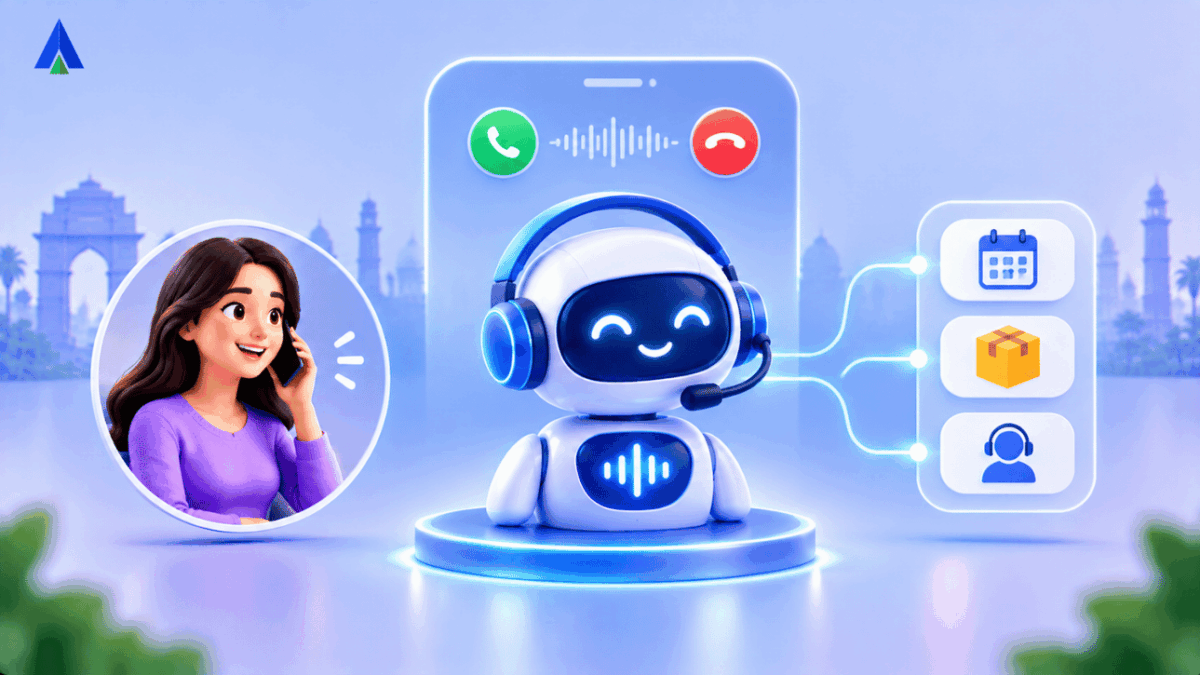
Consider a customer calling an online retailer to check an order status. Instead of navigating multiple menu options, the customer simply asks, “Where’s my parcel?” The assistant identifies the request and retrieves relevant information after completing the required verification. It can then communicate the available delivery status or transfer the conversation when necessary.
This conversational approach offers greater flexibility than basic menu-driven calling systems. Customers can express their needs naturally instead of following predefined instructions. However, understanding a request and completing a business action require different capabilities.
An AI voice assistant commonly provides information or helps callers navigate conversations. An AI voice agent can go further by performing configured actions through connected business systems. These actions might include scheduling appointments, qualifying enquiries, or updating authorized customer records.
For example, Acefone’s Agent Studio support task-oriented conversations through its AceX platform. Its published capabilities include automated calling workflows, business integrations, and contextual handoffs. However, the functionality available to each organization depends on its configuration and connected systems.
Not every AI assistant communicates directly with customers. Some solutions work alongside human employees by retrieving knowledge, suggesting responses, and providing contextual information during calls. This distinction matters because autonomous voice agents and employee-assistance tools address different operational requirements.
Understanding these differences helps businesses choose suitable technology without expecting every platform to perform the same tasks.
How Does AI-Powered Calling Work?

An AI-powered call assistant combines speech recognition, language understanding, and business workflows to process customer conversations. Although the experience may feel natural, several technologies work together behind the scenes. Each component helps the system understand a request, identify relevant information, and determine an appropriate response.
The process begins when someone speaks during a connected telephone call. Speech recognition technology processes the audio and converts spoken language into written text. This process is commonly called speech-to-text.
Speech-to-text: Technology that converts spoken audio into written words.
These technologies allow software to process spoken input and generate audio responses. However, background noise, pronunciation, and unfamiliar terminology can influence recognition accuracy.
Once the spoken input becomes text, the system analyses its meaning using natural language processing. This technology helps computers interpret human language and identify the purpose behind a request.
Natural language processing: Technology that helps computers process and interpret human language.
For example, a customer might say, “Can I move my appointment to Friday?” The assistant identifies the request as an appointment change rather than a general information enquiry. It can then check the appropriate scheduling workflow when a compatible system is connected.
After identifying the request, the assistant determines whether it has sufficient information to respond. A scheduling application might provide available appointment slots, while an order-management system could return delivery information. The assistant uses this information alongside its instructions to prepare an appropriate response.
Text-to-speech technology can then convert the written response into spoken audio. This allows the conversation to continue without requiring the customer to use a separate application.
Text-to-speech: Technology that transforms written text into synthesized speech.
However, automated conversations don’t always follow a predictable path. Customers may ask unexpected questions, provide incomplete information, or request actions outside the system’s permissions. A reliable assistant should recognize these limitations and follow the configured escalation process.
This is why effective AI call automation requires clear boundaries around automated decisions. Businesses must identify which tasks can proceed independently, and which require employee involvement. Without these safeguards, automation may create more frustration than it resolves.
Which AI Call Assistant Features Matter?
Choosing an AI call assistant for business requires focusing on features that improve communication, simplify workflows, and support customers effectively.
Here are six essential capabilities to consider:
- Natural Language Understanding: Allows customers to explain requests without navigating rigid menus. Advanced assistants can recognise caller intent and respond appropriately.
- Inbound and Outbound Calling: Supports routine customer enquiries, appointment reminders, and lead qualification through automated conversations and authorised outbound calls.
- Multilingual Support: Helps businesses communicate across different regions. Acefone advertises support for more than 12 languages, including several Indian regional languages. Businesses should still test accent recognition and conversation accuracy.
- CRM and Business Integrations: Connects assistants with customer relationship management (CRM), booking, and other business systems. Acefone’s AI Voice Agents support CRM integrations, although specific capabilities depend on configuration.
- Knowledge Bases and Analytics: Uses approved information to provide consistent answers. Conversation analytics help businesses identify recurring enquiries, track performance, and improve workflows.
- Human Escalation: Transfers complex or unresolved conversations to human agents. Contextual handoffs can help employees understand customer concerns without restarting the conversation.
Together, these features help businesses improve conversational accuracy, automate repetitive tasks, and maintain a reliable customer experience.
How Should Businesses Choose a Solution?
Choosing an AI Call Assistant requires evaluating business needs, conversational accuracy, integrations, and security. Businesses should begin with predictable tasks, such as appointment confirmations or order tracking, before introducing complex workflows.
An AI-powered call assistant should handle realistic conversations, including regional accents, background noise, and unexpected questions. Reliable human escalation is essential when automation cannot resolve an enquiry.
Businesses should also assess compatibility with existing systems, data protection measures, and implementation costs. The NIST AI Risk Management Framework provides guidance for managing AI-related risks.
Employee training and performance monitoring are equally important. Organizations should strengthen call center communication skills while measuring customer satisfaction, task completion, and escalation rates.
Acefone’s AI voice agent platform comparison offers additional guidance on evaluating available solutions. Ultimately, the right platform should simplify customer interactions, support employees, and deliver measurable value.
How Do AI Calling Technologies Differ?
AI calling technologies may share similar capabilities, but each serves a different business purpose. Understanding these differences helps organizations select the right solution for their communication needs.
Here are five key technologies and how they differ:
- AI Voice Assistant: Understands spoken requests and provides relevant information. It commonly handles routine questions, service enquiries, and basic customer interactions.
- AI Voice Agent: Goes beyond answering questions by completing authorized tasks through connected systems. These may include appointment scheduling, lead qualification, and customer record updates.
- Interactive Voice Response (IVR): Routes callers through predefined menus using keypad inputs or speech recognition. It’s useful for departmental routing and basic self-service. Learn more in Acefone’s guide to IVR systems.
- AI Agent Assist: Supports human employees during live conversations by retrieving information, suggesting responses, and providing contextual guidance. The employee remains responsible for managing the call.
- AI Chatbot: Communicates primarily through written messages on websites or messaging platforms. Unlike voice assistants, chatbots typically handle text-based customer interactions.
The right choice depends on customer expectations and task complexity. Businesses may also combine these technologies to automate routine enquiries while retaining human support for sensitive situations.
How Can Businesses Use AI Call Assistants?
An AI call assistant for business can support everyday communication across customer service, sales, and appointment management. It helps organizations automate predictable enquiries while keeping human agents available for complex conversations.
In customer support, AI can answer routine questions, retrieve authorized account information, and provide service updates. For example, customers can check order status without navigating complicated calling menus.
Sales teams can use AI call automation for lead qualification, follow-ups, and appointment scheduling. Similarly, healthcare providers may use suitably configured systems for appointment reminders and basic scheduling enquiries.
When conversations become complicated, the assistant can transfer callers to human agents with relevant context. This helps employees understand customer concerns without restarting the interaction.
Acefone’s AI Voice Agents support business workflows, including routine enquiries, appointment scheduling, and contextual handoffs. However, available capabilities depend on integration and configuration.
The objective is to automate suitable tasks while preserving human judgement, empathy, and essential call center communication skills.
How Should Businesses Choose a Solution?
Choosing an AI Call Assistant requires evaluating business needs, conversational accuracy, integrations, and security. The right platform should simplify customer interactions while supporting existing workflows.
Here are five important factors to consider:
- Identify Business Requirements: Start with predictable tasks, such as appointment confirmations, order tracking, or routine enquiries. Prioritize workflows where automation can deliver measurable value.
- Evaluate Conversational Accuracy: Test the AI-powered call assistant using real customer scenarios, regional accents, background noise, and unexpected questions. Ensure it can transfer unresolved conversations to human agents.
- Check Integrations and Security: Confirm compatibility with existing business systems, including CRM and scheduling platforms. Review data protection measures, access permissions, and privacy requirements.
- Assess Employee Readiness: Train teams to manage escalations and strengthen essential call center communication skills. Monitor customer satisfaction, task completion, and conversation quality to measure performance.
- Compare Costs and Support: Evaluate implementation costs, language availability, ongoing maintenance, and technical support. Acefone’s AI voice agent platform comparison offers additional insights into available solutions.
Ultimately, the best AI voice assistant should improve communication efficiency, maintain customer satisfaction, and complement human expertise.
Conclusion
An AI Call Assistant can help businesses manage everyday customer conversations without relying entirely on manual processes. However, meaningful results depend on how the technology is implemented and maintained.
First, suitable automation can reduce repetitive enquiries and complete authorized tasks through connected systems. Second, technology should complement human expertise rather than replace every customer interaction. Empathy, judgement, and strong call center communication skills remain essential to effective support.
Third, successful deployment requires reliable integrations, accurate information, appropriate safeguards, and regular performance reviews. Businesses should begin with manageable workflows and evaluate customer outcomes before expanding their use of automation.
The purpose of AI call automation isn’t simply to handle more conversations. It’s to make customer communication more helpful, consistent, and dependable.
Frequently Asked Questions
AI can manage suitable routine enquiries without continuous human involvement. However, complicated complaints and sensitive decisions may still require experienced employees. Businesses should view automation as support for customer service rather than a complete replacement for human interaction. Appropriate escalation remains essential.
Yes, appropriately configured voice agents can answer incoming calls and manage routine enquiries. Common applications include order tracking, appointment scheduling, and basic customer support. Available functionality depends on system integrations, permissions, and operational rules. Businesses should test these workflows before deployment.
Many voice platforms offer multilingual communication, although coverage varies between providers. Acefone advertises support for more than 12 languages, including several regional Indian languages. Businesses should test relevant accents and mixed-language conversations because language availability doesn’t guarantee consistent recognition accuracy.
Voice agents can suit smaller organizations receiving frequent and predictable customer enquiries. A service provider might automate appointment confirmations or routine information requests. Suitability depends on call volume, implementation costs, and workflow complexity. Businesses should evaluate expected value before investing.
Security depends on the platform, connected applications, and organizational controls. Businesses should review encryption, access permissions, recording practices, data retention, and applicable privacy requirements. Automated conversations may involve personal customer information, making appropriate safeguards important. Regular reviews can support responsible use.
No, automated calling isn’t automatically better than traditional systems or human assistance. Simple routing requirements may work adequately through existing telephone menus. Complex interactions may require experienced employees. Businesses should choose technology according to customer expectations, operational requirements, and measurable results.


